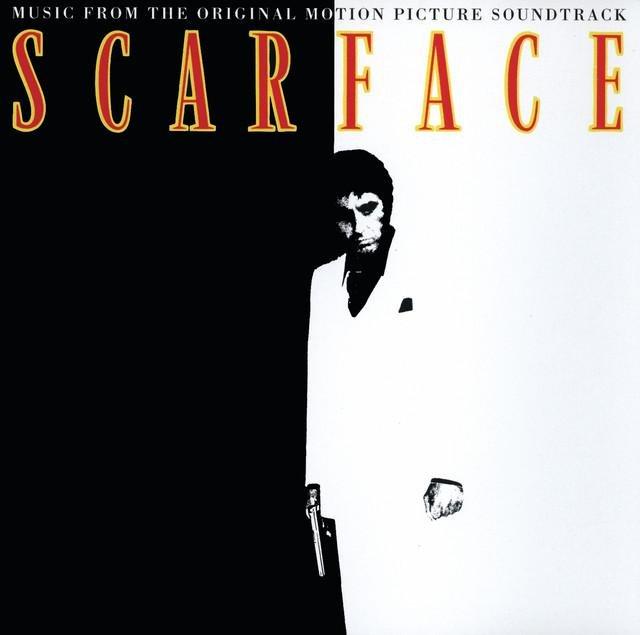
Why Scarface's Anthem Still Feels Dangerous
The meaning of Scarface (Push It To The Limit) Paul Engemann comes down to one big tension: the song sounds like pure motivation, but its message is much darker. It celebrates the rush of ambition while warning that life on the edge can destroy the person chasing more.
"Scarface (Push It To The Limit)" - Paul Engemann
Walk along the razor's edge
But don't look down, just keep your head
Loading lyrics...
Unable to load lyrics
We're unable to display the lyrics at this time. Please try again later.
Performed by Paul Engemann and written by Giorgio Moroder and Pete Bellotte for the 1983 film Scarface, the song became tied to one of cinema’s most famous rise-to-power montages. According to the film reference material summarized by Wikipedia, it appears as Tony Montana builds wealth, status, and control. That setting matters because it turns the song into more than a workout anthem. It becomes a soundtrack for greed, momentum, and coming collapse.
A victory song with a warning inside
On first listen, the track feels built to inspire. The chorus keeps repeating Push it to the limit
, which sounds like a call to break through fear and keep going. But the song quickly complicates that message with images of danger and instability.
The clearest example is razor's edge
. That phrase does not describe healthy confidence. It describes a place where one wrong move can end everything. The song keeps pushing forward, yet it never offers safety, peace, or balance as a reward.
Interpretation: This is why the song works so well in Scarface. Tony Montana is not simply ambitious. He is addicted to expansion. The lyrics fit a man who mistakes momentum for control.
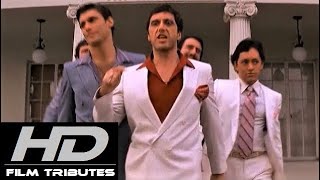
Watch the official Scarface (Push It To The Limit)
music video
How the movie sharpens the meaning
In the film, the song scores Tony’s transformation into a richer, more powerful figure. As Wikipedia notes, the montage shows money counting, business growth, and personal status climbing. That visual context makes the song feel triumphant in the moment.
Still, the lyrics do not fully trust that rise. They mention going past the point where turning back is possible and suggest that reaching the top is not the end of the struggle. Film critic Glenn Kenny highlighted the line about getting to the top and still needing to learn how to keep it, calling attention to the song’s built-in warning, as reported by Wikipedia.
Don't look down
just keep your head
Or you'll be finished
Those lines capture the song’s core idea. Success here is not stable ground. It is a balancing act performed under pressure.
The narrator speaks like a coach—and a temptor
The song uses direct commands, which gives it the tone of advice. Phrases like Open up the limit
and better win it
sound like someone pushing another person toward greatness. That voice is part trainer, part hype man.
But it also feels dangerous. The commands leave no room for caution, grief, or ordinary human limits. The listener is told to keep moving, keep risking, keep climbing. Even when the song admits the stakes are high, it treats stopping as failure.
Interpretation: That voice can represent the culture around Tony Montana as much as Tony himself. In this reading, the song becomes a portrait of a world where worth is measured by dominance, speed, and winning.
Symbols of speed, edges, and no return
The imagery is simple, but it is effective. Nearly every major line points to pressure:
razor's edge
suggests fragile successpoint of no return
suggests moral and personal overcommitmentdouble the stakes
suggests escalation rather than wisdomnever be safe
suggests that power does not remove fear
These images all support the same theme: ambition creates its own trap. The higher the climb, the harder it becomes to stop. The song understands the thrill of risk, but it also shows how risk becomes a permanent condition.
Why the music feels so huge
A big reason the song lasts is its sound. Moroder’s production is bright, synthetic, and relentless, with a driving beat that mirrors forward motion. Critics have described it as synth-heavy, and Ken Tucker called Engemann’s delivery a full-throated
arena-style warble, according to Wikipedia.
That combination matters. The song does not whisper its warning. It blasts it out through pounding drums, gleaming keyboards, and a vocal that sounds larger than life. The production makes ambition feel glamorous before the lyrics reveal the cost.
This is why the track has survived beyond the movie. It has appeared in games, TV, and parody, including Grand Theft Auto III, South Park, and It’s Always Sunny in Philadelphia, as listed by Wikipedia. It can play as a sincere pump-up song or as a joke about excess, because both meanings are already inside it.
So what is the song really saying?
The best answer is that it says two things at once. On the surface, it praises hunger, courage, and total commitment. Underneath, it shows that a life built on endless pushing leaves no room for safety or satisfaction.
That double meaning explains why the meaning of Scarface (Push It To The Limit) Paul Engemann still feels sharp today. It understands the appeal of winning, but it also knows that the dream of “more” can become a machine that never stops.
In the world of Scarface, that is exactly the point. The song does not just celebrate the climb. It hints that the climb is the beginning of the fall.
Disclaimer: This interpretation is based on the song’s lyrics, its use in Scarface, and documented critical commentary. Meaning can vary from listener to listener.








