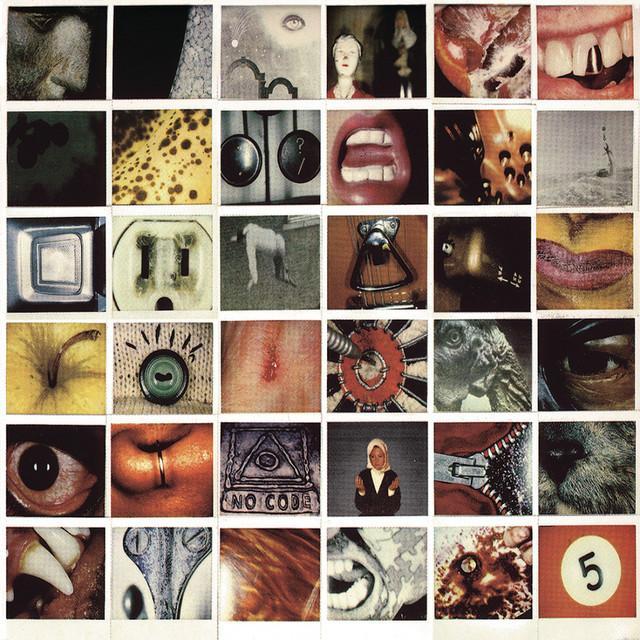
Who You Are by Pearl Jam
The Big Question at the Center
For listeners searching for the meaning of Who You Are Pearl Jam, the clearest answer is this: the song asks what a person contributes to the world, and whether they understand their own place in it. It is less a story than a meditation. Instead of giving one fixed message, Pearl Jam build a series of questions about identity, responsibility, and awareness.
"Who You Are" - Pearl Jam
Transcendental consequences to transcend...
Where we are...Who are we? Who we are...
Loading lyrics...
Unable to load lyrics
We're unable to display the lyrics at this time. Please try again later.
Released in 1996 on No Code, the song came from a period when the band was moving away from straight arena-grunge formulas and toward stranger, more reflective material. According to the Pearl Jam Wiki, the lyrics were written by Eddie Vedder, with music by Stone Gossard and Jack Irons. That matters, because the track feels like a meeting point between Vedder’s searching words and Irons’ more circular, hypnotic musical style.

Watch the official Who You Are
music video
A Song About Identity, Not Ego
At its heart, the song pushes against arrogance. Early on, the line send not condescend
suggests a moral choice: offer something meaningful, but do not talk down to people. In plain terms, the speaker seems to reject ego and preachiness. They are asking for humility.
That idea opens into a larger identity question. The repeated focus on Who are we?
and later Who you are
does not sound like a simple self-help slogan. It sounds unsettled. The song treats identity as something people have to test, not just announce.
Interpretation: Pearl Jam seem to suggest that character is proven through action. It is not enough to claim depth or wisdom. A person has to take part in life in a real way.
How the Verses Build the Theme
The verses move through fragments instead of a clean plot, but they still connect. Images of damage, confusion, and movement all point toward a life that is messy and unfinished. When the song mentions trampled moss
, it pairs nature with injury. Moss is soft and living, yet here it has been stepped on. That image can suggest a wounded inner life or a spirit flattened by modern pressure.
Later, the song turns toward motion and chance. Phrases about winds, mud, and being off track imply that people do not control everything. Life can push them sideways. Even so, the song does not sound hopeless. It sounds like it is saying that uncertainty is part of being alive.
That is why the line take me for a ride
feels important. It carries surrender, but not defeat. The speaker appears willing to move through uncertainty instead of pretending to rise above it.
The Hook Turns Philosophy Into a Challenge
The closing refrain gives the song its emotional punch. Rather than offering a neat conclusion, it circles back to personal responsibility. Everything around them, even a stoplight, plays its part
. In other words, the world is made of connected roles, causes, and effects.
That is what makes the central question feel challenging rather than abstract. If everything has a part, then people do too. The song asks what that part is.
What’s your part?
Who you are
This is the one moment where the song becomes direct. After all the drifting imagery, Pearl Jam suddenly sound almost confrontational. They are not only asking what identity means in theory. They are asking what anyone is actually doing with their life.
Why No Code Matters Here
The song makes more sense in the context of No Code, an album often linked to existential themes and the band’s uneasy relationship with fame and modern culture. During the mid-1990s, Pearl Jam were stepping away from celebrity expectations and experimenting more openly. On the album No Code, they embraced a looser, more inward-looking style.
“Who You Are” fits that shift perfectly. It does not chase a huge singalong chorus in the usual way. Instead, it invites reflection. The lyrics sound like thoughts arriving in pieces, as if certainty itself is being questioned.
The Sound Carries the Meaning
A big reason the song feels spiritual and unsettled is its arrangement. Jack Irons’ drumming is key. Rather than pounding forward, the rhythm rolls in a circular, almost trance-like way. That groove makes the song feel less like a rock anthem and more like a ritual or chant.
The guitars and percussion also avoid heavy release. They create space instead of force. That space supports the lyrics, because the song is not about domination. It is about attention, patience, and self-examination.
Vedder’s vocal adds another layer. He does not belt every line as if he already knows the answer. He sounds like someone thinking aloud, sometimes urgent, sometimes detached. That uncertainty is part of the point.
A Few Strong Interpretations
There is no single official reading, but a few interpretations stand out:
- Identity as responsibility: The song asks people to contribute with humility.
- Identity as self-discovery: The repeated questions suggest that knowing oneself is an ongoing process.
- Identity under pressure: The damaged natural images hint that modern life can bury or bruise the soul.
These readings work together more than they compete. Pearl Jam often leave room for listeners, and this song is especially open-ended.
Why the Song Still Connects
Part of the lasting appeal of “Who You Are” is that it resists easy slogans. It does not flatter the listener. It asks something from them. In a culture full of branding and self-definition, that still feels fresh.
For many fans, the meaning of Who You Are Pearl Jam lies in that tension: people are shaped by chance, confusion, and outside pressure, yet they are still responsible for how they live. The song does not promise a final answer. It asks for honesty.
That may be why it remains one of Pearl Jam’s most quietly powerful songs. It turns a simple question of identity into a moral one.
Disclaimer: This interpretation is based on the song’s lyrics, recording context, and publicly available sources. As with many Pearl Jam songs, different listeners may reasonably hear different meanings.







