Why 'Major Tom' Feels Free and Frightening
The meaning of Major Tom (Völlig Losgelöst) Peter Schilling starts with a space story, but it does not stay there. Peter Schilling’s 1983 hit turns a science-fiction setup into a song about control, detachment, and the strange appeal of leaving everything behind.
"Major Tom (Völlig Losgelöst)" - Peter Schilling
Steht sie da
Und wartet auf den Start
Loading lyrics...
Unable to load lyrics
We're unable to display the lyrics at this time. Please try again later.
Factually, the song was released in German in 1983 and later in English as Major Tom (Coming Home). It became a major international hit, reaching No. 1 in countries including Germany and Canada and No. 14 on the U.S. Billboard Hot 100, according to reference chart data documented by Wikipedia and other music sources. It is also widely described as an unofficial follow-up to David Bowie’s Major Tom story.
A Countdown Story About More Than Space
On the surface, the plot is clear. A mission is prepared, experts argue, the launch happens, and everything first seems under control. Then the astronaut drifts beyond communication, while the people below panic.
What makes the song memorable is how quickly technical confidence starts to look hollow. Early lines stress systems, planning, and duty. Everyone has a role, everyone trusts procedure, and the countdown keeps moving. But the song quietly questions whether efficiency can answer human needs.
That is why the repeated idea of being völlig losgelöst
matters so much. It means being completely detached. In the story, that is literal weightlessness. In Interpretation, it also suggests emotional separation from rules, institutions, and maybe even from Earth itself.
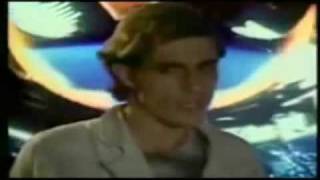
Watch the official Major Tom (Völlig Losgelöst)
music video
When the Chorus Changes the Whole Meaning
The chorus sounds huge, bright, and triumphant. The spaceship floats völlig schwerelos
, and for a moment that feels like victory. Gravity is gone. The mission appears successful.
But Schilling builds tension inside that same image. Weightlessness can mean freedom, yet it can also mean loss of direction. The chorus works because it never fully chooses between those feelings.
Völlig losgelöst
Von der Erde
Schwebt das Raumschiff
Völlig schwerelos
Even in this brief hook, the emotional split is clear. The spacecraft is free of Earth, but it is also no longer anchored to anything human. That is the tension at the center of the song.
Mission Control vs. Major Tom
One of the smartest parts of the lyric is the contrast between the ground team and the astronaut. On Earth, officials argue over data and then panic when the capsule goes off course. Their language is managerial and urgent.
Major Tom reacts differently. He jokes before takeoff, then grows quiet and inward. When contact fades, he does not sound desperate. His final messages are simple, even peaceful, including Grüßt mir meine Frau!
before he falls silent.
In Interpretation, the song sets up a conflict between external control and inner awakening. The people below want the mission saved. Major Tom seems to want something else. He no longer shares their priorities.
The lyric about ein Licht
guiding him through space pushes that idea further. This “light” could suggest death, revelation, transcendence, or a private truth that Earth cannot understand.
The Sound Makes Detachment Feel Seductive
Musically, the track is pure early-1980s new wave and synth-pop. Sources such as Wikipedia classify it in that style, and Songfacts notes that Schilling’s version is very different from Bowie’s musically, built on a more electronic pulse.
That matters to the song’s meaning. The crisp drum programming, glowing synthesizers, and clean momentum make the launch feel sleek and modern. The production sounds controlled, almost machine-perfect.
As the story becomes less stable, that polished sound creates irony. The music still pushes forward confidently, even as human control is slipping away. That contrast helps explain why the song feels exciting and eerie at the same time.
Schilling also benefits from a cool vocal delivery. He does not oversell the drama. That restraint makes Major Tom seem calmer than everyone around him, which deepens the sense that he may be choosing detachment rather than simply suffering it.
Bowie’s Shadow and Schilling’s Own Message
The song is routinely linked to David Bowie’s “Space Oddity,” and that connection is hard to miss. The character name alone invites it, and major reference sources describe Schilling’s song as an unofficial continuation or variation on Bowie’s astronaut.
Still, Schilling’s version has its own identity. Bowie’s Major Tom is often discussed through alienation and self-destruction. Schilling’s Major Tom feels more streamlined, modern, and possibly spiritual. He is not just lost; he may be liberated.
That difference helps explain the song’s long afterlife in pop culture, from Breaking Bad to Deutschland 83, and even its 2024 resurgence during Germany’s Euro celebrations, as reported in current coverage summarized by Wikipedia.
So What Does It Finally Mean?
The best answer is that the meaning of Major Tom (Völlig Losgelöst) Peter Schilling lives in its ambiguity. It is about an astronaut drifting away, but also about the temptation to leave pressure, ego, and control behind.
In one reading, the song is tragic: a man disappears beyond rescue. In another, it is almost mystical: he escapes a narrow world and follows a truth others cannot see. The brilliance is that both readings can exist at once.
That is why the chorus still hits so hard. It sounds like escape, surrender, victory, and loss all at the same time.
Interpretation disclaimer: This analysis separates documented facts from informed reading. Because Schilling leaves the ending emotionally open, no single interpretation should be treated as the only correct one.







