What Makes “U + Ur Hand” P!nk’s Sharpest No
The meaning of U + Ur Hand P!nk comes down to one clear idea: this is a hard, funny, and very public rejection. P!nk turns a bad club encounter into a power anthem, mocking a man who assumes attention, access, and success just because he showed up.
"U + Ur Hand" - P!nk
Uh, uh-uh, uh-uh, uh-uh (oh)
Check it out, goin' out on the late night
Loading lyrics...
Unable to load lyrics
We're unable to display the lyrics at this time. Please try again later.
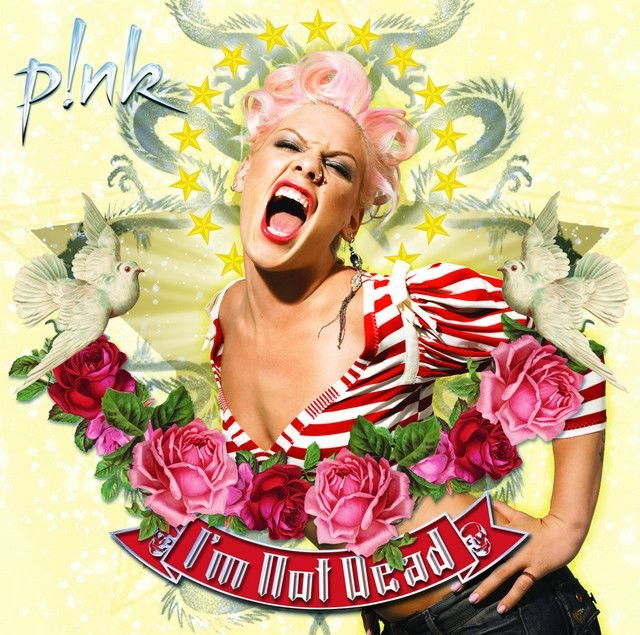
Released as the third single from I’m Not Dead in 2006, the song became one of P!nk’s major crossover hits, reaching No. 9 on the Billboard Hot 100 and No. 1 on US Pop Airplay. Those chart facts matter because they show how widely this message connected: a lot of listeners heard the song not just as a joke, but as a statement about boundaries.
A Brush-Off Turned Into an Anthem
On the surface, the song tells a simple story. A woman goes out to have fun, drink, dance, and enjoy the night. Then a man puts his hands on her, reads the situation wrong, and becomes the target of her comeback.
That is why the chorus hits so hard. When P!nk says not here for your entertainment
, she rejects the idea that her presence in a club is automatically for male approval. She is not flirting by default. She is not performing for strangers. She is there for herself.
The title joke pushes that rejection further. The song’s final insult is sexual, but it is really about humiliation and consequence. She is telling this guy he is leaving alone because he never understood consent, respect, or basic social cues.

Watch the official U + Ur Hand
music video
Who Is Speaking, and to Whom?
The voice is first-person and direct, but the target is second-person. That setup gives the song its bite. Nearly every line feels like a face-to-face shutdown.
Early in the song, the narrator enters with confidence. She is dressed up, already in motion, and in control of her own night. Then the mood changes when the unwanted contact happens. The line put his hands on me
marks the turning point. After that, the song stops being about nightlife and becomes about reclaiming space.
Interpretation: The most important part of the song is not the rude punchline. It is the refusal before the punchline. P!nk makes it clear that the problem is not awkward flirting alone. The problem is entitlement.
The Story Moves in Fast, Sharp Beats
The narrative unfolds almost like scenes in a short film:
- They arrive at the club feeling confident.
- Drinks and noise raise the energy.
- A man mistakes the vibe for permission.
- The narrator shuts him down.
- The chorus turns that moment into a public verdict.
One of the smartest lines comes when she says I was fine before you
. In plain terms, she reminds him that he is not improving her night. He is interrupting it.
That point matters because many pop songs about attraction assume that romance begins with pursuit. Here, pursuit is the problem. P!nk flips a familiar club-song formula and says the woman does not need rescuing, choosing, or winning.
Keep your drink, just give me the money
It’s just you and your hand tonight
In context, that brief couplet is less about literal money than about sarcasm and dismissal. She treats his approach like a failed transaction, then ends the exchange with the song’s most famous put-down.
Why the Chorus Landed So Well
The chorus works because it is easy to sing and impossible to misunderstand. It is blunt, rhythmic, and packed with social meaning.
The phrase mess with me tonight
does double duty. It means he should not try to flirt, pressure, touch, or test her patience. P!nk condenses all of that into one catchy warning.
Critics noticed this edge at the time. The New York Times described the track as using a Joan Jett-style stomp to brush off a barroom pest, while other reviews praised its confrontational humor. That mix of toughness and playfulness helps explain why the song never feels preachy. It sounds like a comeback delivered at exactly the right second.
Sound, Swagger, and Why It Feels So Defiant
“U + Ur Hand” was written by P!nk, Max Martin, Lukasz Gottwald, and Rami Yacoub, and produced by Max Martin and Dr. Luke. Musically, it blends pop with pop-rock and dance-rock energy, giving the song both radio polish and a kick of attitude.
The beat is tight and club-ready, but the guitars and vocal attack give it grit. That combination mirrors the lyric’s message. The track is catchy enough for the dance floor, yet rough enough to sound like a warning.
P!nk’s vocal performance matters just as much as the writing. She does not sing the song like a victim. She sounds amused, irritated, and fully in command. Even the chant-like hook feels less like heartbreak and more like a verdict.
That may be why the song aged better than many mid-2000s club hits. Its production is glossy, but its emotional center is sturdy: boundaries, self-possession, and calling out bad behavior.
More Than a Dirty Joke
Because of the title, the song caused controversy in the US and some outlets treated it mainly as a masturbation gag. P!nk even pushed back after the song was reportedly considered too racy for American Idol; Songfacts summarizes her refusal to soften the title into something less explicit.
But reducing the song to shock value misses the bigger point. The sexual insult is memorable because it is attached to a clear boundary. The joke lands only after the narrator has already said no.
Interpretation: The song can also be heard as a small feminist pop statement. Not in an academic sense, but in a practical one. It centers a woman’s right to occupy public space without being treated like an invitation.
Why It Still Connects
Part of the meaning of U + Ur Hand P!nk is timeless because the situation is timeless. Many listeners know what it feels like to be having a good night until someone decides attention is owed to them.
P!nk’s genius here is that she does not answer that behavior with sadness. She answers it with ridicule. That turns discomfort into control and turns a personal annoyance into a communal sing-along.
Final Take
“U + Ur Hand” is about rejection, but not just romantic rejection. It is about refusing entitlement, objectification, and unwanted touch, then doing it with enough wit to make the refusal unforgettable.
That is the clearest reason the song became a hit: it gave listeners a chorus for a moment many people know too well.
Disclaimer: This interpretation is based on the lyrics, release context, and public reporting, and other listeners may hear different shades of meaning in the song.







