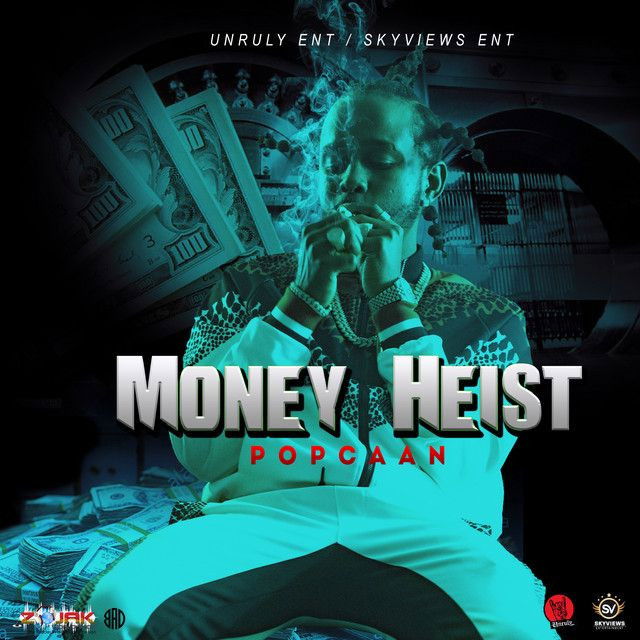
Why Popcaan’s “Money Heist” Hits So Hard
A survival anthem dressed like a flex
The meaning of Money Heist Popcaan starts with pressure. The song sounds like a boast-heavy dancehall record, but underneath the swagger is a simple idea: poverty feels unbearable, so the speaker treats wealth not as a luxury, but as a mission.
"Money Heist" - Popcaan
Yeah (yeah)
Bruk life cyaan' work out, no
Loading lyrics...
Unable to load lyrics
We're unable to display the lyrics at this time. Please try again later.
Right away, Popcaan frames money as a matter of escape. When they say “bruk life cyaan’ work out”
, the line points to frustration with staying broke. The title phrase “Money heist”
is not just about crime-movie style drama. It works as a metaphor for desperate ambition, as if success has to be seized because it will not arrive politely.
Watch the official Money Heist
music video
From Portmore struggle to visible success
Popcaan, born Andrae Hugh Sutherland, is a Jamaican dancehall artist strongly tied to Portmore and Vybz Kartel’s Unruly camp, a public part of his story covered by sources like Britannica and The Fader. That background matters here because the song keeps returning to community language like “ghetto youth” and place references that ground the record in lived experience.
The verses move between rough beginnings and present-day luxury. They mention not having “privilege,” then jump to wealthy neighborhoods, drinks, women, and money calls. That contrast is the point. The song is showing what upward movement looks and sounds like when someone comes from a place where survival itself shaped their identity.
The hook turns desire into a worldview
The chorus is blunt: everybody knows money matters, and the speaker refuses shame about wanting more. When Popcaan says “money nice”
and “riches ah mi choice”
, they are not making a subtle moral argument. They are turning material success into proof of agency.
That is why the repeated hook feels bigger than a club chant. It keeps reframing money as safety, respect, and a path to “paradise.” In other words, the dream is not just cash. It is relief.
The song’s central themes
Several themes carry the record:
- Escape from poverty: being broke is presented as a dead end.
- Self-assertion: wealth becomes a way to reject disrespect.
- Community pride: “ghetto youth” is both identity and rallying cry.
- Success as revenge: prosperity answers doubters without apology.
These ideas connect in nearly every section. Even the most aggressive lines serve the same purpose: they build a hard shell around a vulnerable truth, which is that lack has lasting emotional weight.
Bravado, anger, and the need to be seen
Part of the meaning of Money Heist Popcaan is how often desire comes mixed with aggression. The song does not ask politely for a better life. It demands one. That matters because dancehall often uses toughness, sexual boasting, and confrontation as signs of power.
Interpretation: In this song, bravado works like armor. The speaker sounds oversized because the world they came from made softness risky. When they warn others not to underestimate them, including with a line like “yuh betta wise”
, they are protecting hard-won status.
The zodiac-name drops and luxury details also fit that pattern. On the surface, they are flexes. Underneath, they are evidence: this person has moved from scarcity into abundance and wants everyone to witness it.
How the production supports the message
Even without full production credits widely documented in major databases, the record’s sound tells a lot. It uses a lean, hard-charging dancehall groove with repetitive hooks, sharp percussion, and a vocal performance that swings between chant and threat. That stripped, direct style keeps the focus on hunger.
The beat does not feel dreamy or reflective. It feels urgent. The repetition of the hook mirrors obsessive thinking: if someone has known real lack, money can start to feel like the answer to every problem. The rhythm keeps pushing forward, which matches the song’s no-pause mindset.
A short lyric snapshot
The song’s emotional engine is clear in this brief moment:
“Stop! Me feel fi go rob ah mint
Money heist
See di dollar sign from yuh look inna mi eyes”
Paraphrased, the speaker feels so driven by lack and ambition that money has become visible in their whole identity. The image is exaggerated, but that exaggeration is exactly what makes it memorable.
Is the song literal or symbolic?
Most listeners will hear the “heist” language as stylized exaggeration, not a literal robbery plot. Popcaan uses crime imagery the way many rap and dancehall artists use it: to dramatize desire, pressure, and risk. The speaker sounds like someone who feels cornered by poverty and electrified by the possibility of wealth.
Interpretation: There are two strong readings here:
- Literal-minded flex fantasy: a larger-than-life street anthem about getting money by any means.
- Symbolic escape story: a song where “heist” stands in for intense hustle and refusal to stay poor.
The second reading explains more of the lyrics because the song spends so much time linking money to background, place, and social mobility.
Why the song connects
What makes “Money Heist” stick is its honesty about appetite. It does not pretend ambition is always noble or calm. Instead, it shows how badly someone can want out, and how success can become emotional proof that struggle did not win.
For U.S. listeners, that is part of the appeal too. Even through Jamaican patois and local references, the message is easy to recognize: when people come from very little, chasing money can feel like chasing dignity.
Final takeaway
The meaning of Money Heist Popcaan is not just that money looks good. It is that money represents freedom, status, and survival after hardship. Popcaan turns that idea into a forceful dancehall anthem where every flex points back to the fear of being stuck.
This article offers an interpretation based on the lyrics, performance, and available artist context; song meaning can remain open to other valid readings.








