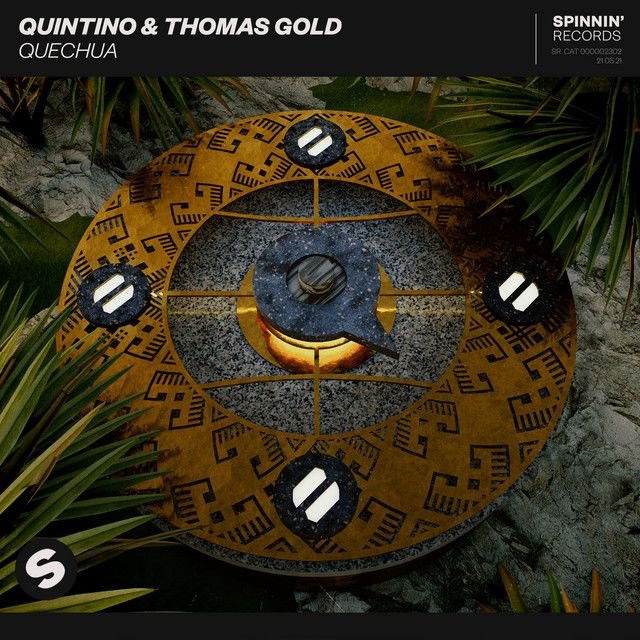
Why 'Quechua' Hits Like a Crowd Command
The meaning of Quechua Quintino, Thomas Gold is not hidden in a complex plot. It lives in the feeling the track creates: a huge festival release, a party call-to-arms, and a celebration of sound-system power.
"Quechua" - Quintino, Thomas Gold
Equal rights and justice for all
Big up yuhself now, selecta
Loading lyrics...
Unable to load lyrics
We're unable to display the lyrics at this time. Please try again later.
Originally released in 2013 by Dutch DJs Quintino and Thomas Gold, the track became known in EDM spaces for its explosive drop and vocal hook, with coverage from dance outlets like Beatport and festival-era playlists across big-room house culture. Even without a long narrative, the lyrics give the song a clear identity. They present music as something that gathers people, lifts the room, and turns the DJ into a kind of crowd leader.
The Core Idea Behind the Track
At its center, “Quechua” is about collective energy. The vocal keeps pushing the crowd toward movement, confidence, and release. When the singer says champion sound
, they frame the music itself as the winner of the night.
That matters because the song is less interested in personal emotion than shared momentum. The lyrics describe staying up until sunrise, drinking, smoking, dancing, and refusing negativity. In plain terms, the message is simple: good vibes belong here, and the bass is the force that makes them real.
Interpretation: The track treats the dancefloor as a temporary utopia. People may come from different places, but for a few minutes they are united by rhythm, volume, and motion.

Watch the official Quechua
music video
A Party Anthem Borrowing Dancehall Language
One reason the song feels so vivid is its use of Jamaican dancehall and sound-system phrasing. Terms like selecta
and crowd ah people
place the vocal in a tradition where the MC hypes the audience and the DJ controls the room. That gives “Quechua” a ritual feel.
Instead of telling listeners what to think, the voice tells them what to do: get ready, move, react. The line about equal rights and justice for all
stands out because it sounds larger and more serious than the rest of the party talk.
Interpretation: In this song, that phrase works more like a rallying cry than a detailed political statement. It widens the atmosphere. For a moment, the party is not just fun; it becomes a space of togetherness and inclusion.
How the Verses Build the Mood
The verses sketch a nightlife scene in broad strokes. They mention going hard until sunrise, drinks in hand, smoke in the air, and people dancing closely. That creates a familiar late-night picture, but the key point is not realism. It is intensity.
The song keeps returning to movement on the dancefloor. The repeated image of people winding and filling the place makes the room feel packed and alive. Another line pushes away bad attitudes, summed up by Only good vibes
. That phrase captures the emotional rule of the song.
Three lyrical moves that matter
- It crowns the sound as powerful and dominant.
- It fills the room with bodies, motion, and heat.
- It rejects negativity so the party can keep rising.
Together, those moves turn a few simple lines into a full club-world. The song does not need character development because the crowd is the character.
Why the Drop Is the Real Message
The biggest clue to the meaning of Quechua Quintino, Thomas Gold comes in the command Drop the bass
. That line is the track’s mission statement.
In many EDM hits, the drop is where emotion is released after tension builds. “Quechua” leans into that structure hard. The vocal hypes the room, then the production delivers a massive, physical payoff. The meaning is not just spoken; it is engineered.
We go hard
'til di sun come up
Those short lines sum up the song’s promise: endurance, excess, and communal release. The night is supposed to feel endless, and the bass is what carries everyone through it.
Production: Big-Room Force With a Street-Level Voice
Quintino and Thomas Gold were both strongly tied to festival-era big-room house in the early 2010s, a period documented by charts and DJ coverage at sources like DJ Mag and Tomorrowland. That context helps explain why “Quechua” sounds the way it does.
The production pairs a chant-like vocal with pounding drums and a giant lead synth. The contrast is important. The vocal feels rooted in dancehall MC tradition, while the instrumental is built for giant stages. That blend gives the song its identity.
Interpretation: The track turns local club language into global festival language. A voice that sounds like it belongs in a packed dancehall is dropped into an EDM structure meant for thousands of people. That tension makes the song memorable.
A Few Alternate Readings
There is a straightforward reading: this is simply a party record, built to move crowds and nothing more. The lyrics support that view.
But there is also a broader reading. The song’s repeated focus on unity, crowd response, and shared vibes suggests that music can create a brief social bond. Even the boastful language about the sound being unbeatable hints that the real hero is not the singer. It is the system, the DJ, and the collective experience.
The Lasting Takeaway
So, what is the meaning of Quechua Quintino, Thomas Gold? It is the feeling of surrendering to a crowd moment where bass, movement, and confidence take over. The lyrics are simple on purpose. They act like commands, not confessions.
That is why the song still works. It understands that sometimes a dance anthem does not need a deep story. Sometimes the meaning is the rush itself.
Disclaimer: This interpretation is based on the song’s lyrics, production style, and public artist context. As with any song, listeners may hear different meanings in it.








