Why 'Somebody's Watching Me' Still Feels So Real
The meaning of Somebody's Watching Me Rockwell starts with a fear almost everyone knows: the sense that privacy is slipping away. Rockwell turns that feeling into a pop thriller. The song is catchy, funny, and a little spooky, but under the hook is a simple idea: even ordinary life can feel unsafe when someone thinks they are being watched.
"Somebody's Watching Me" - Rockwell
Tell me, who's watching?
Who's watching me?
Loading lyrics...
Unable to load lyrics
We're unable to display the lyrics at this time. Please try again later.
Released as a single on December 27, 1983, and later featured on Rockwell's debut album Somebody's Watching Me, the track became his signature hit. It reached No. 2 on the Billboard Hot 100 and No. 1 on the US Hot Black Singles chart, showing how widely its theme connected with listeners. Factually, it was written by Kennedy "Rockwell" Gordy and produced by Curtis Anthony Nolen and Rockwell.
The Big Idea Behind the Hook
The song presents a narrator who says they are just living a normal life. They work, go home, and want peace. That is why the line about being an average man
matters. It sets up a person who should be invisible, not someone famous or powerful.
Then the chorus flips that plain image into panic. When the narrator says somebody's watching me
and complains of no privacy
, the song turns a private fear into a huge public anthem. The words are simple, which is why they stick.
Interpretation: The song is not only about literal surveillance. It is also about anxiety itself. Once fear takes over, every sound, shadow, and stranger can feel threatening.
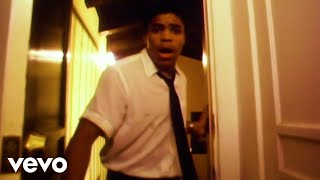
Watch the official Somebody's Watching Me
music video
Everyday Life Becomes a Horror Movie
One smart part of the writing is how Rockwell places fear inside normal routines. Going home at night, taking a shower, and hearing the phone ring should feel ordinary. Instead, each moment becomes suspicious.
The narrator locks the door, avoids calls, and even worries about being seen through the television. That idea sounds absurd, but that is the point. Paranoia rarely stays logical. It grows by connecting harmless things into one giant pattern.
The references to pop culture deepen that effect. The mention of the Twilight zone
suggests unreality, as if the narrator has stepped into a world where normal rules no longer work. The allusion to Psycho adds a shower-scare image that many listeners instantly recognize.
When I come home at night
I bolt the door real tight
Those two short lines capture the whole song. Home should be the safe place, but here it feels like a trap.
What the Chorus Really Means
The chorus works because it is both specific and open-ended. The narrator never fully proves anyone is watching. They keep asking questions instead of giving answers. That uncertainty matters.
Interpretation: The hook can be heard in two ways:
- someone may truly be spying on them
- their own mind may be creating the threat
That second reading gives the song its staying power. Listeners do not need to believe in a stalker to relate to it. They only need to know what it feels like to be uneasy for reasons they cannot fully explain.
The line about whether it is just a dream
also shows that the narrator does not trust their own perception. The song lives in that blurry space between reality and imagination.
Sound That Makes Paranoia Danceable
A big reason the song lasts is its production. It blends synth-funk, synth-pop, new wave, and R&B into something sleek and eerie. The beat keeps things moving, but the synthesizers create a cold, nervous mood.
Instead of sounding messy or wild, the track sounds controlled. That control makes the fear feel more believable. The narrator is not screaming through chaos. They are trapped inside a clean, mechanical groove that never really relaxes.
Michael Jackson's uncredited guest vocal on the chorus is also crucial. His bright, high delivery makes the hook feel immediate and ghostly at the same time. Jermaine and Randy Jackson also provided backing vocals, which helps give the chorus its layered, crowded sound.
Interpretation: That vocal layering mirrors the theme. The song sounds like one person singing, but also like voices pressing in from all sides.
Rockwell's Context Matters Too
Rockwell was Kennedy Gordy, the son of Motown founder Berry Gordy. But the song does not sound like a victory lap or a glamorous debut. It sounds alienated. That distance fits the lyrics well.
According to widely cited background on the song, Rockwell was estranged from his father during this period and was living with Ray Singleton, who helped oversee the project. That context does not prove the song is autobiographical, but it helps explain why its unease feels convincing rather than gimmicky.
The music video pushed the theme even further with horror images, including surveillance-style scenes and shower panic. That visual world helped make the song a long-running Halloween favorite, but it also reinforced the deeper idea: fear can turn ordinary life into a nightmare.
Why the Song Still Connects Now
Today, the meaning of Somebody's Watching Me Rockwell feels even more modern than it did in 1983. Listeners now live with cameras, data tracking, social media exposure, and constant digital contact. The song was exaggerated for effect, but its core fear has become easier to understand.
That is why the track still lands. It is fun enough for parties, but sharp enough to reflect a real cultural worry. The narrator wants the simplest thing in the world: to be left alone. They just cannot tell whether the threat is outside the house or already inside their head.
Final Take on Rockwell's Paranoia Anthem
Rockwell's hit is about more than being watched. It is about how fear changes perception. A normal life starts to feel staged, exposed, and unsafe.
That mix of humor, horror, and pop precision is what makes the song memorable. It gives listeners a paranoid story they can dance to, while quietly asking a bigger question: when people feel watched, how much of that fear is real, and how much is the mind filling in the blanks?
Disclaimer: This article offers an interpretation of the song based on its lyrics, production, and documented context. Meanings can vary from listener to listener.








