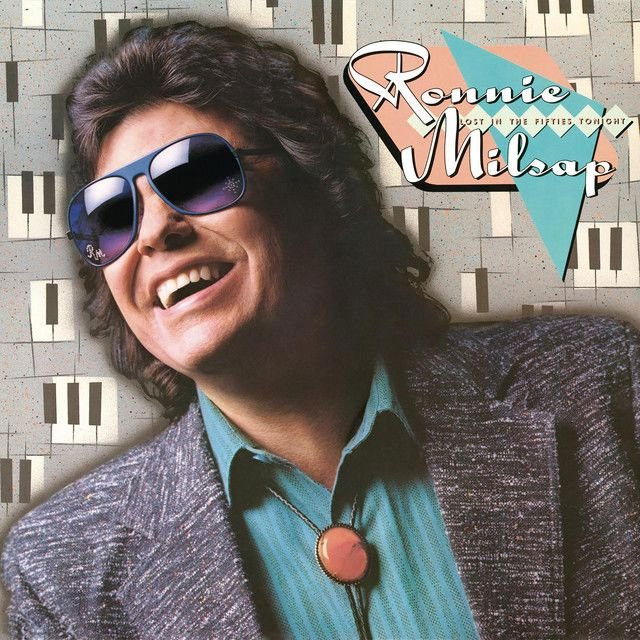
Why 'Lost In The Fifties Tonight' Still Glows
The meaning of Lost In The Fifties Tonight Ronnie Milsap comes down to a simple but powerful idea: love can feel timeless when music unlocks memory. Ronnie Milsap’s hit is not really about history class or exact dates. It is about a couple stepping into a private dream where an old song, a dark room, and shared memories make the past feel alive again.
"Lost In The Fifties Tonight" - Ronnie Milsap
Follow my heart
Call on the memories
Loading lyrics...
Unable to load lyrics
We're unable to display the lyrics at this time. Please try again later.
Milsap released the song in 1985, and it became one of his major country hits. It is widely credited to Mike Reid and Troy Seals, not Hoagy Carmichael and Jo Trent, and it is famous for weaving in the classic old-pop mood of In the Still of the Night
without turning into a straight cover. That matters because the song depends on cultural memory as much as personal memory.
A Love Song Built From Memory
At the center of the lyric, two people choose to reconnect by shutting out the present. The opening invitation, Close your eyes, baby
, is more than romantic stage-setting. It asks the listener and the partner to leave ordinary time behind.
From there, the song moves through touch, memory, and music. The pair do not just remember being young. They re-enter the emotional space of earlier love. When the lyric mentions call on the memories
, it frames memory like something active, almost magical, not passive reflection.
Interpretation: the song suggests that nostalgia is not escapism alone. It can also be a way to renew a bond that still exists in the present.
Watch the official Lost In The Fifties Tonight
music video
The Fifties as Feeling, Not Calendar
One smart thing about the song is that the “fifties” work more like a symbol than a strict setting. Most listeners hear that decade as shorthand for slow dancing, doo-wop harmonies, innocence, and candlelit romance. The title’s emotional force comes from that shared image.
So when the chorus lands on Lost in the fifties tonight
, it is really saying they are lost in a mood. They are wrapped in an older style of love, one that feels tender, safe, and clear.
This is why the song has lasted. It does not require the listener to have lived through the 1950s. It only asks them to understand the pull of a remembered golden age.
How the Story Moves in Small Steps
The lyric has a clean little arc:
- They create a private space in the dark.
- They invite memory to take over.
- Music reconnects them with a past feeling.
- They accept that the moment is temporary.
- They still choose to hold onto it while it lasts.
That fourth step is especially important. The line about precious hours
admits this mood cannot last forever. The song knows that memory fades and time moves on.
That honesty keeps it from becoming sugary. The romance feels stronger because it is temporary.
Why the Chorus Feels So Warm
The chorus is where memory becomes physical. Instead of abstract ideas, it gives touch, closeness, and certainty. The repeated feeling of so real, so right
tells listeners that the emotional truth matters more than whether the moment is literally happening in the present.
In other words, the song argues that love remembered can still be love experienced. That is a big part of the meaning of Lost In The Fifties Tonight Ronnie Milsap: memory is not just replay. It is renewal.
There is also a gentle tension in the famous phrase In the still of the night
. Nighttime often suggests privacy, longing, and vulnerability. Here it becomes the perfect setting for intimacy and emotional time travel.
Ronnie Milsap’s Voice Sells the Dream
Milsap was one of country music’s most versatile crossover stars, moving easily between country, pop, and adult contemporary styles. That background helps this song land. He sings it with tenderness instead of grand drama, which makes the nostalgia feel believable rather than forced.
The production also matters. The arrangement is smooth and polished, with soft drums, warm keys, and a slow-dance pulse. It nods to oldies without sounding like museum recreation. The result is a 1980s country-pop recording that carries the emotional perfume of an earlier era.
Interpretation: that blend of styles mirrors the lyric itself. The present and the past are layered together, just as the couple’s current embrace is layered with old memories.
A Short Bridge Between Old Pop and Country
One reason the track stands out is how naturally it links country storytelling to classic pop nostalgia. Milsap does not sing about heartbreak, betrayal, or rural struggle here. Instead, they deliver a mature romance built on memory, atmosphere, and devotion.
That makes the song feel adult in a quiet way. These are not teenagers dreaming of first love. They sound like people who know moments pass, yet still choose tenderness.
Final Meaning: Nostalgia as a Living Thing
In the end, the song is about more than looking back. It shows how music can briefly suspend time and let love feel whole again. The past is not dead in this lyric. It wakes up when two people listen, remember, and hold each other close.
That is why the song still resonates. Its nostalgia is not about costumes or trivia. It is about the human wish to make one perfect feeling last a little longer.
Disclaimer: This interpretation mixes widely known factual context with critical reading. Like any song, its meaning can shift from listener to listener.








