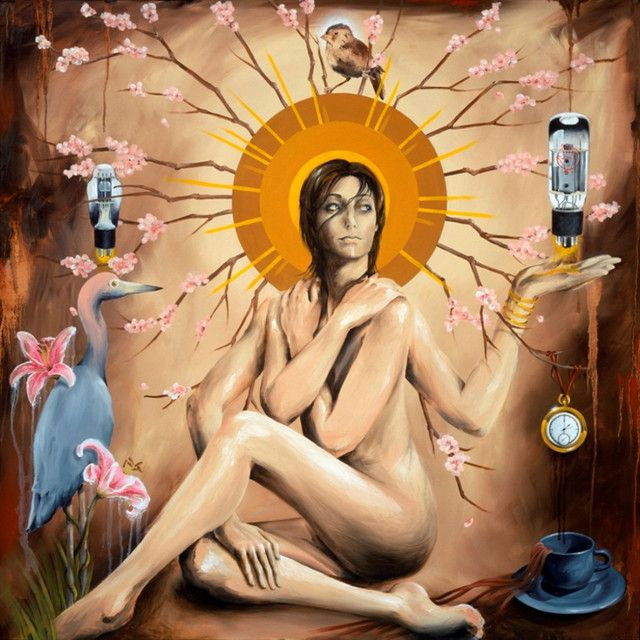
Rx Bandits Turn Speed Into a Warning
The meaning of One Million Miles an Hour, Fast Asleep Rx Bandits centers on a modern life that feels busy, connected, and informed while actually becoming numb, controlled, and spiritually drained. The song sounds urgent, but its main idea is strangely passive: people are rushing forward without really being awake.
"One Million Miles an Hour, Fast Asleep" - Rx Bandits
can't speak a sentence, we got the words placed
Stars keeping falling far from space, we're a million miles an hour, fast asleep
Loading lyrics...
Unable to load lyrics
We're unable to display the lyrics at this time. Please try again later.
That tension gives the track its force. Rx Bandits use images of screens, codes, time, and pressure to ask whether people still know what is real, what they love, and how they actually feel.
A Protest Song About Sleepwalking
At its core, the song is a critique of social conditioning. Early lines describe people repeating what authority tells them, as if language itself has been preloaded. When the band says people listen to everything the man says
, they point to obedience, not dialogue.
The title phrase is the key paradox. To be a million miles an hour
yet fast asleep
suggests a culture obsessed with motion, speed, and output, but detached from awareness. People are not frozen. They are active in the wrong way.
Interpretation: This makes the song less about one villain and more about a whole system. It attacks habits of consumption, digital dependence, and automatic living.

Watch the official One Million Miles an Hour, Fast Asleep
music video
The Chorus Turns Inward
The repeated question about being alone shifts the song from public criticism to private self-checking. Instead of only blaming media, power, or technology, the lyric asks what remains when distraction disappears.
That is why the chorus matters so much. It strips away noise and asks a basic emotional question: who are they when no screen, group, or routine is speaking for them?
How do you feelwhen you're alone?
This is the song’s moral center. The real danger is not just manipulation. It is losing the ability to name one’s own feelings.
Digital Molds and Manufactured Identity
The most striking verse images come from technology and standardization. The song describes bodies forced into digital molds
, then moves to numbers, codes, and faces turned into identifiers. The human person becomes a profile, a sequence, or a managed unit.
That image still feels sharp. Instead of presenting technology as neutral, the song shows it shaping behavior and even perception. A person does not simply use the system; the system teaches them how to exist inside it.
Another strong image places God between screens and plastic barriers. That line suggests spiritual life being flattened into surfaces and commodities. The result is a world where transcendence gets replaced by packaging.
Interpretation: The song is not arguing that every tool is evil. It is warning that when systems define identity, people may forget that identity was once lived, felt, and shared.
Time, Possession, and the Refusal to Be Measured
Late in the song, two character sketches deepen its message. A beggar has what he needs and does not want possession to rule him. An old woman stops trusting the clock and rejects the idea that numbers can capture lived moments.
These figures act like counterexamples to the main culture of speed. They may look powerless, but they hold a kind of freedom. They are less trapped by planning, ownership, and measured time.
The old woman’s insight is especially important. If moments cannot be reduced to ticking units, then modern life has confused measurement with meaning. The system sells efficiency, but not wisdom.
When the lyric warns that they are selling you time
, it pushes this idea further. Time becomes a product, and repeated stimulation keeps people too overwhelmed to resist.
Why the Sound Feels So Restless
Rx Bandits built their reputation on mixing punk energy, progressive structures, reggae rhythms, and post-hardcore tension, a style heard across their catalog and noted in coverage of the band’s evolution on AllMusic. That hybrid sound matters here.
The track’s momentum mirrors the title. Fast pacing and tightly wound instrumental motion create the feeling of acceleration, while the vocal phrasing carries urgency rather than comfort. Even without long lyrical detail, the arrangement tells the same story as the words: constant movement can feel like entrapment.
The song is credited here to Matthew Dean Embree and Steve Choi, both central creative voices in Rx Bandits. Their writing often pairs technical precision with emotional and political unease, which suits this track’s clash between control and inner life.
A Call to Recover the Real
One of the song’s most direct ideas arrives near the end, where the lyric says people must define what is real for themselves. That line does not sound soft or vague. It sounds like a challenge.
So the meaning of One Million Miles an Hour, Fast Asleep Rx Bandits is not only diagnostic. It is also corrective. The band suggests three ways out:
- question inherited language and authority
- resist identities built only by numbers and screens
- reconnect with feeling, presence, and self-definition
Final Reading: Motion Without Presence
The song’s lasting power comes from how current it still feels. Its images of coded identity, screen-shaped reality, and sold time fit the digital age almost too well. Yet the deepest issue is older than smartphones: people can move through life at full speed and still be absent from it.
Interpretation: Rx Bandits frame awakening as emotional, spiritual, and social all at once. To wake up means noticing what has been scripted, what has been commercialized, and what they truly feel when no one else is talking.
That is why the song remains compelling. It is both a warning siren and a mirror.
Disclaimer: This interpretation is based on the released lyrics, the band’s known style, and publicly available context. As with most songs, listeners may hear meanings that differ from this reading.








