Always by Saliva
The meaning of Always Saliva starts with a contradiction: this is not a love song in any healthy sense. It sounds like devotion on the surface, but the lyrics keep exposing a bond built on obsession, resentment, and emotional damage. Saliva turned that tension into one of their biggest hits, and the result still feels intense more than two decades later.
"Always" - Saliva
It's telling me all these things
That you would probably hide
Loading lyrics...
Unable to load lyrics
We're unable to display the lyrics at this time. Please try again later.
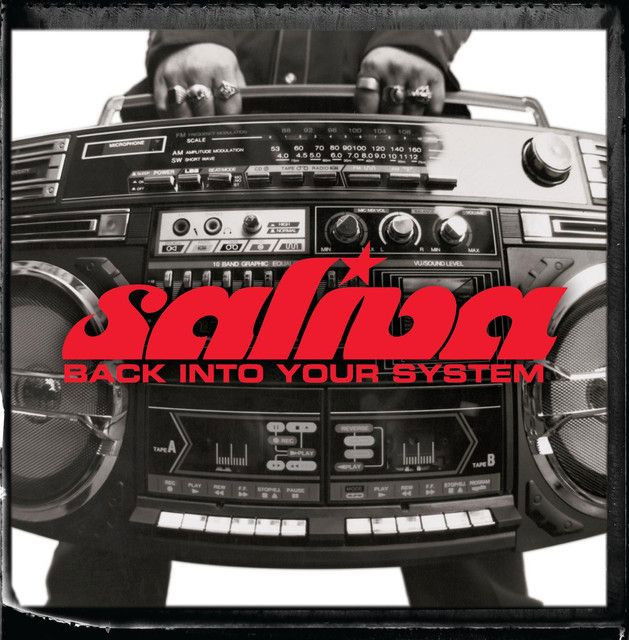
Released in 2002 as the lead single from Back into Your System, the track became Saliva’s only No. 1 on Billboard’s Modern Rock chart and one of the band’s best-known crossover songs. Factually, it was written by Josey Scott and Bob Marlette, and produced by Marlette. It is commonly tagged as post-grunge, nu metal, and alternative rock.
A Love Song That Sounds Like a Breakdown
At the center of the song is a speaker who cannot separate love from pain. They move back and forth between dependence and disgust, which gives the whole track its unstable pulse. Early on, the narrator questions whether they are truly needed or merely used, asking if they are the other person’s desire or the cause of their suffering.
That uncertainty matters. Instead of describing mutual affection, the song describes emotional imbalance. When the chorus circles around always
and then lands on can’t live without you
, it sounds less like romance than compulsion.
Interpretation: The title works almost ironically. “Always” usually suggests comfort, loyalty, and permanence. Here, it feels like being stuck in a cycle they know is hurting them.

Watch the official Always
music video
The Push-Pull at the Heart of the Lyrics
The clearest emotional summary comes in the line I love you, I hate you
. That short phrase captures the entire song’s conflict. The speaker does not simply miss someone; they are consumed by them.
The verses then widen that conflict. The narrator hears warning signs, suspects dishonesty, and starts imagining leaving. They talk about packing up, walking out, and being done with you
, but the repeated returns to longing make the exit feel shaky.
A Quick Narrative Timeline
- The speaker senses deception and asks painful questions.
- They confess total emotional dependence.
- They try to leave the relationship.
- Violent imagery enters, suggesting the damage has gone deeper.
- They end by trying to lift themselves up and finally break away.
That last move is important. Even in all the chaos, the song ends closer to survival than surrender.
When the Song Turns Darker
The reason many listeners remember “Always” so vividly is the way it escalates. In the final section, the lyrics introduce blood, a shaking weapon, and torn-apart emotions. Those details push the song beyond ordinary breakup drama.
The pistol's shakin' in my handsAnd all I hear is the sound
This is the article’s only multi-line lyric quote, and even here the meaning is clearer in paraphrase: the relationship has become so destructive that it is imagined through violence and panic. MTV reportedly asked for a censored video version that replaced “pistol” with “anger,” which shows how charged that moment was even at the time.
Interpretation: Some hear these lines as literal domestic violence imagery. Others hear them as the language of emotional collapse, where rage and grief become physical symbols. Either reading fits the song’s larger point: this is a relationship that has turned dangerous.
Why the Chorus Feels So Huge
Musically, “Always” is built to magnify obsession. The guitars are thick and polished, the drums hit with arena-rock force, and the quiet-loud shifts help the song mimic emotional swings. That was a hallmark of early-2000s hard rock, but Saliva use it here for storytelling rather than just aggression.
The melody in the chorus stretches the word always
into something almost pleading. Then the band crashes back in, making the feeling sound overwhelming instead of tender. Josey Scott’s vocal performance matters too: he sounds wounded, furious, and desperate, often all at once.
That is why the song connected so broadly. It was heavy enough for rock radio, but melodic enough to cross over. Its commercial run supports that: it hit No. 1 on Modern Rock, reached No. 2 on Mainstream Rock, and peaked at No. 51 on the Billboard Hot 100.
Artist Context Helps Explain the Song
Saliva built their early reputation on songs that mixed hard-riff energy with emotional melodrama. “Always” sits right between those two modes. It is more vulnerable than a pure rap-rock anthem, but still loaded with blunt force.
That balance helped it stand out on Back into Your System. The band had already broken through with heavier songs, yet “Always” proved they could channel radio-friendly hooks without losing intensity. It was even used as the theme song for WWE Survivor Series in 2002, which fits the track’s dramatic, high-stakes mood.
The Best Way to Read the Ending
The closing lines suggest the speaker finally tries to recover, symbolized by picking themselves up off the floor. That image shifts the meaning of Always one more time. What looked like permanent attachment starts to crack.
Interpretation: The song may not be saying love lasts forever. It may be saying trauma repeats until someone decides to stop it.
That reading helps explain why the song still resonates. The meaning of Always Saliva is not simple devotion. It is the sound of someone trapped in a toxic bond, wavering between need, rage, and escape, while the music makes every feeling hit at full volume.
Disclaimer: Song meaning is interpretive. This article separates factual background from interpretation, and listeners may reasonably hear different shades of the song’s story.