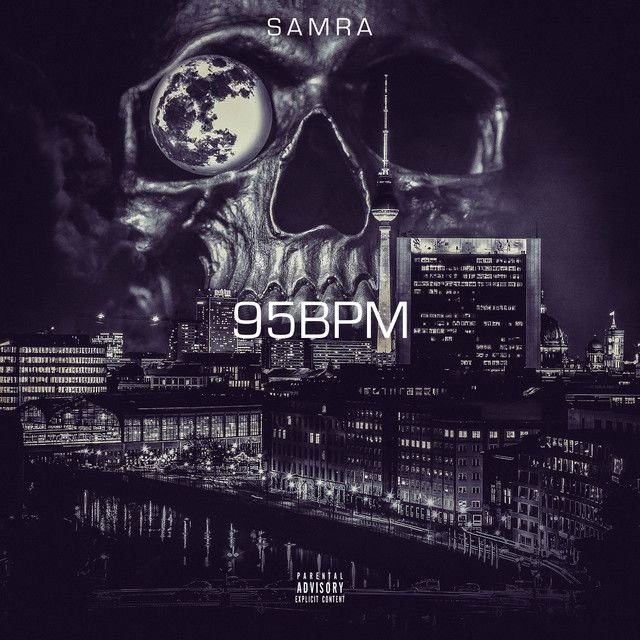
Why Samra's '95 BPM' Feels So Torn
The meaning of 95 BPM Samra comes from its tension: the song sounds like a threat, but it also reads like a confession. Samra piles up images of violence, drugs, money stress, faith, and paranoia until the track feels less like a victory lap and more like a nervous system under pressure.
"95 BPM" - Samra
Baller' Schrot, Gott ist groß und die Neuner ist verchromt
Munition im Lauf und auch, wenn sich unsre Wege trennen
Loading lyrics...
Unable to load lyrics
We're unable to display the lyrics at this time. Please try again later.
Factually, "95 BPM" is a Samra song from Jibrail und Iblis, released in 2020, and it later charted in Germany, Austria, and Switzerland. Samra, born Hussein Akkouche in Berlin, became one of the major voices in German rap through a run of high-charting singles and collaborations, especially in the late 2010s and early 2020s. Those career details help explain why this song matters: it sits at the point where street-rap posture and personal collapse meet. Source: Wikipedia.
A Pulse Built From Fear and Control
On the surface, the track is full of aggression. Samra describes a world of weapons, cocaine, enemies, and retaliation. But the song's deeper idea is not simple dominance. It is survival through hardening.
When he frames life around 95 bpm
, the title sounds technical, almost clinical. Interpretation: that number can be heard as more than tempo. It suggests a fixed pulse, a rhythm he forces himself to keep, even when everything around him is unstable.
That is why the song keeps moving between flexes and admissions. One moment there is luxury and status; the next there are scars, sleeplessness, and emotional damage. The persona is powerful, but never calm.
Watch the official 95 BPM
music video
The Voice Behind the Threats
Swagger Covers Up Fragility
A key part of the meaning of 95 BPM Samra is how often the speaker sounds divided. He presents himself as dangerous and untouchable, yet he also admits that the weight he carries is too heavy. That contrast matters.
Short phrases like Gott ist groß
and lost im Labyrinth
place faith next to confusion. He is not describing a clean moral world. He is describing someone who still reaches for God while living inside chaos.
This keeps the song from being just shock value. The violent lines are real to the song's mood, but they also work like armor. Interpretation: the harsher the pose becomes, the more they reveal how threatened the speaker feels.
Street Images, Private Damage
The verses move like flashes from a damaged life. There are references to rent money, drug dealing, luxury clothing, women, cars, childhood memory, and betrayal. Rather than tell one clean story, Samra gives a chain of scenes.
That fragmented structure fits the mental state in the song. He hears voices, cannot sleep, and talks about scars. He also looks backward to Mercator-Grundschule
, which suddenly brings childhood into a track otherwise built on adult danger.
Ich hab' Narben
kann nachts nicht mehr schlafen
Those two brief lines are among the clearest emotional clues in the song. After so much posturing, they expose the cost. The toughness is not free; it leaves physical and mental marks.
Faith, Fate, and Self-Protection
Religion is one of the strongest threads in the track. Samra invokes God more than once, and he also says he trusts his mother and believes in Allah. That matters because it gives the song a moral center, even if the narrator keeps failing to live cleanly inside it.
Interpretation: the repeated religious language does not erase the violence. Instead, it shows a person trying to place their life inside a larger order when daily reality feels lawless. In that sense, faith is not peace here. It is a survival tool.
The album title Jibrail und Iblis also sharpens this reading. Even without overexplaining the album, the contrast suggested by that title—angelic guidance versus demonic temptation—fits "95 BPM" perfectly. The song lives in that split.
Why the Production Matters
The writing credits provided for the song include Hussein Akkouche, Konstantin Scherer, Konstantinos Tzikas, Lukas Piano, and Vincent Stein. Musically, the beat's mid-tempo pace is important. At 95 BPM, the instrumental can carry menace without rushing.
That gives Samra room to sound both commanding and exhausted. The production feels heavy, nocturnal, and repetitive, which mirrors the lyrics' cycles of sin, stress, and self-assertion. It is not a frantic beat. It is a locked-in one.
This is why the title works so well. The rhythm feels like a heartbeat under strain: steady enough to function, uneasy enough to suggest danger.
More Than a Gangsta Rap Performance
Listeners can hear the song in two ways at once:
- as a classic street-rap display of power
- as a portrait of a man trapped by his own environment
- as a spiritual struggle between protection and self-destruction
All three readings have support in the lyrics. The song brags, threatens, and dazzles, but it keeps circling back to pain, memory, and divine judgment.
In the end, the meaning of 95 BPM Samra is not that violence makes the speaker strong. It is that they have learned to turn fear into rhythm. The beat becomes a routine, the routine becomes identity, and identity becomes a mask that only partly hides the hurt.
That is why the song lingers. It is brutal, but it is also wounded.
Disclaimer: This interpretation is based on the lyrics provided, public artist context, and musical analysis. Like many rap songs, "95 BPM" can support more than one reading.







