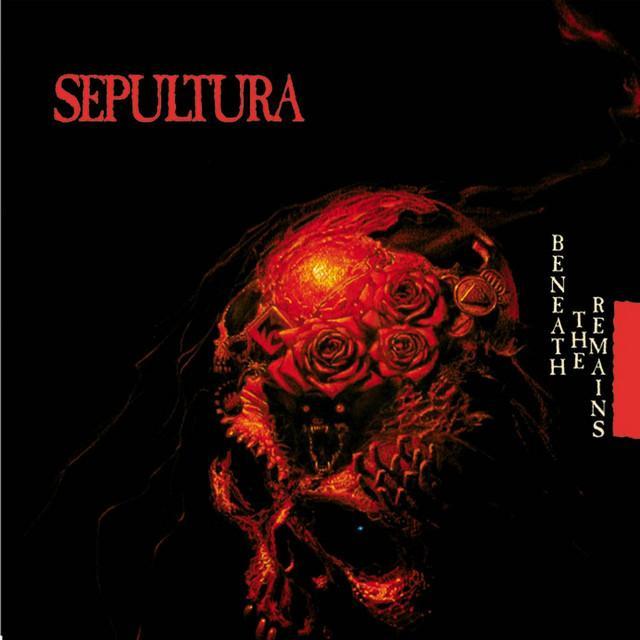
Beneath the Remains by Sepultura
The meaning of Beneath the Remains Sepultura starts with a simple but brutal idea: war does not stay abstract for long. Sepultura turn it into lived experience. Instead of speaking like generals or politicians, they place the listener inside the body and mind of someone caught in devastation, trying to understand what is left after bombs, orders, and ideology have done their work.
"Beneath the Remains" - Sepultura
Deep depression of the nuclear remains
I've never thought of, I've never thought about
Loading lyrics...
Unable to load lyrics
We're unable to display the lyrics at this time. Please try again later.
A War Song Without Glory
At its core, the song is an anti-war statement. The speaker is trapped in a conflict they did not choose, opening with the idea of being in a war not started by me
. That phrase matters because it removes any sense of control or honor. They are not marching toward destiny. They are surviving somebody else’s decision.
The lyrics quickly move from politics to consequences. There are references to nuclear fallout, ruined cities, minefields, and mutilated bodies. Sepultura do not romanticize combat. They show war as a system that crushes ordinary life until home and work become part of the battlefield.

Watch the official Beneath the Remains
music video
The Narrator Lives Inside the Ruins
A first-person witness
The song uses a first-person voice, but the effect feels collective. One survivor speaks, yet they stand in for many civilians and soldiers swallowed by catastrophe. When the song mentions cities in ruins
, it widens the view from one person’s fear to a whole society destroyed.
That is why the repeated questions hit so hard. The line Who has won?
is not really looking for an answer. It challenges the idea that anyone can truly win in a landscape of death. The song pairs that with loss, making victory sound empty from the start.
How the Lyrics Build Their Message
The verses follow a grim emotional timeline:
- A person is thrown into war without choice.
- Their world turns into destruction and disorientation.
- Fear becomes physical, with a sense of approaching death.
- The bigger question arrives: what was any of this for?
One of the sharpest images is Bodies packed on minefields
. It compresses war into a single horrifying picture. Not strategy, not patriotism, just human beings reduced to obstacles and casualties.
Another key phrase is Hope for the future
, which the song immediately undercuts. The lyrics suggest that hope has become almost unreal, a fantasy people talk about when the damage is already done. That bleak turn gives the song more than rage. It gives it despair.
What the Chorus Really Means
The title phrase Beneath the remains
works on two levels. Literally, it suggests bodies under rubble, dirt, and the leftovers of war. Interpretation: symbolically, it also points to people buried under failed systems, false promises, and historical violence.
The chorus keeps returning to the same terrible accounting: ruin, death, and the useless question of winners. That repetition mirrors trauma. Survivors often replay the same questions because nothing about the destruction makes sense.
Who has won?
Who has died?
Beneath the remains
Those lines are short, but they do a lot. They reduce war to its final truth: not ideals, but bodies and wreckage.
Why the Sound Feels Like Panic
The meaning of Beneath the Remains Sepultura is not only in the words. It is in the music’s pressure. The title track opens the 1989 album Beneath the Remains, a record widely viewed as Sepultura’s breakthrough and their first for Roadrunner, produced by Scott Burns with the band. Research on the album notes its sharper production, technical growth, and death-thrash intensity compared with earlier releases.
That context matters. The guitars race forward with tight, cutting riffs. Igor Cavalera’s drumming feels relentless, like machinery that cannot be stopped. Max Cavalera’s vocal delivery sounds strained and urgent rather than theatrical, which makes the song feel like testimony from inside disaster.
The cleaner production also helps the theme. Earlier extreme metal could sound murky, but this record’s more defined mix lets every attack land with force. The result is chaos you can clearly hear, which suits lyrics about devastation becoming horribly real.
Sepultura’s Moment and Why It Matters
Sepultura recorded the album in Rio de Janeiro in late 1988, and it was released in 1989. It marked an important leap from underground promise to international recognition in extreme metal. That is one reason the song still stands out: it captured a band becoming more precise without losing raw anger.
Interpretation: coming from Brazil during the late Cold War era also gives the song added weight. Even without naming a specific conflict, it reflects a global fear that ordinary people could be crushed by systems far bigger than themselves.
A Final Reading of the Song
The best way to read “Beneath the Remains” is as a song about what war does to human meaning. It destroys not just bodies and buildings, but also language like victory, duty, and future. By the end, fear has turned into numb clarity: if this is what winning looks like, then winning is worthless.
That is why the song remains so powerful. It is fast, violent, and aggressive, but its message is not celebration. It is warning.
Disclaimer: This interpretation is based on the lyrics, recorded performance, and known album context. As with most songs, listeners may hear meanings that differ from this reading.







