Why 'Cumbersome' Still Hits So Hard
The meaning of Cumbersome Seven Mary Three starts with a simple feeling: being too much for someone you love. But the song does not stop at breakup pain. It turns that pain into a bigger idea about shame, imbalance, and the fear of becoming hard to carry.
"Cumbersome" - Seven Mary Three
I guess the stones are coming too fast for her now
You know I'd like to believe this nervousness will pass
Loading lyrics...
Unable to load lyrics
We're unable to display the lyrics at this time. Please try again later.
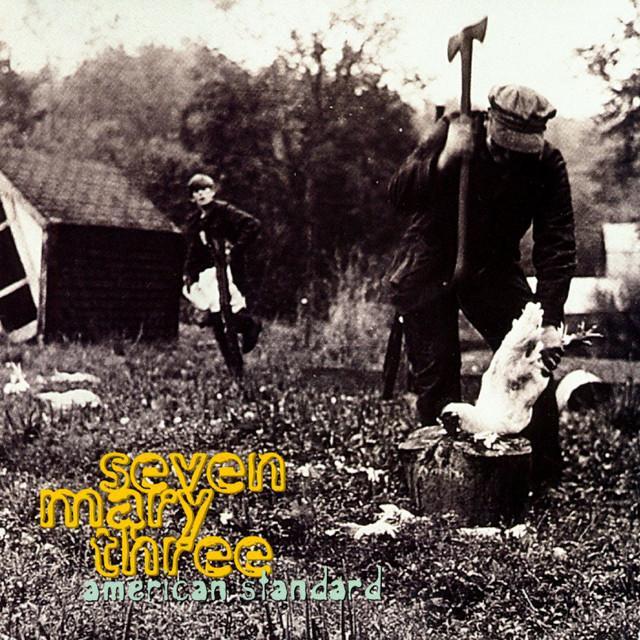
Released in 1995 as the breakthrough single from American Standard, after first appearing on the band’s 1994 indie release Churn, the track became Seven Mary Three’s best-known song and a major rock-radio hit. It reached No. 1 on Billboard’s Album Rock chart, according to widely cited chart summaries, and helped launch the band into the center of the post-grunge era.
A breakup song with a wider ache
On the surface, the song describes a relationship falling apart. The narrator looks back at old damage, tries to imagine repair, and realizes they may now feel like dead weight. That is the emotional force behind the refrain cumbersome
. They are not just sad; they feel unwanted.
Interpretation: What makes the song stronger than a standard breakup single is how that feeling spreads outward. When the narrator says they have become a burden to a partner and to the world, the personal crisis becomes existential. The breakup starts to feel like proof that something deeper is wrong.
Jason Pollock once described the band’s songs from American Standard as being about people dealing with life, feelings, and relationships. That broad frame fits this song well: it is intimate, but it also points to the daily work of trying—and failing—to stay connected.

Watch the official Cumbersome
music video
The opening lines build a battle
The first verse throws the listener into conflict with the strange image Goliath
and David mask
. The song presents a relationship where roles are unstable. One person may seem powerful, then suddenly defensive. The old Bible reference suggests combat, but also misreading: each side may see the other as giant, enemy, or fraud.
Then the song shifts into the image of stones coming fast and building a wall. Instead of healing, every attack becomes more distance. That is one of the key ideas in the lyrics: conflict does not just hurt in the moment. It creates structure. Resentment hardens into something permanent.
Bridges, walls, and the failure to repair
A later verse tries to imagine reconciliation. The narrator wants to fix what came before, almost to bring dead connections back to life. But the song undercuts that hope quickly. The image of bridges appears, then destruction follows.
This is one of the sharpest details in the song. Bridges usually symbolize reunion or understanding. Here, memory itself becomes dangerous. The other person remembers, but not in a healing way. They remember enough to burn what once linked them.
Interpretation: In that sense, the song is not only about love ending. It is about how the past can become unusable. Once trust is damaged, even shared history stops helping.
Why the chorus lands so hard
The hook works because it is plain. After the metaphor-heavy verses, the chorus strips everything down to a direct self-judgment. The narrator has become cumbersome to my girl
, and by extension cumbersome to life around them.
That bluntness matters. Many 1990s rock songs hid feeling under attitude. This one uses rugged guitars and a gravelly voice, but the core message is startlingly vulnerable. The singer is not posing as a victim or a hero. They sound embarrassed, aware, and stuck.
The song’s list of opposites
One of the most memorable sections stacks opposites: too heavy and too light, too wrong and too right, too rich and too poor. The point is not logic. The point is exhaustion. Nothing fits, no matter which side they land on.
That middle passage captures emotional dysregulation better than a neat explanation could. In a failing relationship, even basic traits can start to feel wrong. The self gets split by contradiction.
There is a balance between two worlds
One with an arrow and a cross
Those lines are often read as a reference to male and female symbols, an idea echoed in long-running fan interpretations. Interpretation: Whether or not that was meant literally, the lyric clearly points to a divide between two forces that should balance but do not. The narrator feels trapped between worlds that no longer meet cleanly.
How the sound carries the meaning
Musically, the song helps tell the story. It opens with steady strummed guitar, with muted movement between chord changes, creating tension before the chorus opens up. Research summaries also note the prominent bassline in the bridge, which adds weight right when the song turns inward.
That arrangement matters. The guitars are heavy enough to sound frustrated, but the tempo is controlled rather than chaotic. It feels like someone trying to keep composure while losing emotional ground. Jason Ross and Jason Pollock wrote the song and co-produced the better-known studio version with Tom Morris, whose work helped give it that radio-ready but still rough-edged 1990s sound.
Why it lasted beyond its era
Part of the reason the song endured is that it says something many people recognize but rarely say well: sometimes the deepest hurt in a relationship is not anger but the belief that they have become difficult to love. That idea ages well because it is not tied to slang, trend, or scene.
It also became a defining song for the band, for better and worse. Drummer Giti Khalsa later called it both a blessing and a curse because of how strongly it overshadowed the group’s later work. That tension adds another layer to the song’s legacy: even success can become its own burden.
The lasting meaning of Cumbersome
So, what is the meaning of Cumbersome Seven Mary Three? Most clearly, it is about a relationship breaking under the weight of unresolved hurt. More deeply, it is about the fear that they have become too difficult, too conflicted, or too damaged to hold onto someone—or even themselves.
That is why the song still lands. It turns private insecurity into a loud, memorable rock song without losing the human sting at its center.
Disclaimer: This interpretation is based on the lyrics, the recording, and publicly available artist context. As with many songs, listeners may hear meanings that differ from the writer’s original intent.








