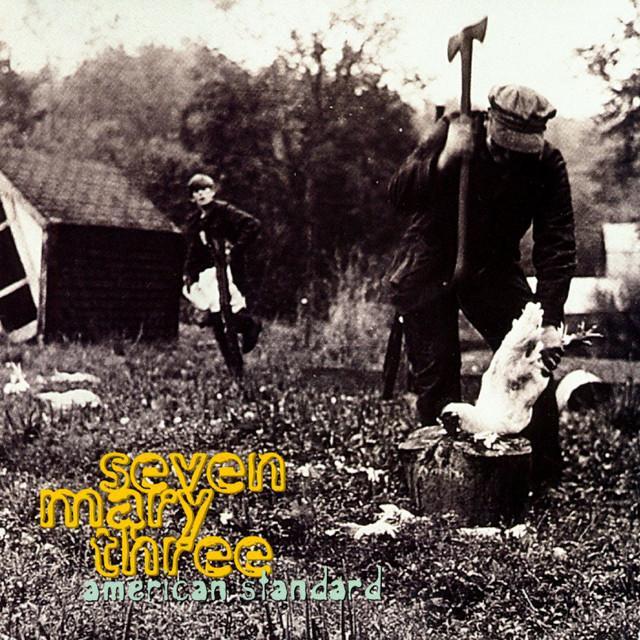
Water's Edge by Seven Mary Three
The meaning of Water's Edge Seven Mary Three starts with a brutal scene, but the song is really about something even darker: witnessing violence, staying silent, and living with that failure afterward. Rather than telling a mystery where listeners must guess what happened, the song makes the event painfully clear. A woman is killed near a creek, the narrator sees enough to know the truth, and fear keeps him from speaking.
"Water's Edge" - Seven Mary Three
"you can't stomach what you're going to see"
It's down there, by the water's edge
Loading lyrics...
Unable to load lyrics
We're unable to display the lyrics at this time. Please try again later.
That directness is one reason the track still hits hard. Released as a single from American Standard after first appearing on the band's indie debut Churn, it became one of Seven Mary Three's best-known songs and reached No. 7 on Billboard's Mainstream Rock chart. Its popularity makes sense: it combines a gripping story with moral panic, heavy guitars, and a confession that never finds relief.
A Murder Story Told by a Cowardly Witness
On the surface, the plot is simple. The singer is warned, don't go there
, because what waits by the creek is horrifying. He later admits he knows how the woman ended up there, and even says, I saw who did
. That turns the song away from detective fiction and into a study of complicity.
The key fact is not just that he saw something terrible. It is that he did nothing. Near the end, the confession becomes plain when he says, I didn't do anything
. That line is not about innocence. It is about shame.
Interpretation: the song's deepest wound is moral paralysis. The narrator is not the killer, but he cannot escape the feeling that his silence helped the crime stand.

Watch the official Water's Edge
music video
Why the Chorus Feels Like a Panic Attack
The chorus centers on the repeated warning about the creek. When he says water's edge
, it is not just a location. It becomes a mental boundary. He cannot return to the scene physically, and he cannot move past it emotionally.
The second half of the chorus matters even more. He fears the killers are still powerful and could strike again. In other words, silence is not only about guilt. It is also about intimidation. The witness believes the people responsible have protection, influence, and the ability to punish anyone who talks.
That idea appears again when he says the killers have friends in familiar places
. The phrase suggests local power networks, corrupt protection, or at least a shared culture of looking away. The crime is awful, but the social system around it may be just as frightening.
The Song's Most Chilling Theme: Silence as Survival
A lot of crime songs focus on the victim or the criminal. This one spends more time inside the mind of the witness. That choice changes everything.
Instead of asking, "Who did it?" the song asks, "Why didn't someone stop it?" The answer seems to be fear. The narrator knows enough to speak, but he also believes speaking could get him killed. That tension gives the lyrics their ugly realism.
this ain't no fucking game
and I'm feeling so ashamed
Those lines are the emotional peak. He is no longer describing the scene as if it happened to someone else. He breaks down and admits the personal cost of doing nothing. The profanity does important work here. It strips away any distance and makes the shame feel immediate and raw.
Sound and Structure Mirror the Story
Musically, "Water's Edge" follows a soft-loud pattern that many post-grunge songs used in the 1990s, but here it serves the narrative especially well. The verses feel restrained, almost watchful. Then the chorus opens up with heavier force, as if buried panic is crashing to the surface.
According to the song's release history, the version for American Standard was condensed from an earlier, longer cut. That tighter structure helps the story hit faster. There is very little wasted motion. Muted guitar work and small atmospheric touches in the quieter sections create a tense, creek-side unease, while the heavier chorus gives the narrator's fear a physical shape.
Jason Ross and Jason Pollock wrote the song, and Ross, Pollock, and Tom Morris produced it at Morrisound Recording in Tampa, according to Wikipedia's song entry. That production balance matters: the band keeps the arrangement dark and forceful without burying the words, so the confession remains the center of the track.
Possible Influences, Clear Meaning
Some accounts have linked the song to the 1986 film River's Edge, while others say Jason Ross drew from a book he read in college. Those origin stories are not fully settled, so they should be treated carefully.
Still, listeners do not need a confirmed source to understand the song's emotional core. Factually, the lyric tells of a dead woman, a witness, and killers protected by fear. Interpretation: beyond that plot, the song works as a broader statement about communities where everybody knows something is wrong, but no one wants to be the person who says it aloud.
That reading also helps explain why the track lasts. It is not only a grim story song from the post-grunge era. It taps into a common fear: that truth alone is not enough when power decides who gets to speak.
Why the Song Still Feels Unsettling
The meaning of Water's Edge Seven Mary Three lasts because the song refuses easy comfort. The narrator confesses, but confession does not equal courage. He is haunted, but haunting does not restore the victim or punish the guilty.
That unresolved ending is the point. The listener is left with a witness who knows the truth and still cannot fully act on it. The creek becomes a symbol of memory, guilt, and the place where conscience failed.
In that sense, "Water's Edge" is less about what was found by the water than about what dies in the person who walks away from violence.
Interpretation disclaimer: song meanings can be debated, and this reading separates established release facts from interpretive analysis of the lyrics and sound.







