
Why "6 AM" by Sfera Ebbasta Feels So Empty
The meaning of 6 AM Sfera Ebbasta comes into focus fast: this is not a victory lap. It is a dawn-after-the-party song about success that looks perfect from the outside and hollow from the inside.
"6 AM" - Sfera Ebbasta
Hotel cinque stelle, ma non è casa mia
La tipa che ho a fianco no, non è la mia tipa
Loading lyrics...
Unable to load lyrics
We're unable to display the lyrics at this time. Please try again later.
Sfera Ebbasta, born Gionata Boschetti, became one of Italy's biggest rap stars and is widely credited as a central figure in bringing trap into the Italian mainstream. He was also reported as the best-selling Italian artist of the 2010s and a record-holder for No. 1 songs in Italy, according to the research data provided from Wikipedia. That background matters here, because "6 AM" sounds like someone speaking from inside fame, not just dreaming about it.
A Dawn Scene With No Real Comfort
The song opens on a very clear image: it is early morning, the phone is buzzing, and they are in a luxury hotel that still does not feel like home. That contrast sets the whole track in motion.
When the lyric says "hotel cinque stelle"
, the point is not glamour by itself. It is that even a five-star room cannot replace belonging. The next emotional hit comes with "non è casa mia"
, which turns luxury into alienation.
Interpretation: the song is about what happens when material success arrives before emotional stability. They have the room, the attention, and the image, but not the peace that those things are supposed to bring.
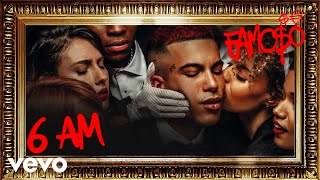
Watch the official 6 AM
music video
The Chorus Turns Time Into a Trap
The hook keeps returning to "sei di mattina"
, and that repeated hour matters. Six a.m. is not just a clock reading. It is the moment when distractions begin to fade and private thoughts get louder.
They stay awake, unable to settle, and look for temporary comfort. The song frames that insomnia as routine, not an exception. This is what makes the chorus sadder than it first appears: the problem is not one bad night, but a pattern.
In plain terms, the song suggests that success has not fixed the deeper issue. It has only changed the scenery around it.
Rain, Time, and the Limits of Money
One of the sharpest images in the song links weather to emotion. The idea that it is raining outside and also "inside" collapses the outer world into their mental state. The storm is both real and emotional.
Then comes one of the track's best lines in paraphrase: they once thought a Rolex could make time feel better, but it cannot. The message is simple and effective. Expensive objects can measure time, decorate time, and prove status, but they cannot heal regret.
That is the heart of the meaning of 6 AM Sfera Ebbasta. Money can change conditions, but not memory. Fame can widen opportunities, but not erase what was lost getting there.
Before the Fame, After the Dream
Midway through, the song looks backward. They remember rapping to a mirror and feeling like a star before celebrity was real. That memory does two things at once.
First, it proves the ambition was genuine. Second, it exposes the gap between fantasy and reality. Back then, fame looked like pure escape. Now, in the adult version of the dream, it comes with loneliness, suspicion, and emotional drift.
The song also criticizes younger people who want the visible rewards without the work behind them. That line fits Sfera's career arc. According to the supplied research, his rise came through years of uploads, mixtapes, collaborations, and a key creative partnership with producer Charlie Charles before mainstream breakthrough. The lyric pushes back against the idea that success appears overnight.
What Success Cost Them
The song gets more direct when it admits a core split: "mi sono perso"
. They are being followed, admired, maybe even copied, but they no longer feel fully connected to themselves.
That idea deepens when the lyrics contrast what people can see with what they cannot. Outsiders see clothes, watches, hotels, and fame. They do not see sacrificed relationships, old cold nights, and the personal damage left behind.
Another strong line says, in effect, that a new jacket cannot make them forget the cold. That image is perfect for the song's logic. New wealth covers the body, but not the past. It softens appearances, not memory.
Old Photos and a Better Kind of Rich
Near the end, the song becomes almost nostalgic. Looking at old photos with an ex, they remember having less money but feeling freer. That is not the same as saying poverty was better. It is saying that emotional closeness once made life feel full.
This is one of the song's most human turns. The track does not reject success outright. Instead, it questions the trade. If they once felt "vivevo da re"
with almost nothing, then "being rich" clearly means more than possessions.
How the Sound Carries the Message
Musically, the song fits Sfera Ebbasta's trap style, a genre blend reflected in the supplied artist research: trap, hip-hop, and pop rap. The production feels spacious, nocturnal, and heavy, which supports the lyrics well.
The beat leaves room for fatigue and reflection rather than constant aggression. That matters. A brighter instrumental might have made the status details feel celebratory. Here, the muted atmosphere makes them feel distant and cold.
Interpretation: the production turns the track into a post-party confession. The room is large, but emotionally empty.
Why the Song Still Lands
What makes "6 AM" memorable is its honesty about the aftertaste of achievement. It understands that envy usually stops at surfaces. Listeners may want the suite, the watch, or the fame, but the song asks whether they also want the insomnia, the blurred relationships, and the feeling of being lost inside their own success.
That is why the meaning of 6 AM Sfera Ebbasta goes beyond a typical flex track. It is a song about disillusionment, self-awareness, and the moment when night ends and truth becomes hard to avoid.
Final Take
In the end, "6 AM" presents fame as real but incomplete. It gives status and distance at the same time.
Disclaimer: This interpretation is based on the lyrics provided, artist context, and the song's mood. As with any piece of music, listeners may hear different meanings in the same lines.








