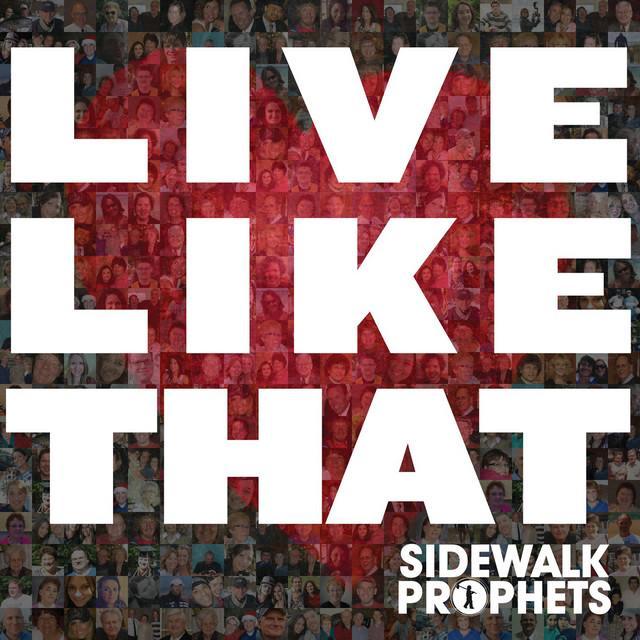
Live Like That by Sidewalk Prophets
A Faith Song About Evidence, Not Image
The meaning of Live Like That Sidewalk Prophets centers on a hard spiritual question: if faith is real, what does it look like in everyday life? Rather than celebrating feelings alone, the song asks whether a person’s actions leave visible proof of love, grace, and devotion.
"Live Like That" - Sidewalk Prophets
What will people say of me
When I'm only just a memory
Loading lyrics...
Unable to load lyrics
We're unable to display the lyrics at this time. Please try again later.
That makes the track less about private belief and more about public witness. The speaker wonders what other people will remember, whether they were kind to those in need, and whether their life pointed beyond themselves. In simple terms, the song is about wanting character to match confession.
Sidewalk Prophets, a Nashville-based contemporary Christian band, released “Live Like That” in 2012 as the title track from their Live Like That album. According to chart data summarized there, the single reached No. 2 on Christian Songs and Christian Airplay, and it later earned Gold certification. That success fits the song’s broad appeal: it turns a deeply Christian message into a question almost anyone can understand—does their life line up with what they say matters?
Watch the official Live Like That
music video
The Core Tension: Legacy Before Eternity
The opening thought is about memory. The singer imagines the day when they are gone and asks what people will say then. This is not just fear of being forgotten. It is a moral self-test.
The verses keep pressing that test through direct questions. They ask if love showed up when others did not, and whether worship was more than music. One key phrase, more than just a song
, reveals the track’s main concern: faith can sound sincere in church yet stay shallow in real life.
Interpretation: the song frames legacy in two ways at once. First, there is the human level—how people remember someone. Second, there is the spiritual level—whether a life reflected Christ. That double focus gives the song emotional weight. It is introspective, but it is also accountable.
Why the Chorus Hits So Hard
The chorus turns those questions into a pledge. Instead of staying stuck in self-doubt, the singer states a goal: live like that
and give it all I have
. The message is active, not abstract.
The song’s emotional center is the line about everything they say and do pointing to God. In paraphrase, the singer wants daily behavior to function like a signpost. The faith here is not hidden or performative. It is meant to be visible in conduct.
If love is who I am
then this is where I’ll stand
never holding back
This short section matters because it ties identity to action. Love is not treated as a mood. It is treated as a stance. Interpretation: that is why the chorus feels bigger than a personal resolution. It sounds like a mission statement.
Verse Questions That Build the Meaning
A strong feature of the songwriting is its repeated use of questions. The singer asks whether grace can truly change a heart and whether others can see that change. Those questions make the song humble. It does not assume spiritual maturity; it reaches for it.
Another crucial phrase is least of those
. In Christian language, that points to serving overlooked or vulnerable people, echoing Jesus’ teaching in Matthew 25. The song therefore measures faith not by status, talent, or image, but by compassion.
There is also a social angle. The singer wonders whether people who do not even know their name could still notice something different. That is important. The song is not asking for fame. It is asking for evidence.
How the Sound Supports the Message
“Live Like That” works because its production sounds sincere without being overly heavy. The arrangement sits in the modern Christian pop-rock lane: steady drums, clean guitars, bright piano textures, and a chorus designed to open up emotionally. Producer Ian Eskelin, who also worked on earlier Sidewalk Prophets material, helps the song move from reflection to declaration in a very accessible way, as noted in the band’s career overview.
The verses feel measured and conversational, which suits the self-examining lyrics. Then the chorus grows wider and more anthemic. That lift mirrors the song’s movement from doubt to commitment.
Dave Frey’s vocal style also matters. They do not sing these lines like a preacher delivering a verdict. They sing them like someone still wrestling with the standard. That keeps the song inviting rather than self-righteous.
Artist Context and Why It Connected
By 2012, Sidewalk Prophets had already built a strong audience in Christian music through songs that mixed direct faith language with relatable struggles. They had won the GMA Dove Award for New Artist of the Year in 2010, and “Live Like That” was later nominated for Song of the Year at the 2013 Dove Awards.
That context helps explain the reception. The band had a reputation for earnest, message-driven songs, and this one sharpened that identity. It does not rely on complex poetry or hidden symbols. Instead, it speaks plainly about discipleship, service, and change. For many listeners, that directness is the point.
A Clear Reading of the Song’s Meaning
So what is the meaning of Live Like That Sidewalk Prophets in one sentence? It is a prayer to live so faithfully and lovingly that other people can see God’s grace at work.
A second reading is also possible. Interpretation: beyond its Christian message, the song can be heard as a broader challenge about integrity. Are they becoming the person they claim to admire? Are their values visible under pressure? Those questions reach outside one genre.
In the end, the song’s power comes from its honesty. It admits the gap between belief and behavior, then refuses to make peace with that gap. Instead, it asks for a life marked by love, courage, and spiritual consistency.
Disclaimer: This interpretation blends lyric analysis with available artist and release context. As with any song, listeners may connect with it in different ways.








