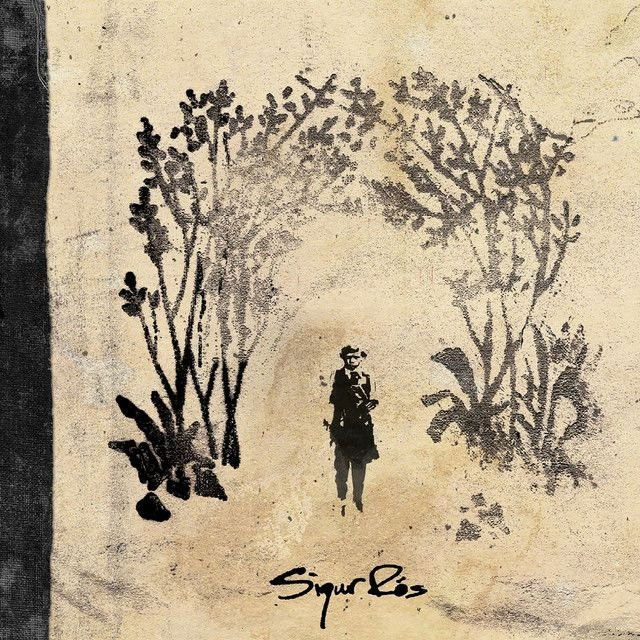
Glósóli by Sigur Rós
The meaning of Glósóli Sigur Rós often feels bigger than a simple plot summary. The song moves like a dream: someone wakes up, senses that the world has changed, goes searching, and finally arrives at a moment of radiant recognition. Even if listeners do not speak Icelandic, the emotion lands clearly.
"Glósóli" - Sigur Rós
Allt virðist vera breytt
Ég gægist út
Loading lyrics...
Unable to load lyrics
We're unable to display the lyrics at this time. Please try again later.
On the surface, the lyrics describe waking into strangeness and stepping out into an uncertain world. Under that surface, the song suggests a deeper passage from confusion to revelation. It is about being pulled forward by instinct, memory, hope, or love until something hidden finally appears.
A Dream Quest Hidden in Plain Sight
Early lines place the speaker in a half-awake state. They notice that everything seems altered, but they cannot fully understand what they are seeing. A phrase like Allt virðist vera breytt
signals that sudden shift. The world is familiar, yet not secure.
From there, the song becomes a search. The speaker gets ready, steps outside, and tries to navigate without clear vision. That matters because the lyrics are less about physical direction than emotional orientation. They are moving forward before they know exactly where they are going.
Interpretation: this makes the song feel like a coming-of-age journey, or a moment of spiritual awakening. The speaker is not only walking through streets. They are crossing from one state of being into another.

Watch the official Glósóli
music video
When the Missing Sun Becomes the Main Symbol
One of the key images is the question of the sun. The lyric asks, in effect, where light has gone and where the other person has gone too. A short phrase like Hvar er hún?
carries more than one meaning. It can refer to the literal sun, but it also sounds like a cry for warmth, clarity, or connection.
That is why the title matters. “Glósóli” is often understood as blending ideas of glow and sun, even if it remains poetic rather than strictly literal. The song keeps reaching toward a source of brightness that feels partly outside the self.
Og hér ert þú
Glósóli
This repeated arrival feels important because it turns absence into presence. After uncertainty, the speaker seems to find what they were seeking. Whether that “you” is a person, a vision, or a state of inner peace remains open.
How the Story Moves From Fear to Motion
The song’s emotional arc is simple but powerful:
- They wake into disorientation.
- They feel a lack of sight or understanding.
- They set out anyway.
- They are driven by stars, dreams, and instinct.
- They reach a final moment of recognition.
That movement is what gives the song its force. A phrase like legg upp í túr
shows action beginning. Another like nota stjörnurnar
suggests guidance from something distant and beautiful rather than practical.
This is one reason the meaning of Glósóli Sigur Rós connects so strongly with listeners. The song captures a universal feeling: people often move through life without perfect clarity, following small lights until the path opens.
The Sound Explains What the Words Only Suggest
Sigur Rós are known for turning atmosphere into narrative, and “Glósóli” is one of their best examples. The track appears on Takk... and is credited to Jón Þór Birgisson, Orri Páll Dýrason, Georg Hólm, Kjartan Sveinsson, and Philip Glass. That last credit hints at the band’s connection to repeating, slowly transforming musical patterns.
The arrangement begins softly, almost cautiously. The drums, piano, and bowed textures leave space around the voice, which makes the early uncertainty feel intimate. Then the song keeps building. Layer by layer, it gathers momentum until the ending bursts open in a near-martial crescendo.
That final explosion matters as much as any lyric. It sounds like breakthrough. What begins as private confusion becomes collective release. In Sigur Rós’s official video, that tension between innocence, danger, and transcendence becomes even more vivid.
Why the Language Still Feels Clear in Translation
Even translated, the lyrics resist a single fixed explanation. The speaker seems to address a “you,” but that “you” may not be only one person. It could be a loved one, childhood wonder, faith, the sun itself, or an inner spark that had gone dim.
Interpretation: one strong reading is that the song describes recovering hope after a period of numbness. Another is that it reflects the strange logic of dreams, where searching for someone becomes the same as searching for oneself.
A phrase like Sé ekki út
suggests not being able to see out clearly. That blindness can be literal in the scene, but it also works emotionally. The song does not hide that confusion. Instead, it treats uncertainty as the beginning of revelation.
Why “Glósóli” Endures
Part of the song’s power is that it never explains too much. It gives listeners images instead of instructions: waking, shoes, streets, stars, hair, heartbeat, sun. Those details are concrete enough to feel lived-in, but open enough to invite personal meaning.
For many fans, “Glósóli” stands out because it turns patience into payoff. The slow climb is not decorative. It mirrors the act of searching through doubt until something finally breaks through. That is why the ending feels earned rather than merely loud.
In the end, the meaning of Glósóli Sigur Rós is less about solving a riddle than entering a feeling. The song suggests that light may disappear, but the search for it can become its own kind of illumination.
Disclaimer: This interpretation is based on the lyrics, musical context, and known credits, but song meaning is ultimately open to listener experience.







