Why 'Die by the Sword' Feels So Ruthless
The meaning of Die by the Sword Slayer comes through fast: this is a song about power, cruelty, and the way violence comes back on the people who use it. Slayer does not tell a neat story with heroes and villains. Instead, they build a nightmare world where war, religion, and evil images all blur together.
"Die by the Sword" - Slayer
The helpless minds of you all
Die by my hand in pools of blood
Loading lyrics...
Unable to load lyrics
We're unable to display the lyrics at this time. Please try again later.
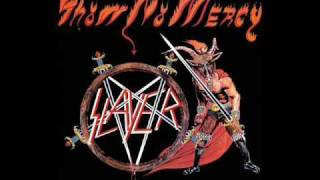
That approach fits where the song came from. "Die by the Sword" appears on Show No Mercy, Slayer’s 1983 debut, a record that helped define early thrash metal and became one of Metal Blade’s biggest early successes. It was released on December 3, 1983, and the song was one of the album cuts regularly played live. Jeff Hanneman wrote the track, while the album was self-produced by the band.
The Core Idea Behind the Chaos
At the center of the song is a simple warning: people who control others through fear will face the same fate. The title phrase, Die by the sword
, works like a curse and a law. It suggests that violence is not just an act; it is a cycle.
The opening lines describe domination over helpless minds
, then quickly move to bloodshed and collapse. In plain terms, the song shows rulers, killers, or dark forces crushing the weak. But it also hints that no one stays in control forever.
Interpretation: They seem less interested in one historical battle than in the pattern of tyranny itself. The lyrics present violence as contagious. Once it shapes a society, everyone becomes trapped inside it.
Watch the official Die by the Sword
music video
A Voice That Keeps Changing
One of the most interesting parts of the song is the shifting speaker. At times, the voice sounds like a conqueror threatening victims. At other moments, it sounds like a group begging for rescue from a broken world.
That is why lines about command sit next to lines like Hear our cry
. The song moves from menace to desperation without warning. This creates confusion on purpose.
Interpretation: They may be showing how violence destroys clear moral boundaries. In this world, the oppressor, the witness, and the victim all exist in the same storm. The changing voice makes the song feel less like a character sketch and more like a vision of total collapse.
War, Faith, and Corruption
A major part of the meaning of Die by the Sword Slayer is its attack on corrupted authority. The lyrics mention slaughtered children, abused women, and people acting in the name of holy words. Those details suggest that organized power can hide behind religion while doing terrible harm.
The phrase words of the Lord
is especially important. Slayer is not offering a careful theology lesson here. They are showing how sacred language can be twisted to excuse brutality.
This fits the band’s early image. Slayer’s first era used Satanic and anti-religious imagery to provoke listeners and build menace. Tom Araya later explained that the band wanted to create an image and scare people on purpose. That context matters: the song uses blasphemous and demonic symbols as part of its artistic attack, not as a simple statement of belief.
Why Satan Appears Everywhere
The song repeatedly points to infernal control, especially in the line Satan watches all of us
. That image turns evil into a constant observer. It is not hiding in the background; it is sitting above the action, almost amused.
Later, the world becomes even more unreal, with decaying flowers, black knights, and blood-fed evil. These are not realistic details. They are gothic symbols.
Interpretation: Satan here can be read in two ways:
- as a literal horror figure inside Slayer’s dark fantasy world
- as a symbol for human cruelty, especially when violence becomes routine
Either reading leads to the same result: the song imagines a place where moral order has failed.
How the Music Carries the Meaning
The production on Show No Mercy is rougher than the band’s later classics, and critics have often noted that. AllMusic described the album as more amateurish than later Slayer records, while still important to the band’s legacy. Even so, the raw sound helps this song.
The guitars rush forward with sharp, cutting riffs that match the title image of the sword. Dave Lombardo’s drumming drives the song with speed and force, even though he later criticized how the debut album’s drums were recorded. That imperfect recording gives the track a scrappy, dangerous feel.
Tom Araya’s vocal style is also key. He does not sing with sorrow or reflection. He attacks the lines. That delivery makes the chorus feel like a punishment being handed down, not a lesson calmly explained.
Slayer’s Early Context Matters
This song landed at a time when Slayer were still building their identity out of speed metal, NWOBHM influence, and shock value. Show No Mercy has often been described as a bridge between traditional metal and more extreme forms to come. Later musicians even pointed to the album as an influence on black and death metal.
That matters because "Die by the Sword" shows Slayer learning how to turn speed into atmosphere. The song is not only fast. It is theatrical. Its horror images, moral collapse, and repeated title all helped shape the band’s early signature.
The Lasting Meaning of the Song
So, what is the meaning of Die by the Sword Slayer? Most clearly, it is about the boomerang effect of violence: those who rule through force are consumed by force. Around that idea, Slayer layers images of war, false righteousness, and demonic control.
The result is not subtle, but it is effective. The song feels ruthless because it presents a world where power has no conscience and no stable center. Everything points toward punishment, decay, and fear.
That is why the track still stands out on Slayer’s debut. It turns a blunt phrase into a whole worldview.
Disclaimer: This interpretation is based on the lyrics, musical context, and publicly available artist commentary. As with many metal songs, some meanings remain open to listener interpretation.








