How Slayer Turned Fear Into Theater
The meaning of Show No Mercy Slayer starts with a simple idea: this is a horror song told from the side of the monster. Rather than asking listeners to admire the speaker, Slayer make them feel hunted by one. The lyrics stage a night raid led by demonic forces, and the song’s whole point is intimidation.
"Show No Mercy" - Slayer
Lords at night we ride
From the depths of Hell's domain
Loading lyrics...
Unable to load lyrics
We're unable to display the lyrics at this time. Please try again later.
That matters because Slayer’s debut album Show No Mercy arrived in 1983, at a time when the band were building an extreme image through speed, Satanic imagery, and shock value. The album was released by Metal Blade on December 3, 1983, and was recorded in Los Angeles that same year. It was also self-financed in part by Tom Araya and Kerry King’s family support, which shows how early and hungry this band still were. Factual background on the album, credits, and release history is widely documented by major reference sources such as Wikipedia’s summary of the record.
The Song’s Core Idea Is Ruthless Power
At its heart, the track is about domination without pity. The title is not subtle, and neither are the lyrics. They describe a force that rises at night, attacks the weak, and serves evil with total loyalty.
When the song uses phrases like through the night
and reborn to reign
, it paints a dark army emerging from below, almost like a nightmare made real. The speaker is not conflicted or tragic. They are proud of violence, and that confidence is the point.
Interpretation: The song works like a horror-film monologue. It is less about real belief than about entering the voice of something cruel and supernatural. That reading fits Slayer’s early image-making, especially because Tom Araya later said the band used Satanic themes to create an image and scare people on purpose.
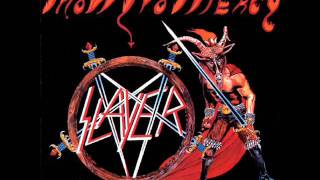
Watch the official Show No Mercy
music video
A Villain’s Voice Drives the Whole Track
One reason the song hits hard is its point of view. The narrator keeps speaking as if they are already close, already in control, and already beyond human morality. In the chorus, the line stalking the night
turns the song into a chase scene.
The lyrics keep shifting between “we” and “I,” which helps the song feel larger than one killer. Sometimes it sounds like a legion of demonic fighters. Other times it becomes one predator speaking directly to a victim. That switch makes the threat feel both personal and unstoppable.
How the Story Moves
The song unfolds in a clear sequence:
- A demonic force rises at night.
- It declares loyalty to Satan and war.
- It stalks victims who do not see danger coming.
- The speaker closes in and claims total power.
- The ending becomes graphic, with body and soul both conquered.
That structure is simple, but it is effective. The opening builds atmosphere, the chorus delivers pursuit, and the final verse turns fear into bodily destruction.
The Chorus Explains the Title
The key line is the phrase show all no mercy
. Everything in the verses points toward that principle. The speaker does not threaten for revenge or justice. They threaten because mercy itself is rejected.
Interpretation: This is why the song feels colder than ordinary heavy metal violence. There is no emotional backstory, only appetite and command. The title becomes a mission statement for the narrator and, on a larger level, for Slayer’s early artistic identity.
Night, Hell, and War: The Main Symbols
The imagery is direct but purposeful. Night stands for hidden danger. Hell stands for rebellion against moral order. War imagery turns evil into an organized campaign rather than random chaos.
The phrase gates of Hell
gives the song a mythic scale. It makes the speaker sound like part of an army crossing from another realm. Later, references to souls, prayer, and divine weakness frame the conflict as spiritual warfare, not just physical murder.
Interpretation: The song’s Satanic language is best read as theatrical symbolism. It takes familiar religious ideas—hell, Satan, the soul, judgment—and flips them to make the villain sound triumphant. That inversion was central to Slayer’s early appeal.
Why the Music Makes the Lyrics Stronger
Even without reading a single line, the music tells listeners this world is hostile. Show No Mercy the album is usually described as thrash metal and speed metal, with strong influence from Venom, Iron Maiden, Judas Priest, and Mercyful Fate. Kerry King even joked that the album sounded like Iron Maiden here and there
.
That mix matters for this song. The fast riffing gives the feeling of pursuit. The drumming pushes forward like a charge. The guitars feel sharp and lean instead of warm, which matches the lyrics’ lack of compassion.
The production is rough compared with later Slayer records, and drummer Dave Lombardo later criticized parts of the drum sound. Still, that rawness helps the song. It feels less polished and more dangerous, like a band trying to hit as hard and fast as possible.
Context Changes the Meaning
The meaning of Show No Mercy Slayer also becomes clearer when they place it in 1983. This was Slayer’s debut album, and it became Metal Blade’s highest-selling release at the time, reportedly moving well beyond the label’s usual numbers in the United States and overseas. Reviews were sharply split, with some critics dismissing it and others calling it one of the heaviest records around.
That polarized reaction fits the song perfectly. It was built to provoke. Slayer were not asking for approval; they were testing how far they could push speed, menace, and taboo imagery.
Final Take on the Song’s Message
So what is “Show No Mercy” about? It is about fear performed at full volume. The song creates a demonic narrator who attacks body and soul, then backs that image with fast, punishing metal.
Interpretation: More than a literal Satanic statement, the track is an early Slayer blueprint for shock theater. It uses evil as a dramatic costume to express power, panic, and rebellion.
That is why the song still matters. It captures a young band discovering how to turn extreme imagery into identity.
Disclaimer: This interpretation is based on the song’s lyrics, album context, and documented comments from band members. As with all art, listeners may hear different meanings in it.







