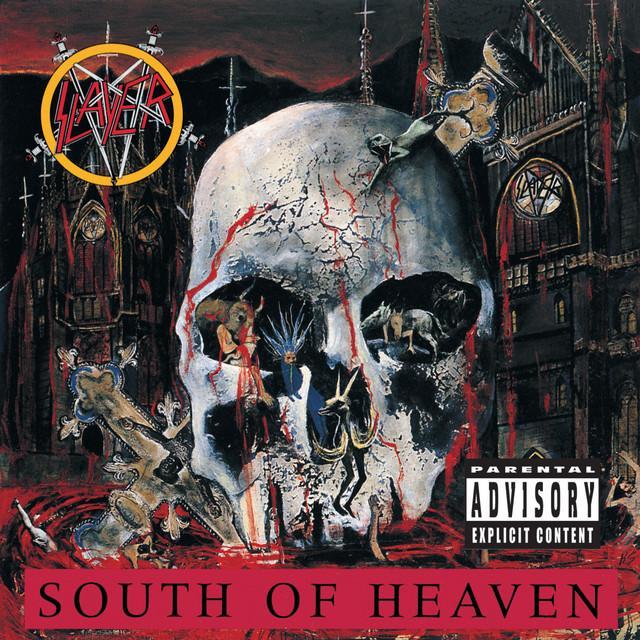
Why Slayer’s “South of Heaven” Still Feels Cursed
Slayer’s title track from South of Heaven does not just aim for shock. The meaning of South Of Heaven Slayer is closer to a portrait of a world rotting from the inside. It imagines moral collapse, failed faith, and constant violence, then wraps those ideas in one of the band’s heaviest slow-burn grooves.
"South Of Heaven" - Slayer
Unsuspecting victims no warnings, no signs.
Judgment day the second coming arrives.
Loading lyrics...
Unable to load lyrics
We're unable to display the lyrics at this time. Please try again later.
Factually, the song opens the band’s 1988 album South of Heaven, released by Def Jam and produced by Rick Rubin with Slayer, as summarized by Wikipedia’s album overview. That album was a major pivot after Reign in Blood: slower tempos, some cleaner guitar textures, and more space in the arrangements. That shift matters because the song’s meaning lands through dread, not speed.
A Hellscape Built on Human Failure
At its core, the song describes a society in collapse. The opening image, unforeseen future
, points to disaster arriving before people are ready. From there, the lyrics move through judgment, corrupted desire, distrust, and broken sanity. The effect is not a neat storyline. It is more like a chain of warnings.
Interpretation: the song suggests that evil is not only supernatural. It is social and human. Phrases about hatred, lust, and domination imply that people help create the nightmare they fear. Even when the song uses religious language, it keeps returning to earthly behavior: cruelty, exploitation, and blind conformity.
That is why the title phrase matters so much. south of heaven
sounds like a place below grace, below order, and below hope. It is less a map location than a condition of being.

Watch the official South Of Heaven
music video
How the Verses Turn Fear Into a Worldview
The verses keep widening the frame. They begin with apocalypse, but they do not stay there. Soon the song is naming social decay, warped family structures, and a culture trapped in suspicion. When Slayer repeats age of distrust
, they turn private fear into a whole era.
This is one reason the song lasts in listeners’ minds. It does not only say the end is coming. It says the end is already showing in how people live.
On and on, south of heaven
On and on, south of heaven
That brief refrain acts like a verdict. The idea is cyclical and relentless: the fall keeps continuing. The song does not offer rescue or release, only motion deeper into corruption.
Religious Imagery Without Easy Answers
Slayer built much of their reputation on extreme imagery, and this song is one of their clearest examples. It mentions judgment, damnation, and a ruling power that feels cold and oppressive. But the writing is not simple preaching in reverse.
Interpretation: one reading is that the song attacks hypocrisy in organized belief. The line about a domineering deity
can be heard as a critique of power used to control people through fear. Another reading is broader: the song may be showing what happens when spiritual language gets emptied of compassion and turned into force.
Either way, the lyrics stay focused on a broken moral order. The most direct summary may be root of all evil
, which shifts blame back toward the human heart. The song’s darkness works because it is not only about monsters. It is about people becoming monstrous.
Why the Music Makes the Meaning Heavier
The meaning of South Of Heaven Slayer comes through the sound as much as the words. According to background collected in the album’s Wikipedia entry, Slayer deliberately slowed down after Reign in Blood because they felt they could not simply top that album’s intensity. Jeff Hanneman said they “had to slow down,” while Kerry King said they wanted to keep people guessing.
That decision gave the title track its famous crawl. The riff does not rush; it stalks. Tom Araya’s voice is more measured than on earlier material, which makes the threats feel colder and more controlled. Rick Rubin’s production also leaves room for weight and impact, and critics like PopMatters noted how forward Dave Lombardo’s drumming sits in the mix, adding punch and ceremony.
Instead of chaos by speed, Slayer create chaos by pressure. Every pause feels ominous. Every return of the riff feels inevitable.
Context Inside Slayer’s Career
The song also means more because of where it arrived. South of Heaven was Slayer’s fourth studio album, released on July 5, 1988, and it reached No. 57 on the Billboard 200. Initial reviews were mixed, but the album later gained a reputation as an underrated metal classic, even landing in Decibel’s Hall of Fame and Rolling Stone’s 2017 list of top metal albums, as summarized in the same source.
That history matters. Fans expecting Reign in Blood Part Two heard restraint instead. Over time, many came to see that restraint as the point. The title track became a live staple because its slower, grooving menace hits differently from the band’s faster assaults.
Final Take on the Song’s Meaning
So what is the meaning of South Of Heaven Slayer? The song imagines humanity living beneath its ideals—morally ruined, spiritually hollow, and trapped in violence that feeds on itself. Its apocalypse is not just future tense. It is a diagnosis of the present.
Interpretation: the title track endures because it turns abstract evil into atmosphere. They make dread feel physical, then use that feeling to ask what kind of world people are building.
That interpretation is one informed reading, not a definitive statement from the band. Songs like this stay powerful because they leave room for listeners to decide whether the real terror is divine judgment, human corruption, or both.







