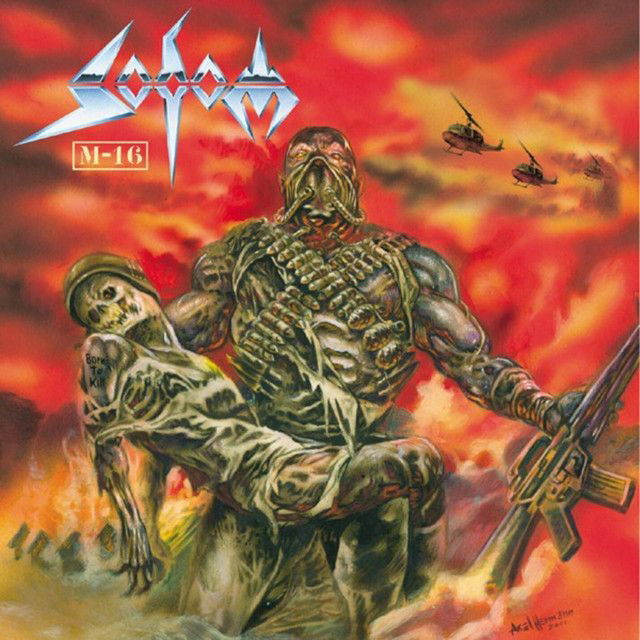
M-16 by Sodom
A war song with no comfort
The meaning of M-16 Sodom starts with its setting: this track comes from M-16, Sodom’s 10th studio album, released in 2001, a concept album centered on the Vietnam War. The record was produced by Harris Johns and recorded at Spiderhouse Studios, according to widely cited album credits and reference listings (Wikipedia, M-16 album page).
"M-16" - Sodom
Just rolling thunder we found
Pregnant with the tears of shame
Loading lyrics...
Unable to load lyrics
We're unable to display the lyrics at this time. Please try again later.
That context matters. This is not just a song about a gun. It is a song about what war does to the mind, the body, and the moral sense. The title points to a weapon, but the lyrics focus on the people holding it and the damage left behind.
Watch the official M-16
music video
What the song is really saying
At its core, “M-16” presents combat as a system that strips away empathy. Early lines describe feelings of shame and pain being buried rather than released. The song does not dwell on heroism. Instead, it moves quickly into repeated violence, where the speaker’s world has narrowed to orders, targets, and survival.
A key phrase is free fire zone
. In plain terms, that image suggests a place where restraint has collapsed. It turns a battlefield into a moral vacuum. Another phrase, vendetta burns inside
, adds something personal: war is not only organized violence, but also emotional corruption.
Interpretation: The song suggests that once revenge and ideology take over, mercy becomes almost impossible. That idea is summed up by mercy chilled
, which frames compassion as something frozen solid.
The voice inside the battlefield
The lyrics use a first-person plural perspective in the recurring refrain, especially with we shoot ’em down
. That choice is important. It does not sound like one reflective narrator standing outside events. It sounds like a group identity formed by war itself.
This collective voice makes the song more disturbing. The repetition feels less like storytelling and more like conditioning. Each return of the line makes the killing sound automatic, almost industrial. The result is one of the song’s strongest effects: violence is not shown as dramatic or noble, but as repetitive and numbing.
Images of dehumanization and control
Several details sharpen the song’s critique. The phrase eyes unseen
implies distant authority, hidden decision-makers, or commanders who do not face the same human cost. That creates a split between those who order war and those trapped inside it.
The reference to blind religion
expands the target beyond combat alone. It suggests ideology, dogma, and belief systems that cloud judgment. In other words, the song is not only about bullets and rifles. It is also about the ideas that make violence seem righteous.
There is also a bodily focus in the lyrics. The mention of ammunition and penetration makes death feel clinical and mechanical. People are reduced to targets and impacts. This language supports the wider theme that war erases individuality.
How the chorus changes the meaning
The chorus is simple, but that simplicity is the point. By returning again and again to the weapon and the act of shooting, the song compresses war into a brutal loop.
Free fire zone with my m-16
Vendetta burns inside
Mercy chilled to the freezing point
Paraphrased, the hook links space, weapon, emotion, and moral collapse. The battlefield becomes lawless, the rifle becomes an extension of the self, revenge becomes fuel, and compassion dies off. That is why the chorus feels so bleak.
Why the sound matters so much
Sodom are a German thrash metal band, and the album is usually classified as thrash metal. That genre matters to the song’s meaning. Thrash relies on speed, sharp riffing, pounding drums, and aggressive vocals. Those traits fit “M-16” perfectly because the music mirrors the emotional state in the lyrics.
The guitars hit with a rigid, martial force. The drums push forward like constant incoming fire. Tom Angelripper’s vocal style is rough and clipped, which helps the words land as commands and eruptions rather than reflection. Produced by Harris Johns, the album’s sound is heavy but clear enough to keep the attack direct instead of muddy (album credits as listed on the M-16 album page).
Interpretation: The arrangement makes listeners feel trapped in momentum. There is very little room to breathe, which matches the song’s vision of war as relentless pressure.
The Vietnam War frame behind the song
Because M-16 is a Vietnam War concept album, the song’s language carries extra weight. Terms like “free fire zone” evoke the historical reality of military doctrine and the way war can turn geography into permission for destruction. Even without naming specific events, the song taps into the fear, confusion, and moral damage associated with that conflict.
The album itself was well received in metal circles, with strong scores from outlets such as Rock Hard and Brave Words & Bloody Knuckles, which suggests that listeners heard it as one of Sodom’s sharper, more focused late-career statements (reception data summarized on the album reference page).
Final takeaway on the meaning of M-16 Sodom
The meaning of M-16 Sodom is not hidden. It is a harsh portrait of war turning people into instruments of violence. The rifle in the title is both a real object and a symbol of emotional shutdown, obedience, and revenge.
What gives the song its power is the way lyrics and music work together. The words show mercy freezing over; the sound makes that freeze feel violent and immediate. Interpretation: Rather than glorifying combat, “M-16” presents war as a machine that damages everyone inside it.
Disclaimer: This interpretation is based on the song’s lyrics, album context, and musical presentation. As with most metal songs, listeners may hear different shades of meaning depending on what details stand out to them.







