Lovers In The Parking Lot by Solange
The meaning of Lovers In The Parking Lot Solange comes down to a painful realization: they hurt someone while chasing freedom, excitement, and control, and only understand the cost after the relationship slips away. It is not a breakup song about being wronged. It is a breakup song about admitting fault.
"Lovers In The Parking Lot" - Solange
The young just live and don't look back or wait for anyone
And maybe you loved me but I just up and wanted to run
Loading lyrics...
Unable to load lyrics
We're unable to display the lyrics at this time. Please try again later.
That honesty is what gives the track its sting. Instead of painting the speaker as a victim, Solange frames them as someone who treated love casually, then had to sit with the consequences. The song turns flirtation, indecision, and emotional distance into a confession.
A breakup song told from the guilty side
At the center of the song is a narrator who knows they were reckless. Early lines describe youth as impulsive and fast-moving, with little patience for commitment. When the song says not done having my fun
, it captures the reason the relationship failed: they wanted freedom more than stability.
That idea matters because it shifts the song away from simple heartbreak. The pain here comes from self-recognition. They are not just lonely; they know they helped create that loneliness.
Pitchfork's track review noted that the song flips the emotional angle of “Losing You.” In that earlier song, Solange sounded resigned after being hurt. Here, she stands on the other side, admitting she did the hurting.
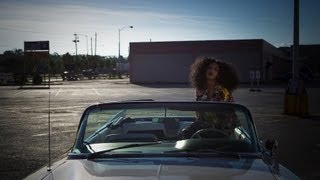
Watch the official Lovers In The Parking Lot
music video
Why the parking lot matters
The setting is small but vivid. A parking lot is public and private at once. It is a place of movement, waiting, quick decisions, and temporary meetings. That makes it a strong symbol for a relationship built on heat rather than depth.
When the song mentions lovers in the front line
, it suggests chaotic romance, almost like desire has become a scene or a pattern. Interpretation: the parking lot may represent emotional transience, a place where people pass through instead of truly staying.
It also fits the song's emotional messiness. Cars come and go. People hesitate, circle, stop, then leave. That mirrors the relationship, which the lyrics describe as constant back-and-forth.
The chorus turns regret into the real punishment
The chorus is the emotional core because it states the lesson plainly. The narrator admits, played around with your heart
, then faces the result: laying around in the dark
. In simple terms, they treated love like a game, and now they are stuck with the emptiness that follows.
This is why the hook feels so effective. It is catchy, but the repetition sounds less like confidence and more like self-indictment. By returning to the same admission again and again, the song makes guilt feel inescapable.
And I want you back
You back, you back
That brief plea changes the song's temperature. Up to that point, the narrator sounds reflective. Here, they sound desperate. The repetition suggests panic, as if clarity has arrived too late.
A story of control, then loss
The verses show a relationship shaped by imbalance. The speaker keeps moving between closeness and distance, staying emotionally unavailable while expecting the other person to remain within reach. Later, the song reveals the flip side: now the other person is gone, unreachable, and unwilling to reopen the door.
A key line is the idea of pushed you far
. Paraphrased, the narrator says they pulled someone in, tilted the relationship around their own desires, and eventually drove that person away. That image links romance with control, then turns control into self-sabotage.
Interpretation: the song is partly about maturity. The narrator begins with the thrill of freedom, but ends by learning that carelessness can become its own trap. In that sense, the heartbreak is also a moral reckoning.
How the music deepens the meaning
The production matters a lot. “Lovers in the Parking Lot” was written by Solange, Dev Hynes, and Melanie Fiona, and produced by Hynes. On Solange's 2012 EP True, the song stands out for sounding sleek yet unsettled.
Critics heard glimmering synths, crisp percussion, and touches of house piano under the arrangement. Pitchfork described it as lusher than “Losing You,” with Solange's melismatic vocals pushing against a twitchy backing track. That tension is important: the instrumental feels polished and danceable, while the lyrics are full of regret.
The result is emotional contradiction. They can move to the beat, but the story underneath is bruised. That split suits Solange's style during the True era, when she blended indie-pop sharpness with strong 1980s and 1990s R&B references.
Another useful comparison came from The Line of Best Fit, which heard a 1990s girl-group spirit in the song, closer to TLC or En Vogue than straightforward modern pop. That helps explain why the song feels both nostalgic and emotionally direct.
The bigger Solange context
Artist context sharpens the meaning. Solange was building a distinct identity around True, moving further into a curated sonic world of stylish production and emotionally precise writing. “Lovers in the Parking Lot” fits that phase well because it is elegant on the surface but messy underneath.
It also shows one of Solange's strengths as a writer: she lets vulnerability come from accountability. Many breakup songs ask listeners to side with the singer. This one asks listeners to watch them admit they were careless.
Final takeaway
So, the meaning of Lovers In The Parking Lot Solange is about realizing too late that thrill-seeking can damage real love. The song's parking-lot imagery, circling structure, and repeated admissions all point to the same truth: they confused freedom with power, then discovered that loss is the price.
Its brilliance is that the confession arrives inside a beautiful, glowing pop-R&B track. That contrast makes the regret hit harder.
Disclaimer: This interpretation draws on the lyrics, credited writers and producers, and published critical context, but song meaning can remain open to individual listeners.








