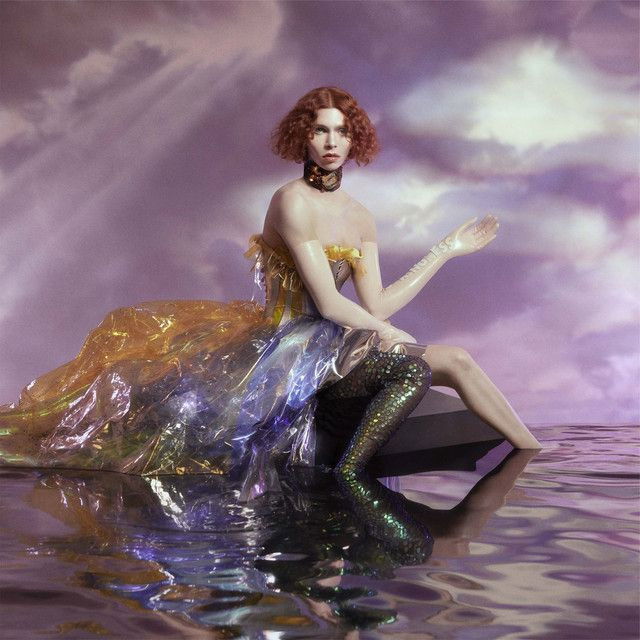
It's Okay to Cry by SOPHIE
A song this gentle can still feel like a shock. Released in 2017, SOPHIE’s “It’s Okay to Cry” arrived as a quiet revelation—musically soft, emotionally direct, and culturally important. For readers seeking the meaning of It's Okay to Cry SOPHIE, the track offers permission, intimacy, and a path toward self-acceptance.
"It's Okay to Cry" - SOPHIE
I know that scares you
All of the big occasions you might have missed
Loading lyrics...
Unable to load lyrics
We're unable to display the lyrics at this time. Please try again later.
A Quiet Coming-Out in a Sky of Sound
This single marked a turning point: it was the first time SOPHIE used her own face and voice in her work, and many understood it as a public acknowledgment of her transgender identity. The self-directed video places her against a vast sky as the weather shifts, mirroring an inner clearing. Critics celebrated the move as a brave new direction and listed the song among the year’s best.
The cultural context matters. Early in her career, SOPHIE favored anonymity and synthetic extremes. Here, the mask lifts. The song’s impact comes from how soft it is—and how clear.

Watch the official It's Okay to Cry
music video
What the Song Is Really About: Permission and Self-Trust
At heart, this is an invitation to be vulnerable without shame. Lines like your inside is your best side
capture a central message: the parts we hide can be our strongest, most beautiful features.
The voice offers acceptance rather than judgment. When the singer says I accept you
, they move beyond apology into care. The refrain reassures that there’s nothing to hide
, turning private pain into shared safety. Interpretation: the song reframes crying as an honest act, not a failure of strength.
Who’s Speaking, and What Changes
The narrator speaks in the first person to a “you.” That “you” might be a lover, a friend, or a former self. Interpretation: many hear the song as SOPHIE addressing her own younger self—or anyone who needs gentleness at the edge of change.
The verses remember small, concrete gestures that build trust. The line I came to find you
suggests an active effort to reach someone who is lost. Later, the desire to explore the world inside you
shows curiosity without control. Across the song, withholding gives way to disclosure; fear becomes relief.
The Chorus, Unpacked
The hook does the emotional heavy lifting. It notices a tear, accepts pain, and claims solidarity. The effect is intimate and unforced, like a hand on the shoulder.
I, was that a teardrop in your eye? I never thought I'd see you cry Just know whatever hurts, it's all mine
Interpretation: the chorus names vulnerability and then absorbs it. Saying “whatever hurts…is all mine” doesn’t erase someone’s pain; it pledges companionship. Over multiple repetitions, the refrain becomes a mantra. The message is not to stop crying—it’s to trust that crying is safe here.
Symbols in Plain Sight
- Tears: Not a sign of collapse, but of truth-telling. The song dignifies emotion by placing it at the center.
- The door and “magazine” memory: A threshold image—knocking, entering, glimpsing influences—signals the moment a person lets themselves be seen.
- Inside/outside: Lines about the
world inside you
and the wish toshine some light
recast interior darkness as a place worth exploring, not escaping. - Sky and weather in the video: An external mirror of shifting feelings. As the atmosphere swells, so does the permission to feel.
How the Production Makes Space to Feel
The arrangement leans toward synth-pop and dream pop, with soft pads, patient pacing, and a dynamic swell. Instead of the abrasive textures heard in much of SOPHIE’s early work, the textures here are open and warm. The mix foregrounds her voice, leaving air around it so the words land without clutter.
As the track builds, the harmonic bed grows denser, like clouds collecting. The climax hints at storm energy without turning the song into a battle. Form supports theme: gentleness is not the absence of power; it’s power under control. Credit-wise, SOPHIE wrote, produced, and sang it herself, making the intimacy feel earned rather than staged.
Alternate Readings and Lasting Impact
Interpretation: One reading frames the song as a self-address, a letter from a future, braver self to a past one. Another hears it as a community promise—especially meaningful to trans and queer listeners—that says: you are not alone.
Beyond identity, the piece resonates with anyone who needs permission to feel. Its critical acclaim and its place on multiple year-end lists underline how tenderness can cut through cultural noise. For listeners searching for the meaning of It's Okay to Cry SOPHIE, the takeaway is simple and radical: emotional honesty is not a liability; it’s a bridge.
Takeaway
SOPHIE turns reassurance into structure and sound. By matching a soft vocal with a spacious mix and a steady build, she makes room for tears—and for what comes after them: clarity.
Disclaimer: Song interpretations are opinions based on lyrics, context, and public information, and may differ from the artist’s intent.
Sources
- https://en.wikipedia.org/wiki/It%27s_Okay_to_Cry
- https://en.wikipedia.org/wiki/Oil_of_Every_Pearl%27s_Un-Insides
- https://www.theguardian.com/music/2021/feb/01/the-guide-sophie-was-experimental-pop-sci-fi-star
- https://www.billboard.com/media/lists/best-songs-2017-top-100-8063686/
- https://www.dazeddigital.com/music/article/38206/1/dazed-best-tracks-of-2017
- https://www.thefader.com/2017/12/12/best-songs-2017
- https://www.thelineofbestfit.com/features/articles/the-best-songs-of-2017
- https://www.vice.com/en/article/bjv37q/the-100-best-songs-of-2017








