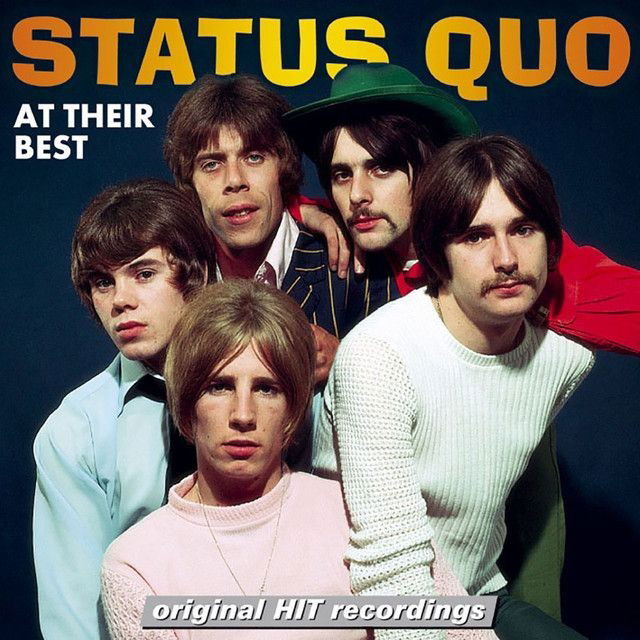
Pictures of Matchstick Men by Status Quo
A breakup song disguised as a psychedelic dream
The meaning of Pictures of Matchstick Men Status Quo starts with obsession. On the surface, the song sounds hazy and strange, full of odd images and floating visions. But underneath that psychedelic style, it is a simple emotional story: someone cannot stop seeing an ex everywhere.
"Pictures of Matchstick Men" - Status Quo
I see your eyes, a funny kind of yellow
I rush home to bed, I sunk my head
Loading lyrics...
Unable to load lyrics
We're unable to display the lyrics at this time. Please try again later.
Francis Rossi wrote the song, and it became Status Quo's first major hit, reaching No. 7 in the UK and No. 12 in the US, their only American Top 40 hit. It was released in January 1968 and appeared on Picturesque Matchstickable Messages from the Status Quo. Research sources also note that Rossi later said it was basically about his ex-wife and the feeling of realizing a marriage was a mistake.
That personal context matters. It turns the song from random late-'60s imagery into a portrait of regret, fixation, and emotional exhaustion.

Watch the official Pictures of Matchstick Men
music video
Why the narrator sees one face everywhere
The verses describe a mind that cannot rest. Ordinary places—the sky, the bed, the window—become screens for memory. The singer does not just remember this person; they invade daily life.
When the song mentions funny kind of yellow
, it gives the memory a sickly, unreal color. That phrase suggests something off-balance. This is not warm nostalgia. It feels unsettling.
Then the images get more intense. The face appears underneath my pillow
and through the window. In plain terms, the song shows how heartbreak can distort perception. The narrator is exhausted, half-awake, and unable to escape repetition.
Interpretation: They may not literally be seeing visions. Instead, the lyrics likely dramatize intrusive thoughts. The ex has become so dominant in the mind that every object seems to reflect them.
The chorus turns memory into a hallucination
The chorus is where the song's title becomes meaningful. Rossi links the lost lover with matchstick men
and with mirages of matchstick men
. Before and after those phrases, the song makes clear that these are fleeting, ghostly images rather than solid reality.
The title points to the thin human figures in paintings by British artist L. S. Lowry, whose crowded industrial scenes often featured spindly people nicknamed "matchstick men." That reference helps explain the song's visual world. The narrator is not seeing one clear memory. They are seeing a whole crowd of sketch-like shapes, with the ex mixed among them.
Interpretation: The matchstick figures may symbolize emotional distance. They are human, but simplified and flattened, like people reduced to outlines after a painful split. The lover becomes less a real person than a repeated image the mind cannot stop projecting.
A short emotional timeline of the song
The story moves in a tight loop:
- The narrator looks outward and sees the ex in the sky.
- They try to hide or sleep, but the image follows them indoors.
- Morning brings no relief; the memory returns at the window.
- The chorus reveals that everything has become a mirage.
- The final lines turn bitter, accusing the other person of deceit.
That last turn is important. The song shifts from dreamy confusion to hurt. In the repeated line you make me cry
, the emotion stops being abstract. It becomes direct and personal.
You in the sky
you with this guy
you make me cry
you lie
This is the one moment where the song stops drifting and points to a cause: jealousy, betrayal, or at least the narrator's belief that they were misled.
How the sound carries the meaning
A big part of the meaning of Pictures of Matchstick Men Status Quo comes from the arrangement. The song opens with a simple four-note guitar riff, then adds bass, rhythm guitar, organ, drums, and vocals. The recording also uses flanging and, in the mono single, a striking wah-wah effect between vocal lines.
Those details are not just decoration. The riff feels repetitive, which matches the loop of obsessive thought. The flanging gives the track a blurred, floating quality, as if reality is slipping. The organ and guitar effects make the song feel dreamlike, but the beat stays grounded enough to keep the emotion focused.
That mix of control and distortion is why the song still works. It sounds psychedelic, yet the pain is easy to follow. It is not chaos for its own sake.
Artist context makes the song sharper
Status Quo later became known more for hard-driving boogie rock than for psychedelic pop. That makes this single stand out in their catalog. It was originally planned as a B-side before being switched to the A-side, a lucky move that launched the band's chart career.
Rossi's later comments also give the song a human scale. He said he wrote much of it while hiding from domestic tension, and he told Songfacts it was basically about his ex-wife. Those remarks should not erase the song's mystery, but they do anchor it. This is not abstract art-rock poetry. It is a young writer using surreal images to express relationship panic.
The strongest reading of the song
The best reading is that this is a breakup or marital-regret song told through psychedelic imagery. The strange visuals represent a mind stuck in replay. The lover appears everywhere because the narrator has not processed the hurt.
A second reading is also possible: the song captures how jealousy turns the world into evidence. Every glance feels loaded, every shadow becomes a sign, and memory starts behaving like a hallucination.
Either way, the emotional center is the same: they are trapped between longing and resentment.
Why it still connects today
The song endures because it describes a familiar feeling in an unusual way. Many songs say someone cannot get over an ex. Few turn that feeling into painted figures, yellow skies, windows, and mirages.
That is why the meaning of Pictures of Matchstick Men Status Quo still resonates. It takes post-breakup obsession and gives it a memorable visual language, while the production makes that inner confusion sound real.
Disclaimer: This interpretation separates documented facts from informed reading. Songs can hold more than one meaning, and listeners may hear different emotional shades in the lyrics and sound.








