Why 'Magic Carpet Ride' Still Feels Like Escape
The meaning of Magic Carpet Ride Steppenwolf starts with a simple idea: music can feel like travel. In this 1968 hit, Steppenwolf turn a loud stereo, a dream state, and a flirtatious invitation into a song about leaving everyday life behind. It sounds huge and free, but the lyric is more focused than it first appears.
"Magic Carpet Ride" - Steppenwolf
Right between the sound machine
On a cloud of sound I drift in the night
Loading lyrics...
Unable to load lyrics
We're unable to display the lyrics at this time. Please try again later.
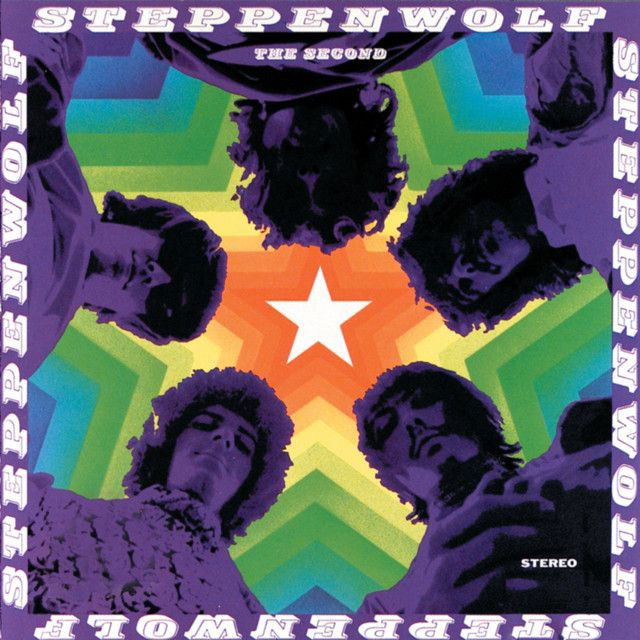
The track was released in September 1968 as the lead single from The Second, written by John Kay and Rushton Moreve and produced by Gabriel Mekler. It reached No. 3 on the Billboard Hot 100, making it one of the band's biggest songs. Those facts help explain why it became such a lasting classic: it landed right at the meeting point of hard rock power and psychedelic imagination.
A Dream Powered by Sound
On the surface, the song describes drifting into fantasy. The opening idea is not about walking somewhere real. It is about being carried by sound itself. When the singer mentions sound machine
and being on a cloud of sound
, the song frames music as the engine of escape.
That is not just a fan theory. John Kay explained that the lyric came after hearing the demo on a new hi-fi system and being struck by how big it sounded. In a Songfacts interview, he said the phrase came to him from the stereo experience. That makes the song's central image less mysterious: the “ride” begins in a room, with speakers, then expands into the mind.
Interpretation: Even with that origin, the song is not only about audio equipment. It uses sound as a doorway into freedom, desire, and possibility.
Watch the official Magic Carpet Ride
music video
The Invitation at the Center
What gives the lyric its emotional pull is the fact that the speaker does not travel alone. They invite someone else along. The repeated image of a magic carpet ride
turns the song into a shared adventure, not a private trance.
The chorus keeps promising discovery. The other person does not yet know what they might find or see, but the singer believes fantasy can open them up. In plain terms, the message is: trust the moment, trust imagination, and let go of control.
That is why the line fantasy will set you free
matters so much. It is the song's thesis in miniature. Freedom here is not political or material. It is mental and emotional.
How the Lyrics Move From Reality to Myth
The song's second verse deepens the fantasy by pulling in storybook imagery. The reference to Aladdin's lamp brings in wish fulfillment, magic, and sudden loss. The speaker briefly feels close to keeping that magical state forever, then finds it taken away.
That small turn matters. Without it, the song would be only blissful. Instead, it admits that transcendence is fragile. They can touch wonder, but they cannot hold it permanently.
Close your eyes, girl
Look inside, girl
Let the sound take you away
These lines are the clearest guide to the song's method. The journey is inward first. The eyes close, the mind opens, and sound becomes the force that transports the listener.
Why Many People Hear More Than One Meaning
Because the song came out in the late 1960s and uses psychedelic imagery, many listeners have read it as a drug song. That reading is understandable. The drifting mood, altered perception, and magical language all point in that direction.
But Kay pushed back on reducing it to that. According to the available interviews summarized by Songfacts and Wikipedia, he tied the lyric mainly to the hi-fi inspiration, while also noting personal and imaginative elements in the writing. So the safest reading is not either-or.
Interpretation: The song works on three levels at once:
- a celebration of music's transporting power
- a romantic invitation into shared fantasy
- a psychedelic-era image set that allows broader readings
That layered quality is a big reason the song has lasted.
The Sound Makes the Meaning Real
Steppenwolf did not just write about lift-off. They built it into the record. Rushton Moreve came up with the central riff, and Michael Monarch created the famous feedback intro later spliced onto the track. Bill Cooper also helped shape the final record through editing and an added chorus.
Those production choices matter because the song lives between two feelings. The riff is earthy and muscular, almost heavy. The intro and vocal overdubs add a floating, unreal edge. Together, they create the sensation of being both grounded and airborne.
That balance explains why the song can fit labels like hard rock, acid rock, and psychedelic pop at once. Billboard called it a “pulsating rocker,” which is brief but accurate. It pulses forward, yet it also seems to hover.
Why the Song Endures
Part of the meaning of Magic Carpet Ride Steppenwolf is its refusal to pin escape to one source. It could be music. It could be romance. It could be imagination itself. The lyric stays broad enough for listeners to enter it with their own hopes.
Its chart success and long afterlife in films, television, and pop culture also show how universal that feeling is. People return to it because almost everyone knows the desire to be carried somewhere beyond the ordinary, if only for a few minutes.
In the end, “Magic Carpet Ride” is not really about traveling far away. It is about what happens when sound, desire, and fantasy make a person feel larger than the room they are in.
Disclaimer: This interpretation separates documented background from critical reading. Like many classic rock songs, "Magic Carpet Ride" supports more than one reasonable meaning.








