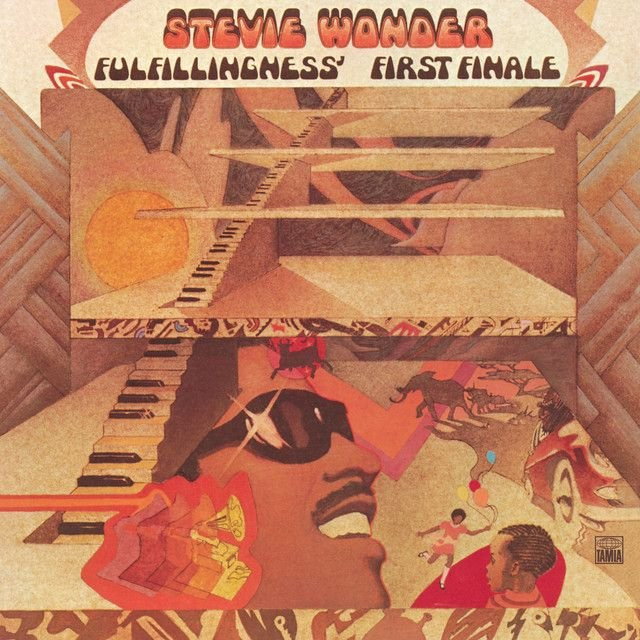
Heaven Is 10 Zillion Light Years Away by Stevie Wonder
A spiritual song with both pain and hope
The meaning of Heaven Is 10 Zillion Light Years Away Stevie Wonder centers on a hard question: what does faith mean when the world feels cruel, unfair, and far from holy? In this song, they do not sing about heaven as simple comfort. They use heaven as a measure of distance between the world people want and the world they actually live in.
"Heaven Is 10 Zillion Light Years Away" - Stevie Wonder
And just the pure at heart will walk her righteous streets someday
They say that heaven is ten zillion light years away
Loading lyrics...
Unable to load lyrics
We're unable to display the lyrics at this time. Please try again later.
Released on Talking Book, the song comes from one of Stevie Wonder’s most creative periods. That matters because he was making music with more freedom, more social focus, and more personal vision. Here, faith is not soft or passive. It is tested by racism, hate, and human failure.

Watch the official Heaven Is 10 Zillion Light Years Away
music video
Why the title sounds so huge
The title image is the song’s main idea. When they sing ten zillion light years away
, they are not making a science lesson. They are dramatizing how unreachable justice and peace can feel.
At first, the line sounds like a complaint about religion. If heaven is impossibly far away, then goodness can seem delayed too. But the song keeps pushing beyond that first frustration. It asks why love and moral clarity should be distant at all.
That is why one of the song’s strongest moves is turning from heaven to earth. Instead of only dreaming about another world, Stevie Wonder asks why hate cannot be made distant instead. In other words, the real issue is not geography. It is human behavior.
Faith under pressure, not faith without doubt
The song argues with God while holding on
A key part of the song’s power is that it sounds like prayer mixed with protest. They repeat the challenge Where is your God
, which frames the doubts raised by suffering. That question is not treated as evil or foolish. It is treated as honest.
The answer is also complex. Rather than giving a neat religious slogan, the song suggests that people have taken so long to grow because humanity still has moral work to do. This keeps responsibility on both God and human beings, but especially on people.
Interpretation: the song is not rejecting belief. It is rejecting empty belief that ignores injustice. Its faith is active, wounded, and demanding.
The song’s clearest social message
The most direct verse deals with race. When Stevie Wonder asks why my color black
should make him seem lesser, the song stops being abstract and becomes sharply political. It connects spiritual language with life in America, especially the Black experience.
This matters in the context of the early 1970s. Wonder was writing during a time shaped by civil rights gains, but also by ongoing inequality and disillusionment. The song says a world built by God should belong to every person, not just those favored by prejudice.
That gives the track two linked themes:
- faith should lead to equality
- racism proves how far society is from its ideals
- hope must be lived, not only preached
The result is a gospel-minded song that also works as a moral indictment.
How the chorus changes the meaning
By the end, the song turns inward. Instead of leaving God far away, Stevie Wonder says inside of me
. That shift changes everything. Heaven may feel distant, but the divine presence does not have to be.
This is the song’s emotional breakthrough. It moves from waiting for rescue to discovering conscience, spirit, and love within the self. The message becomes less about escape and more about transformation.
if you open your heart
you can feel it
Those lines, brief as they are, sum up the final movement. The song claims that spiritual truth is not only future reward. It is also present awareness.
How the music carries the message
The production helps explain why the song feels both heavy and uplifting. Stevie Wonder’s recordings from this era often blend soul, gospel, pop, and rich keyboard textures, and this track follows that pattern. According to the album credits documented by the Grammy Hall of Fame, Talking Book stands as one of his landmark works.
The arrangement supports the lyric in several ways:
- The tempo is gentle, giving the questions room to land.
- The vocal delivery feels intimate, like testimony instead of lecture.
- Layered harmonies create a church-like warmth around painful ideas.
- The repeating spiritual refrain builds from thought into feeling.
That last point is crucial. The song begins with argument and ends with sensation. They do not just think about God; they try to feel a spirit moving through the music. This makes the final section sound less like debate and more like revelation.
Two strong ways to interpret the song
Reading one: a protest song in spiritual clothing
Interpretation: this reading hears the track mainly as a critique of social injustice. Heaven becomes a symbol for promises people use to avoid fixing real problems now. The mentions of hate, racial inequality, and delayed justice support this view.
Reading two: a gospel song for doubters
Interpretation: this reading hears the track mainly as a testimony that faith survives even when belief is strained. The movement from distance to inner presence supports that idea. God is not proven by institutions, but by inner conviction and moral action.
Both readings work because the song keeps them together. It protests the world and protects hope at the same time.
Why the song still feels current
Part of the meaning of Heaven Is 10 Zillion Light Years Away Stevie Wonder is that moral progress can feel painfully slow. That idea still resonates. People still ask why hatred seems close while justice seems far.
Stevie Wonder’s answer is not simple optimism. It is a challenge. If heaven feels distant, people should bring compassion closer. If God seems absent, they should let love, fairness, and dignity show through their own actions.
That is why the song lasts. It does not offer escape from the world. It asks listeners to help repair it.
Final takeaway
At its core, this song is about the distance between belief and behavior. Stevie Wonder uses religious imagery to ask why human beings accept hate, racism, and spiritual emptiness when love should be the real standard.
Their message is both personal and public: the search for God means little unless it changes how people treat one another. Interpretation disclaimer: song meaning is never fully fixed, and this reading is an informed interpretation based on the lyrics, historical context, and recorded performance.








