Miss America by Styx
The meaning of Miss America Styx centers on image, public pressure, and the way fame can turn a person into a symbol. On the surface, the song points to a beauty queen or celebrity figure admired by the public. Underneath, it sounds far less celebratory. Styx use that glamorous image to ask what happens when a woman is loved mainly for how she looks, not for who she is.
"Miss America" - Styx
As you cut the ribbon at the local mall
A mirage for both you and us
Loading lyrics...
Unable to load lyrics
We're unable to display the lyrics at this time. Please try again later.
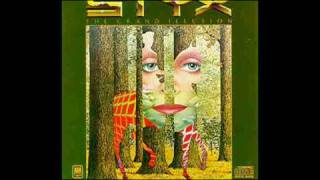
Written by James Young and released on Styx's 1977 album The Grand Illusion, the song fits the album's larger interest in false images and public fantasy. That record is famous for exploring the gap between appearances and reality, and “Miss America” is one of its sharpest examples.
A Crown That Feels More Like a Trap
The verses present a woman who seems to stand at the center of public affection. She cuts ribbons, appears in photographs, and represents a kind of national dream. But the song quickly questions that dream. When the lyric refers to her as the apple of the public's eye
, it frames her as an object of mass attention, almost like a product on display.
That idea grows darker as the song asks whether she is really the person people think they see. The smile, in this reading, is not proof of happiness. It may be part of the job. Styx suggest that public beauty can become a mask that slowly erases the private self.
Interpretation: The song is less about one pageant winner than about America turning women into symbols. “Miss America” becomes shorthand for any public figure expected to stay beautiful, cheerful, and desirable for an audience.
Watch the official Miss America
music video
How the Chorus Changes the Meaning
The chorus is the key to the song's emotional twist. The repeated title sounds catchy and anthemic, but the phrasing is loaded with doubt. When they sing Don't you Miss America
, the line works like a pun. It can mean, “Aren't you the ideal America loves?” But it can also mean, “Don't you miss the person you used to be?”
That double meaning matters. Instead of praising the woman, the chorus hints that she may be homesick for her old life, her old identity, or a version of herself untouched by fame. The next phrase, our love
, is not purely romantic either. It sounds possessive. The public offers affection, but that affection also claims ownership.
Won't you Miss America
our love
In context, those lines feel less like comfort than pressure. The crowd wants her to keep performing the role they gave her.
Verse by Verse: The Song's Story
Styx build the meaning in stages:
- First, they show public adoration: photos, ceremonies, and hometown pride.
- Next, they question the cost of that adoration, wondering whether her smile hides exhaustion.
- Then, they imagine an inner self trying to break out from the public image.
- Finally, they point to the brutal cycle of fame: today she is watched, next year she may be forgotten.
That last shift is especially important. The song argues that celebrity culture is not just shallow; it is disposable. A woman can be lifted up as a national ideal and then dropped as soon as the culture moves on.
Images of Display, Control, and Decay
Several images deepen the critique. One of the strongest is human zoo
. That phrase turns celebrity into captivity. People stop and stare, but they do not really know the person they are looking at. She is visible yet trapped.
Another sharp line is the cover sometimes makes the book
. In plain terms, Styx are saying that appearance often decides value before anyone looks deeper. The song wonders whether the judges, and by extension the public, ever truly read between your lines
. That image suggests that her real thoughts, fears, and history are being ignored.
Interpretation: These symbols connect the song to broader themes of objectification and performance. The beauty queen figure is treated as a national fantasy, but fantasies do not leave much room for human complexity.
Why the Sound Matters So Much
Musically, “Miss America” helps deliver this tension. Styx were a rock band that mixed hard guitar energy with polished hooks, and this track uses that contrast well. The guitars push forward with force, while the big chorus has the kind of arena-ready lift that sounds almost triumphant.
That is exactly why the song works. The bright, chant-like hook mirrors the crowd's excitement, while the darker words undercut it. The production gives listeners the thrill of spectacle and, at the same time, exposes spectacle as a trap. James Young's writing and the band's tight arrangement make the song feel both glamorous and uneasy.
For context, AllMusic notes The Grand Illusion as one of Styx's defining albums, and this song shows why: the band could package criticism inside a very accessible rock song.
The Bigger Message Behind the Pageant Image
The meaning of Miss America Styx is ultimately about what fame asks people to surrender. The song takes a familiar American icon and shows the loneliness behind it. Beauty, applause, and public love may look powerful, but Styx suggest they can also become a cage.
There is also a distinctly American edge here. By choosing “Miss America” as the symbol, the band connects personal pressure to national ideals. The woman is not simply expected to be attractive. She is expected to stand for perfection, optimism, and public desire. That burden is impossible to carry forever.
Final Take
“Miss America” remains effective because it never turns into a lecture. It is catchy, dramatic, and easy to sing along with, but its questions cut deep. Styx use the image of a crowned, admired woman to explore how public love can flatten a real person into a role.
Interpretation, not confirmed fact: Listeners may hear the song as a critique of pageants, celebrity culture, media objectification, or all three at once. That openness is part of its strength. Meaning in songs can vary, and this reading is an informed interpretation rather than a definitive statement from the band.








