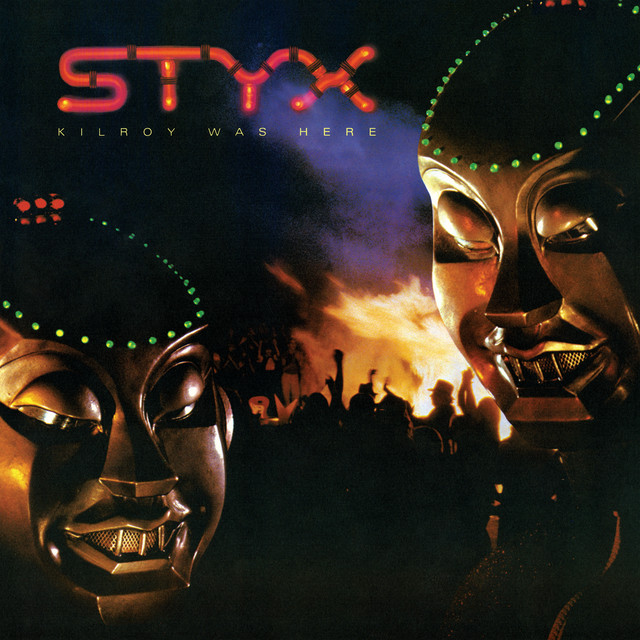
Why 'Mr. Roboto' Is Really About Being Human
The meaning of Mr. Roboto Styx goes deeper than its famous hook. On the surface, it is a catchy 1983 sci-fi pop-rock single. Underneath, it is a song about hiding, identity, and the fear that modern life can turn people into machines.
"Mr. Roboto" - Styx
Domo arigato misuta Robotto
Mata au hi made
Loading lyrics...
Unable to load lyrics
We're unable to display the lyrics at this time. Please try again later.
Styx released the track as the lead single from Kilroy Was Here in 1983, and it was written by Dennis DeYoung. It became a major hit, reaching No. 3 on the Billboard Hot 100, while also becoming one of the band's most argued-over songs in later years. Factually, it belongs to a larger concept story rather than standing alone as a random novelty single.
A Robot Mask, a Human Panic
In the album's story, the singer is a man escaping danger by hiding inside a robot body. That plot detail matters because the song keeps asking what remains human when a person survives by becoming a machine.
Early lines frame that confusion with phrases like modern man
and true identity
. The narrator sounds half proud, half trapped. They present someone who knows he is living in a technological age, but also knows that the tools helping him survive are changing how others see him.
Interpretation: This is why the song still lands. It is not mainly about a literal robot. It is about a person using performance, disguise, and technology as armor.
Watch the official Mr. Roboto
music video
The Heart of the Song's Conflict
The key emotional tension comes when the narrator insists he is still a feeling person. He says, in essence, that his body is human even if his mind now seems fused with machinery. The short phrase brain I.B.M.
captures the idea in a witty, unsettling way.
That line is memorable because it compresses the whole theme into one image: a human being whose thoughts are being processed like data. Right after that, the song explains the reason for the disguise. He needs somewhere to hide, not because he is evil or powerful, but because his life has spun beyond his control.
This makes the song less like a victory anthem and more like a panic song wrapped in bright production.
How Kilroy Was Here Shapes the Meaning
To understand the meaning of Mr. Roboto Styx, they need the album context. According to widely cited accounts of the project, DeYoung built Kilroy Was Here as a rock-opera about censorship, performance, and control. The central character, Robert Orin Charles Kilroy, escapes imprisonment by using a Roboto shell.
That context turns the chorus from a quirky slogan into part of a stage narrative. The repeated Domo arigato
is not only catchy; it is the language of the mask itself, the sound of the machine persona that helps the character flee.
American Songwriter reported that DeYoung's concept grew from ideas about robotics and cultural panic around hidden messages in rock records. The song reportedly began as a smaller interstitial piece before becoming the obvious single. That backstory helps explain why it feels theatrical but also tightly pop-focused.
When the Chorus Turns Ironic
The hook sounds cheerful, but the song's message is uneasy. The narrator thanks the machine for doing hard, unwanted work and for helping him escape. Yet the song then pivots into its warning: too much technology may save lives, but it can also strip away personhood.
That is the real trick of the chorus. It makes listeners sing along to something that is not simple praise. The gratitude is mixed with dependence. The robot is useful, even necessary, but relying on it comes at a cost.
To throw away this mask
Now everyone can see
My true identity
That moment brings the song back to its deepest point: survival through disguise is only temporary. Eventually, the self wants to be seen.
The Sound Is Part of the Story
Production matters here. "Mr. Roboto" blends rock instrumentation with heavy synthesizers, keyboard textures, and processed vocals. Those choices make the song feel polished, artificial, and futuristic in a way that supports the lyric's conflict.
DeYoung handled lead vocals and keyboards, while the band added guitar, rhythm section power, and vocoder-style touches associated with the track's robotic mood. The result is a smart contrast: warm human singing set against cold electronic surfaces.
Interpretation: That contrast is the song in musical form. The arrangement never lets the listener forget that a person is trapped inside the machine.
Why the Song Divided Fans
Part of the song's legacy comes from reception. Some listeners loved its ambition and pop sheen, while others felt Styx had moved too far from straight arena rock. Even so, the single became one of the band's signature songs and entered American pop culture as a catchphrase-heavy classic.
Importantly, the common claim that this one song single-handedly broke up Styx is too neat. Later commentary has pushed back on that myth, noting that the band's tensions were broader and unfolded over years. In other words, the controversy around the song says as much about fan expectations as it does about the music itself.
The Lasting Meaning of "Mr. Roboto"
In the end, the meaning of Mr. Roboto Styx is about the pressure to become less human in order to survive a system built on control, image, and technology. The narrator hides behind a machine, but the song keeps arguing that emotion, fear, and identity cannot be fully mechanized.
That is why the track endures. Its future-world story is very 1983, but its anxiety feels modern: people use screens, personas, and protective masks every day, then wonder whether anyone still sees the real person underneath.
That makes "Mr. Roboto" less a joke song than a clever warning wrapped in one of pop-rock's most unforgettable hooks.
Disclaimer: This interpretation separates documented facts about the song's concept and release from critical reading of its themes. As with most songs, listeners may hear meanings that differ from the artist's stated intent.








