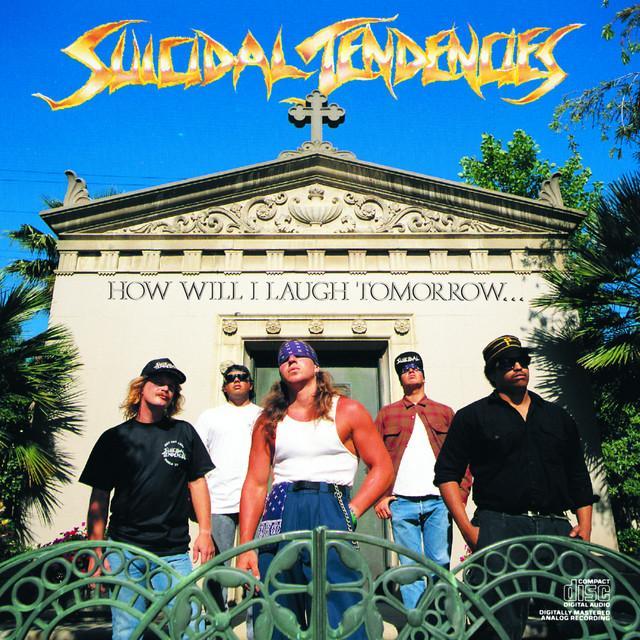
Why "One Too Many Times" Still Hurts
The meaning of One Too Many Times Suicidal Tendencies comes down to a painful idea: someone has been hurting for a long time, asking for care in awkward or incomplete ways, and getting missed again and again. The song is not just sad. It is frustrated, exhausted, and direct about what happens when emotional pain goes unseen.
"One Too Many Times" - Suicidal Tendencies
But those thoughts never went away
And I'm sure you remember, said that all I wanted was sympathy,
Loading lyrics...
Unable to load lyrics
We're unable to display the lyrics at this time. Please try again later.
Suicidal Tendencies are often linked with aggression, speed, and confrontation, but this track shows another side of their writing. Instead of pure anger, they focus on vulnerability. That shift matters, because it makes the song feel less like a rant and more like a last attempt to be understood.
A Cry for Help Hidden in Plain Sound
At its core, the song describes a person who struggles to speak clearly about what they feel. Early on, the speaker admits they were never good at talking, which frames the whole track. They have emotions that stay buried, then return with more weight.
That is why short lines like felt so sad and lonely
hit hard. The song does not dress up the feeling with much metaphor. It names isolation plainly, which makes the pain feel immediate.
Interpretation: the speaker is not only describing sadness. They are also accusing the listener of not noticing it. The repeated idea that no one cared turns private suffering into a relationship failure.

Watch the official One Too Many Times
music video
When the Chorus Becomes the Wound
The chorus is the emotional center because repetition becomes evidence. Each return to too many times
suggests a pattern, not a single bad day. They were overlooked repeatedly, and each missed moment added to the damage.
This is what gives the song its title force. By the end, one too many times
means a limit has been crossed. The speaker is saying that patience, silence, and hope have all been stretched past what they can bear.
Why the repetition matters
In rock songs, repeated hooks often work like slogans. Here, repetition sounds more like pressure building. The phrase keeps landing until it feels like a bruise being pressed.
That emotional pattern connects to real-world mental health language too. Public health sources note that suicidal thoughts can range from passing ideas to more serious rumination, and social isolation is a major risk factor (CDC summary via Wikipedia). The song should not be treated as a diagnosis, but it clearly portrays a person whose distress has been minimized for too long.
The Person They Needed Never Fully Arrives
One of the most revealing details is how the speaker keeps waiting for simple human gestures: a hand, eye contact, a sign that someone understands. Those are small acts, but the song treats them as life-changing.
waited so long
for someone to take my hand
and say they understand
This brief moment sums up the song’s emotional logic. The speaker does not ask for grand rescue. They ask for recognition.
Interpretation: the unnamed “you” could be one person, such as a partner or close friend. But it can also stand for everyone around them. That ambiguity makes the song broader. It becomes about what happens when a whole support system assumes someone is fine because they appear strong.
The line about being seen as much too strong
is especially sharp. It suggests a common mistake: people often miss suffering in those they think can handle anything.
Spiritual Language Without Easy Faith
Another key part of the meaning of One Too Many Times Suicidal Tendencies is the song’s uneasy use of spiritual language. The speaker says they never learned how to pray, then still asks for a prayer. That contrast matters.
It shows someone who may not feel comfortable with religion, ritual, or direct pleading, yet still wants some form of mercy. In plain terms, they do not know how to ask for help in the “right” way. They ask anyway.
That detail makes the song more human. Many people in crisis do not deliver neat, clear warnings. Research on suicidal ideation often stresses that people may not fully disclose what they are feeling, even when they have recently seen others or sought care (overview). The song captures that gap between inner pain and outward communication.
How the Band’s Hard Rock Style Carries the Message
The music strengthens the lyrics by refusing softness. This is a rock song, and its drive matters. The guitars and pounding rhythm make the pain feel trapped under momentum, as if the speaker has no calm space to sort through what they feel.
That contrast is powerful: vulnerable words delivered in a forceful setting. Suicidal Tendencies often work in punk, crossover thrash, and heavy rock spaces, and that attack gives the track urgency even when the lyrics are inward-facing. Rather than sounding delicate, the sadness comes out as strain, resentment, and tension.
Interpretation: the performance suggests that hurt and anger are not opposites here. Anger is the form the hurt takes after being ignored.
The Sharpest Meaning of the Ending
By the closing lines, the speaker no longer sounds hopeful. They sound certain that waiting itself has become part of the harm. The repeated complaint about being kept waiting changes the song from confession into judgment.
That is the final sting. The tragedy is not only that the speaker suffered. It is that they believe help might have mattered if it had come sooner.
The Last Word on the Song
The meaning of One Too Many Times Suicidal Tendencies is about loneliness turning into accusation. It shows a person who tried to speak, failed to be heard, and reached the point where delay felt dangerous.
What makes the song memorable is its plainness. It does not hide behind abstract poetry. It says emotional neglect has consequences, and sometimes the worst pain comes from being visible to others but not truly seen.
Disclaimer: This interpretation is based on the song’s lyrics, tone, and context. It is an informed reading, not a confirmed statement of artist intent or a clinical judgment.








