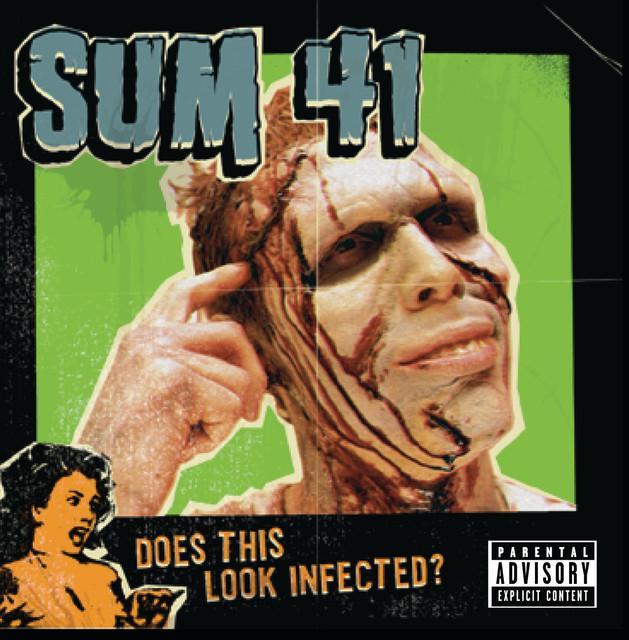
Still Waiting by Sum 41
Why This Sum 41 Anthem Still Hits Hard
The meaning of Still Waiting Sum 41 comes down to a simple but powerful idea: they are fed up with a world driven by hate, lies, and conflict, yet they have not fully given up on change.
"Still Waiting" - Sum 41
For this world to stop hating?
Can't find a good reason
Loading lyrics...
Unable to load lyrics
We're unable to display the lyrics at this time. Please try again later.
Released on October 14, 2002, as the lead single from Does This Look Infected?, the song arrived when Sum 41 were getting heavier and more confrontational in both sound and subject matter. It was written by Deryck Whibley and Greig Nori, and produced by Nori. It also became one of the band's biggest rock-radio songs, reaching No. 7 on Billboard's Alternative chart and later earning major certifications in several countries, including Platinum in the United States.
Watch the official Still Waiting
music video
The Core Message Beneath the Anger
At its center, the song is a protest. But it is not just aimed at one person or one event. In a statement quoted by Songfacts from MTV.com, Whibley said it was not directly about 9/11 or the war on terror, but about the war on everything
. That matters because it widens the song's meaning.
Instead of naming a single enemy, the lyrics describe a broken social mood. They move through public hatred, empty talk, and moral confusion. When they ask still waiting
, the question sounds bigger than politics. They are asking whether the world will ever stop repeating the same damage.
Interpretation: The song works because it mixes public anger with private exhaustion. It sounds like a civic rant, but it also feels like an emotional burnout spiral.
How the Verses Build a World of Distrust
The verses paint a place where people speak violently, act without conviction, and hide behind contradiction. The line about words feeling like a weapon turns speech itself into a threat. That image suggests a culture where language is used to wound, not heal.
Another key phrase is no conviction
. In context, that sounds like a complaint about leaders, institutions, or even everyday people who say the right things but never live by them. The song keeps pointing to a gap between belief and action.
That is why the track keeps returning to the idea of listening. The narrator is not asking for perfect answers. They are asking for honesty, attention, and some real reason to believe people can do better.
The Chorus Turns Protest Into a Plea
The chorus is what made the song stick. It is catchy, but it is also emotionally direct. When they ask world to stop hating
, they reduce a huge global problem into plain language that anyone can understand.
Can't find a good reason
Can't find hope to believe in
Those lines shift the song from accusation to despair. The problem is not only that the world is cruel. It is that cruelty drains hope. That is a crucial part of the meaning of Still Waiting Sum 41: the song is about the emotional cost of living inside nonstop conflict.
A Political Song, But Not a Narrow One
Many listeners connect the track to the post-9/11 climate, the Bush era, and the Iraq War. That reading makes sense. Contemporary sources have described it as anti-Bush and anti-war, and the timing supports that view.
Still, the song survives because it is broader than a headline. It never locks itself into one policy debate. Its real target is a pattern: fear, division, fake certainty, and social violence. That is why new listeners can hear it in relation to modern polarization just as easily as fans did in 2002.
Interpretation: They are not only criticizing governments. They are criticizing a culture that rewards outrage and ignores empathy.
Why the Sound Feels So Urgent
The music carries the message almost as strongly as the words. At just 2:38, the song is fast, compressed, and relentless. Its punk foundation gives it speed, while the heavier guitar tone pushes it toward metal.
That mix matters. Punk gives the song its protest energy. Metal gives it force. The drums hit hard, the riff sounds tight and aggressive, and Whibley's vocal leans into a strained, shouted edge. There is very little softness anywhere in the arrangement.
The result is a song that feels like it is running out of patience. Even before listeners process every line, the production tells them this is a warning, not a shrug.
The Video Adds Satire to the Message
The music video takes a different route: humor. Directed by Marc Klasfeld, it famously spoofs early-2000s garage-rock trends, with a record executive trying to repackage the band as The Sums
. That joke is about image, trend-chasing, and industry shallowness.
This does not replace the song's political edge, but it complements it. The video mocks a culture that turns everything into branding. In that sense, it matches the lyrics' disgust with fakery and contradiction.
Why "Still Waiting" Endures
Part of the song's staying power is that it never pretends anger is enough. Beneath the volume, there is confusion and loneliness. The later lines about isolation make clear that rage has a human cost.
That is why fans still connect to it. It is not just a song about being mad at the world. It is about being tired of what that world does to people's ability to trust, hope, or feel secure.
The Final Take on Its Meaning
The meaning of Still Waiting Sum 41 is a mix of protest, disillusionment, and stubborn hope. They describe a world full of hatred and contradiction, but the very act of asking for better means they have not stopped caring.
That tension is the song's power: they are furious because they still believe things should be better.
Disclaimer: This interpretation is based on the lyrics, public comments, and the song's historical context. Like any song, it can mean different things to different listeners.