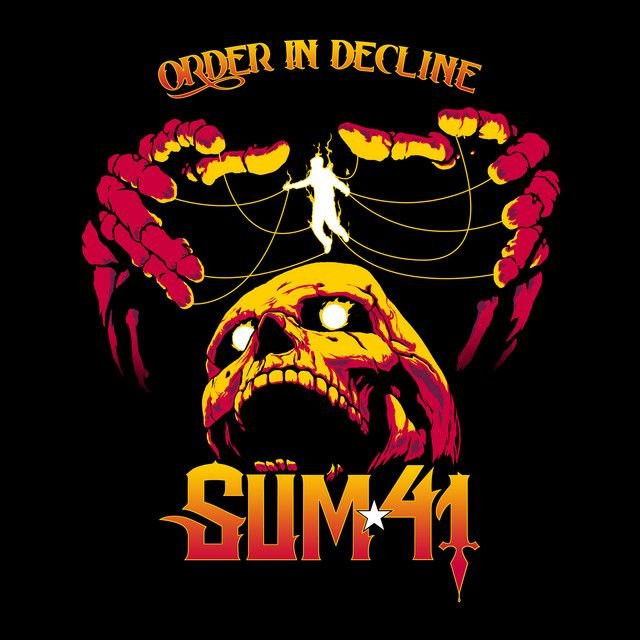
The People Vs… by Sum 41
A protest song dressed as a hard-rock warning
The meaning of The People Vs… Sum 41 starts with distrust. The song sounds like a citizen staring at public life and deciding that the people in charge are failing everyone else. It is not a love song or a private diary entry. It is a public argument.
"The People Vs…" - Sum 41
Maybe we can try to find some peace in time
Might be just a bit beyond your comprehension
Loading lyrics...
Unable to load lyrics
We're unable to display the lyrics at this time. Please try again later.
The lyrics move between frustration, fatigue, and a stubborn bit of hope. Early lines imagine escape through another place, another time
, but that wish does not last. The song keeps returning to the same ugly truth: power changes hands, but the damage often feels the same.
That makes the title important. “The People Vs…” sounds like a court case, as if ordinary people are bringing charges against a leader, a system, or maybe a whole cycle of corruption. Interpretation: the unfinished title suggests the target is larger than one person. It could be one politician, but it could also be the machinery around them.
Watch the official The People Vs…
music video
Where it sits in Sum 41’s evolution
This track comes from Underclass Hero, released on July 23, 2007, during a period when Sum 41 were blending their pop-punk roots with a sharper political voice. According to their discography, the album followed the heavier Chuck and arrived after guitarist Dave Baksh left the band in 2006.
That timing matters. Sum 41 had already shown they could move beyond bratty humor and radio-friendly hooks. By this era, Deryck Whibley was writing songs that sounded more openly concerned with war, leadership, class, and social decay. The band had also said they did not want to repeat themselves; Whibley once remarked, briefly, that he hated when bands repeated albums, a view noted in coverage of the band’s catalog and shifts in style.
So this song fits a broader pattern: Sum 41 using fast, loud rock to speak about civic anger.
How the verses build the song’s argument
A wish for peace meets political reality
The first verse opens with distance and uncertainty. The speaker imagines a new direction and maybe some peace, but the wording feels doubtful, not calm. Even the attempt to understand what is happening seems hard, like pulling teeth
. That phrase suggests truth is painful to get and that honesty is being resisted.
Then the song sharpens. The lyrics say that day by day, things are slipping away. This is a key theme in the meaning of The People Vs… Sum 41: loss of control. The problem is not just one bad day. It is a slow erosion.
Naming the villain
The clearest moment comes when the narrator says bad man
. That is blunt language on purpose. Instead of dressing the problem in policy talk, the song reduces it to moral judgment. The idea is simple: if a leader causes suffering, they should be seen plainly.
He is the bad man
but I've got faith
to end this misery
Even here, anger is paired with belief. The song is not only condemning power. It is also insisting that people can still reject it.
The chorus and hook: frustration without surrender
The hook lands on he's got to go
and this is no life for me
. Paraphrased, the message is that the current state of society feels intolerable, and removal is the only answer.
This matters because the chorus turns private discomfort into political action. The speaker is not just sad. They are drawing a line. In many protest songs, the emotional move is from fear to defiance. Sum 41 follow that same path here.
Interpretation: the “me” in that line may stand for more than one person. Even though the lyric is singular, the title and repeated references to the human race make the feeling collective. One voice speaks, but many people are implied behind it.
The song’s biggest theme: history keeps repeating
The second verse says history repeats itself and calls the latest change almost meaningless. That is one of the song’s most cynical ideas. New faces arrive, but the structure stays rotten.
The phrase changing of the guard
is especially sharp. It sounds official, but in the song it feels empty. Leadership rotates, headlines change, and yet regular people are still asked to live with the same fear and disappointment.
This is where the song becomes more than a direct attack on one figure. It becomes a critique of political theater itself. The speaker has heard it all before. Promises no longer impress them.
Sound and production: why the music feels confrontational
Musically, the song supports that reading. Underclass Hero leans into punchy guitars, quick momentum, and a clean but aggressive mix. Sum 41 had long worked across punk, alternative rock, and metal, and their career overview shows how often they shifted between those sounds.
On this song, the band use tight riffs and a driving rhythm to keep the pressure high. There is little space for reflection. That suits lyrics about social anxiety and political disgust. Whibley’s vocal delivery sounds urgent rather than theatrical, which helps the song feel like a warning instead of a speech.
Interpretation: because the melody stays catchy, the band make the message easier to carry. They are not writing abstract protest poetry. They are writing a chant people can remember.
A few plausible readings
There are at least three useful ways to read the song:
- Direct political protest: a response to a specific leader or government climate.
- Systemic criticism: an attack on the cycle of replacing one harmful authority with another.
- Personal burnout in public language: a song about feeling trapped by the world around them, using politics as the frame.
The strongest reading is probably the first two together. The lyrics point to one “bad man,” but they also insist the larger pattern keeps returning.
Why the song still connects
Part of the lasting power of the meaning of The People Vs… Sum 41 is how familiar its frustration feels. Many listeners know the experience of watching public life become exhausting, then hearing promises that sound recycled. Sum 41 turn that exhaustion into something louder and more active.
They do not offer a detailed solution. Instead, they offer recognition: things are broken, people see it, and refusing to accept it is a start.
Final takeaway
“The People Vs…” is Sum 41 at their most politically frustrated and emotionally direct. It frames public anger as a moral case against failed leadership, while also warning that changing faces does not always change outcomes.
That reading is an interpretation based on the lyrics, the band’s era, and the song’s sound. Listeners may hear a specific political target or a broader protest against repeating history.








