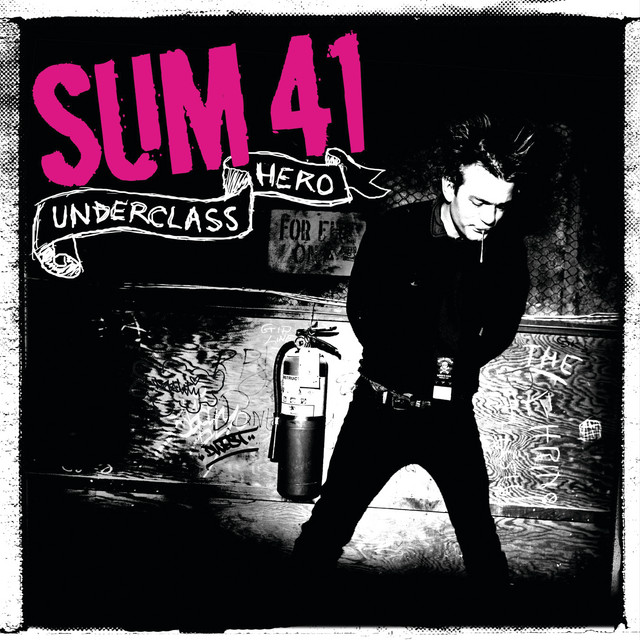
Underclass Hero by Sum 41
Sum 41 turn frustration into a rallying cry, making rebellion sound catchy, communal, and strangely hopeful.
"Underclass Hero" - Sum 41
Provided by LyricFindOne, two, three, four
Well, I won't be caught living in a dead end job
Or pray to a government content godLoading...Loading lyrics...
Unable to load lyrics
We're unable to display the lyrics at this time. Please try again later.
Why the meaning of Underclass Hero Sum 41 still hits
The meaning of Underclass Hero Sum 41 centers on defiance. The song speaks for people who feel boxed in by class, authority, and expectations, then flips that frustration into pride. Instead of begging to belong, they claim power by identifying with the outsiders.
Factually, “Underclass Hero” was the lead single from Sum 41’s fourth studio album of the same name, released in 2007, and it followed guitarist Dave Baksh’s departure from the band. It was produced by frontman Deryck Whibley and helped signal a return to a more straightforward pop-punk sound after the heavier Chuck era. Those details are widely documented in reference coverage and album reporting.[1][2]
That context matters. This is not just a teen tantrum song. It arrives at a point when the band was reshaping itself, and the lyrics sound like a mission statement: they refuse to be managed, categorized, or sold back a fake version of freedom.

Watch the official Underclass Hero
music video
A protest song dressed as pop-punk
At its core, the track attacks systems that keep people passive. Early lines reject the trap of a dead end job
and mock obedience to institutions. In plain terms, the song says the speaker would rather be unruly than quietly accept a life built by other people.
The phrase face of the establishment
makes that conflict direct. The enemy here is not one person. It is the whole machine of power, status, and social pressure. That broad target is part of why the song has lasted for listeners who may not share the same politics but do understand the feeling of being talked down to.
Interpretation: The “underclass” in the title seems to mean more than economic class alone. It also points to youth, misfits, rejects, and anyone treated as disposable. The song builds a temporary community out of that exclusion.
How the verses build an outsider identity
The verses move from refusal to identity. First, the speaker rejects a future of numb obedience. Then the song turns toward the people left out by mainstream approval.
A key line is just another reject
. Paraphrased, the song takes a label meant as an insult and wears it like a badge. That move is classic punk: shame gets turned into solidarity.
There is also a generational edge in references to wasted youth and a numb public mood. Rather than praising rebellion as glamorous, the song presents it as a response to disappointment. They are not rebelling because life is easy. They are rebelling because official promises feel empty.
A compact timeline of the lyric’s message
- They reject a scripted, obedient life.
- They identify the establishment as the force pushing that script.
- They gather the rejected into a shared “we.”
- They end by turning that “we” into a public declaration.
That progression gives the track its momentum. It does not stay in complaint mode for long. It becomes a call to stand together.
Why the chorus sounds so confident
The chorus is what transforms the song from rant to anthem. Its repeated claim that we're doing fine
is less a literal status update than a statement of self-worth. The speaker is saying they do not need approval from the people trying to control them.
That matters because the verses are full of pressure and rejection. The chorus answers that pressure with a refusal to be bought and sold
. In other words, the song rejects both manipulation and commercialization. It is anti-authority, but it is also anti-co-optation.
Interpretation: The chorus may sound almost defensive on purpose. Repeating that they are “fine” suggests a group trying to convince both the world and itself that survival without permission is possible.
The title’s deeper idea
Critics noticed that Underclass Hero echoes John Lennon’s “Working Class Hero,” and PopMatters discussed that connection while reviewing the album.[2] Sum 41 are not copying Lennon’s tone, though. They shift from bitter folk realism to loud, youth-driven punk theater.
The title phrase makes an ironic hero out of someone society would usually ignore. That irony fits the song’s bigger point: the people called useless may actually be the only ones refusing to play along.
The spoken pledge near the end sharpens that idea:
I pledge allegiance to the underclass
as your hero at large
This is the song’s one big theatrical moment. It parodies patriotic language to create loyalty to outsiders instead of institutions.
How the sound carries the message
Musically, “Underclass Hero” is brisk, punchy pop-punk with chant-ready vocals, power-chord guitars, and a marching, forward-driving beat. Reference sources list it as pop punk, and that tag fits.[1] The arrangement is simple on purpose: it feels like something a crowd could shout back.
That simplicity is meaningful. The production does not hide behind complexity. Whibley’s vocal delivery pushes urgency, and the group shouts make the song feel public rather than private. It sounds like a pep rally for the disaffected, which also matches the single’s video concept featuring a crowd of teenagers and school-rally imagery.[1]
Reviewers were mixed on the broader album, but even critical takes noted the title track’s energy. Andrew Blackie at PopMatters argued that the band sounded most convincing when they simply leaned into that direct, fast style.[2]
Final takeaway on Sum 41’s anthem of refusal
The meaning of Underclass Hero Sum 41 is about claiming dignity from below. The song turns alienation into identity, then identity into resistance. Its message is simple but effective: if the system already sees them as disposable, they can stop asking it for permission.
That is why the song still connects. It gives frustrated listeners a way to hear themselves not as failures, but as a group with a voice.
Disclaimer: This interpretation mixes documented context with critical reading. Like most songs, “Underclass Hero” can support more than one meaning depending on the listener.








