Why 'Dare You to Move' Still Hits Hard
The meaning of Dare You to Move Switchfoot comes down to one powerful idea: life knocks people down, but grace, courage, and choice can still pull them forward. Switchfoot turned that idea into one of the most lasting rock-pop anthems of the 2000s, and its message still feels fresh because it speaks to failure without staying there.
"Dare You to Move" - Switchfoot
Welcome to existence
Everyone's here
Loading lyrics...
Unable to load lyrics
We're unable to display the lyrics at this time. Please try again later.
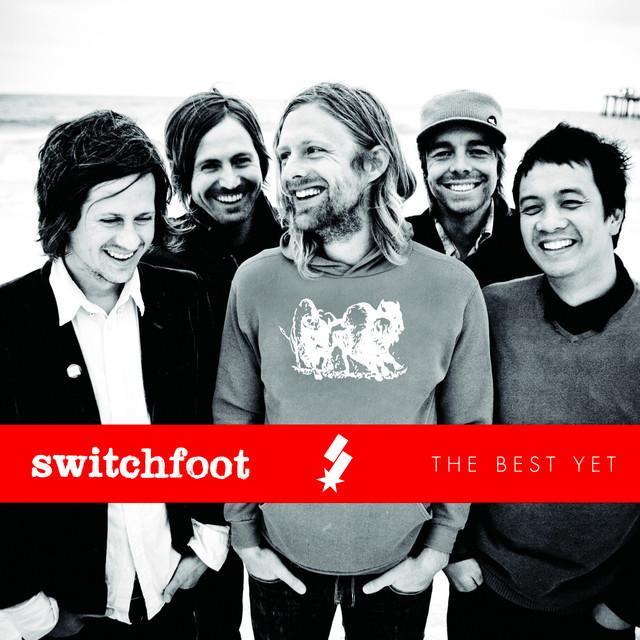
The song appeared in an earlier form as I Dare You to Move on Learning to Breathe, then was re-recorded for 2003's The Beautiful Letdown. According to Songfacts, the later version added heavier guitars and stronger vocals, and it became the band’s breakout single, reaching No. 17 in the US after its 2004 push (Songfacts).
A Challenge Hidden Inside an Encouragement
On the surface, the song sounds simple: someone is on the ground, emotionally or spiritually, and the voice of the song tells them to rise. That central image is clear in the repeated phrase lift yourself up off the floor
. The words do not stay in sadness. They insist on motion.
Interpretation: The brilliance of the song is that it does not promise easy rescue. Instead, it frames healing as a dare. That makes the message feel more active than comforting. It is not just “you will be okay.” It is “choose to begin.”
This is also why the title matters. A dare is risky. It suggests fear, resistance, and a moment of decision. The listener is not treated like a victim with no agency. They are treated like someone who still has power, even when they feel broken.

Watch the official Dare You to Move
music video
The Real Conflict: Present Self vs. Possible Self
The key verse sets up the song’s deepest theme: between who you are
and who you could be
. In plain terms, the song is about the painful gap between reality and potential.
Jon Foreman explained that idea directly. In a quote cited by Songfacts from CCM Magazine presents 100 Greatest Songs In Christian Music, he described the track as an honest look at “the gap between who I am and who I want to be” and between the world as it is and as it should be (Songfacts). That gives the song both a personal and moral dimension.
Interpretation: This tension can be heard in at least three ways:
- as an inner fight between shame and growth
- as a spiritual struggle toward redemption
- as a social frustration with a world that falls short
The song works because it leaves room for all three.
Why the Opening Feels So Exposed
The first lines welcome the listener into existence, then immediately say that Everybody's watching you now
. That creates pressure. Life is presented as public, uncertain, and already underway.
Then comes the question: what happens next? That idea makes the song feel like the soundtrack to a turning point. It is not about the whole life story. It is about the next move.
Interpretation: This opening can sound anxious, but it also suggests possibility. If the future is not written yet, then failure is not the end of the story.
Redemption, Forgiveness, and the Fall
Later, the lyric turns more openly toward spiritual language. It suggests that redemption and forgiveness may meet a person exactly where they collapsed. The key thought is compressed into one beautiful line: Maybe forgiveness is right where you fell
.
That line is a major reason the song has resonated with both mainstream and Christian audiences. Songfacts notes that the song carries a Christian theme about stumbling through hard times and how God dares people to get back on their feet (Songfacts).
Maybe redemption has stories to tell
Maybe forgiveness is right where you fell
Those lines do not deny the fall. They transform it. Instead of treating failure as proof that someone is finished, the song treats it as the very place where grace can begin.
How the Sound Carries the Message
Part of the meaning of Dare You to Move Switchfoot comes from its sound. The re-recorded version is bigger and more urgent than the earlier release. The electric guitars give the chorus lift, while the drums push the track forward like a heartbeat that refuses to stop.
Foreman’s vocal delivery matters too. He does not sing the chorus like a soft pep talk. He leans into it with strain and conviction, which makes the dare feel earned. The production turns a private crisis into a public anthem.
This helps explain why the song lasted. It is reflective enough for headphones but broad enough for arenas. Songfacts also notes that years of live performance helped make it one of Switchfoot’s signature songs (Songfacts).
Why It Connected in the 2000s — and Still Does
The song’s rise was tied to timing as well as quality. Several Switchfoot songs were used in A Walk to Remember, which exposed the band to a much wider audience before their major-label breakthrough, according to Songfacts (Songfacts). But exposure alone does not create staying power.
What lasted was the song’s emotional usefulness. People return to it during breakups, burnout, loss, recovery, and faith crises because it does not talk down to them. It admits the floor exists. Then it asks what comes after.
The Lasting Takeaway
The meaning of Dare You to Move Switchfoot is not just “keep going.” It is deeper: the moment after collapse may be the exact place where change begins. The song sees pain clearly, but it refuses to grant pain the final word.
That is why it still lands. It gives listeners a hard truth, a hopeful truth, and then a choice.
Disclaimer: This interpretation combines documented artist comments, release context, and close reading of the lyrics. Meaning can vary from listener to listener.








