
SZA’s ‘Low’: Power, Privacy, and the Soft Flex
They don’t whisper by accident in SZA’s world—they whisper to survive. “Low” is a mood-board for modern boundaries, where affection stays hidden and clout stays out. If you’re looking for the meaning of Low SZA, think guarded desire and strategic silence.
"Low" - SZA
(I'm out the loop, I'm out of range)
(Oh, I stay out the way)
Loading lyrics...
Unable to load lyrics
We're unable to display the lyrics at this time. Please try again later.
What the Song Is Really Saying: Stay Low, Keep Control
“Low” draws a line between private intimacy and public noise. The narrator craves connection but refuses spectacle. When she says keep it on the lowski
, she sets a rule: no posts, no gossip, no audience. Pair that with you don't know me
, and the message is clear—recognize her in the music, not in the street.
Interpretation: The song isn’t cold; it’s protective. SZA frames secrecy as self-care. Fame invites commentary and distortion, so discretion becomes power. She chooses who gets access, and on what terms.
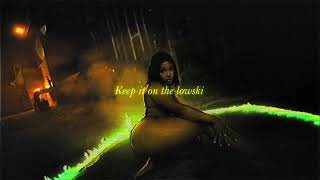
Watch the official Low
music video
Who’s Speaking—and Who Needs to Listen
The voice is first-person and firm. She addresses a casual partner who keeps blurring lines. On one hand, she states we ain't makin' love
; on the other, she insists don't call me
. The pairing isn’t mixed signals—it’s rules of engagement.
Interpretation: She’s building a space where desire can exist without performance. The boundary work isn’t just romantic; it’s also a clapback to spectators who feel entitled to her movements.
From Spark to Silence: A Quick Timeline
- Attraction hits fast—chemistry over sentiment.
- She asserts terms: privacy first, feelings second.
- Outside attention grows, and she clamps down harder.
- A partner tests limits; she responds with detachment.
- Final stance: connection stays, but only off‑grid.
The Hook as a Boundary, Not a Tease
The hook re-centers the song each time it arrives, reminding listeners that discretion is the nonnegotiable. When she warns that the block is too hot
, she’s talking about the risk of public exposure—paparazzi, blogs, or messy friend groups. Interpretation: The chorus isn’t a come-on; it’s a policy. Desire is allowed in private, never in the feed.
Symbols You Can Hear
- Low/Lowest: “Low” doubles as sonic and social strategy—low frequencies, low profile. The title is a synonym for “low‑key,” turning privacy into a vibe.
- Heat/Hot Block: Heat marks pressure and attention. Hot spaces invite chaos; she opts out.
- Crime Imagery: Lines about secrecy and risk frame intimacy like a heist—exhilarating but planned.
- Silence vs. Voice: She’s loud in private, muted in public. That split highlights how safety shapes expression.
How Production Shapes the Mood
“Low” rides a murky trap-and-R&B blend: sub-bass that feels subterranean, dry hi-hats, and vaporous pads that float like fog. The arrangement keeps space around the vocal, pulling the ear into whispers and side comments. It’s a hush you can dance to.
Producers and writers (including Solana Rowe, Robert Clark Bisel, Alessandro Buccellati, Aire Atlantica, and Rashad Johnson) craft a minimal palette where small choices carry meaning. Uncredited ad‑libs associated with Travis Scott flicker in the background, adding a nocturnal swagger. Interpretation: The low-end focus literalizes the theme—everything important happens below the surface.
Alternate Readings Worth Considering
- Persona Defense: Interpretation—SZA uses the song to reconcile public fame with private need. She isn’t anti‑love; she’s anti‑exposure.
- Post‑Breakup Control: Interpretation—after emotional fallout, she swaps romance for rules. Intimacy remains, but it’s transactional by design.
Both readings underline the same truth: boundaries aren’t walls; they’re doors she keeps the key to.
Takeaway: Why ‘Low’ Resonates Right Now
In a culture of oversharing, “Low” makes privacy feel radical and stylish. It says you can be tender without being public property. That’s the soft flex—choosing silence not from fear, but from power.
Disclaimer: Song interpretations are subjective; this analysis reflects one informed reading of lyrics, context, and production.









