
Why Taylor Swift's 'peace' Hurts So Deeply
The meaning of peace Taylor Swift comes down to one painful truth: someone can offer enormous love and still feel unable to offer a calm life. On Folklore, this song stands out because it is less about fantasy than confession. It is a love song shaped by anxiety, public pressure, and the fear that devotion might not be enough.
"peace" - Taylor Swift
Suddenly this summer it's clear
I never had the courage in my convictions
Loading lyrics...
Unable to load lyrics
We're unable to display the lyrics at this time. Please try again later.
Released on July 24, 2020, as part of Folklore, “peace” was written by Taylor Swift and Aaron Dessner, with Dessner producing it. Research and album credits describe it as one of the more personal songs on a record often built from fictional storytelling. That matters, because its emotional force comes from how direct it feels.
A Love Song That Refuses Easy Comfort
At its core, “peace” is about radical honesty. The narrator does not sell romance as safety or escape. Instead, they admit that loving them means accepting tension, noise, and uncertainty.
The key refrain, paraphrased, asks whether love can survive without a peaceful life. When Swift repeats give you peace
, it does not sound like a simple promise. It sounds like a limit. They can offer care, loyalty, and closeness, but not freedom from the storms around them.
Interpretation: That is why the song feels mature. Rather than saying “love conquers all,” it asks a tougher question: what if love is true, but the world around it stays hard?
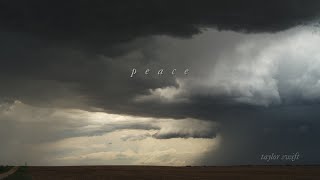
Watch the official peace
music video
The Speaker's Offer Is Huge, but Incomplete
Much of the song lists what the narrator can give. They can give warmth, secrecy, endurance, and chosen family. They can stay through bad days and emotional lows. In one of the song’s strongest images, the narrator says I'm a fire
, framing themself as both comfort and danger.
That dual image is central to the song’s meaning. Fire warms, but it also burns. The narrator knows they may protect the person they love emotionally, while also exposing them to outside heat.
A later promise expands that devotion even more: they would die for you in secret
. The idea is not flashy romance. It is private sacrifice. That fits a song where public attention is treated as a burden, not a prize.
Growing Up Means Seeing the Cost Clearly
The opening verse gives the song a reflective tone. It begins after innocence is gone. The narrator looks back and realizes adulthood has made certain truths impossible to ignore.
When they admit danger lives close by, the problem is not just outside enemies. It is internal too. The fear, the history, and the complications are already part of them. That makes the confession sadder: peace is not merely blocked by circumstances; it may be impossible because of who the narrator has become within a public life.
Interpretation: This is why the song feels both romantic and guilty. They are not warning a lover about abstract trouble. They are saying, “If you stay with me, trouble comes with me.”
Public Life Hangs Over Every Verse
Many listeners connect “peace” to Swift’s experience with fame and scrutiny, and that reading fits the song well. Critics and reference sources have noted that the lyrics point toward the downsides of media attention and the struggle for normal intimacy inside a highly visible life.
The most obvious example is the line about robbers to the east
and clowns to the West
. Those images suggest pressure on all sides: people who take, people who mock, and public chaos that never fully goes away.
Some critics have tied those images to specific public conflicts in Swift’s career. Still, the broader point matters more than any one decoding. The song presents celebrity as a constant weather system. The partner is not just dating a person; they are stepping into a storm.
How the Sound Carries the Meaning
One reason “peace” lands so hard is its production. Reports on the track describe an R&B-leaning, minimalist arrangement with soft piano, harmonized bass, subtle synthesizers, and a ticking electric pulse. Justin Vernon contributed that pulse, while Dessner shaped the rest of the sparse instrumental bed.
That calm sound creates a powerful contrast. Swift reportedly said the music had an immediate serenity, but she chose to write something more conflicted over it. That choice is brilliant. The track sounds stable even while the lyrics say stability cannot be promised.
The vocal also matters. Because the arrangement is so bare, every line feels close to the listener. There is very little to hide behind. The performance sounds less like a grand statement and more like someone telling the hardest truth they know.
Why the Chorus Feels So Devastating
The chorus does not explode. It circles the same doubt again and again. That repetition mirrors anxious thinking: if they love someone enough, will it cover what they cannot fix?
Near the end, the song keeps returning to the same question until it feels almost unanswered on purpose. That is what makes it devastating. The narrator can imagine offering sunshine, loyalty, even a future, but they still know the rain
will keep coming.
In plain terms, “peace” says love may be real, generous, and lasting, yet still shadowed by forces outside the couple’s control. That is the emotional center of the meaning of peace Taylor Swift.
The Lasting Power of "peace"
“Peace” remains one of the most admired songs on Folklore because it strips romance down to responsibility. It is not about butterflies. It is about whether someone will stay after hearing the full truth.
That honesty is why the song still resonates. It suggests that the deepest form of love is not a perfect promise. It is the courage to say what cannot be promised at all.
Disclaimer: This interpretation is based on the song’s lyrics, production, and publicly available artist context. Any deeper personal reading remains interpretation, not confirmed fact.







