
Why 'Gary Gilmore's Eyes' Still Disturbs
The meaning of Gary Gilmore's Eyes The Adverts starts with a great punk trick: take a real headline, push it one step further, and turn public shock into a private nightmare. The song imagines a patient waking in a hospital after an eye transplant and realizing the donated eyes once belonged to executed killer Gary Gilmore.
"Gary Gilmore's Eyes" - The Adverts
I'm pinned against the bed.
A stethoscope upon my heart,
Loading lyrics...
Unable to load lyrics
We're unable to display the lyrics at this time. Please try again later.
Released in 1977, the single was written by T. V. Smith and became one of the Adverts' defining songs. It reached No. 18 on the UK chart and even led to a Top of the Pops appearance, which says a lot about how quickly its dark idea cut through the noise of the first punk wave.
A Horror Story About Identity, Not Just Crime
On the surface, the plot is simple. A person wakes up in a hospital bed, senses something is wrong, hears news about a murderer whose sight was donated, and realizes they are now looking through Gary Gilmore's eyes
.
But the song is not really about transplant medicine. It is about identity panic. The narrator fears that the new eyes might carry part of the dead man's self. That fear is irrational in a medical sense, but emotionally it feels real. The song turns a bodily repair into a spiritual invasion.
Interpretation: the real subject is the terror of losing control of who they are. The transplant becomes a symbol for unwanted inheritance. The narrator is not only scared of seeing differently; they are scared of becoming different.
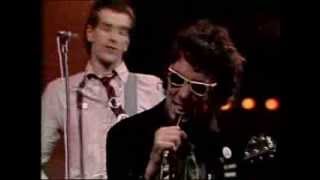
Watch the official Gary Gilmore's Eyes
music video
The Real-Life Fact Behind the Punk Shock
The premise hit hard because it was rooted in a true story. Gary Gilmore was a real American murderer executed by firing squad on January 17, 1977. Reports from the time said he had requested his eyes be donated to science, and his corneas were used soon after his death.
That factual base matters. Punk often used provocation, but this song was sharper than simple outrage bait. It took a recent, widely reported event and asked a disturbing question: what happens when a violent public story ends up inside an ordinary body?
The Adverts built the chorus around that question, repeating Gary Gilmore's eyes
like a thought the narrator cannot escape. It sounds catchy at first, then increasingly trapped.
How the Verses Build Fear Step by Step
One reason the song works so well is its quick narrative structure. In just over two minutes, it moves through several stages:
- The narrator wakes in a clinical setting.
- The staff seem uneasy, which hints that something is off.
- News from the outside connects the surgery to Gilmore.
- The narrator breaks down in anger and dread.
Those details keep the story grounded. Small phrases like private ward
and vision is confused
make the scene feel less like fantasy and more like an emergency happening in real time.
Then the song widens its meaning. Near the end, it says the eye sends signals to the brain, but there is no promise those signals will be understood the same way. That is one of the song's smartest ideas. It separates physical sight from human perception.
Gary don't need his eyes to see.Gary and his eyeshave parted company.
That brief passage pushes the song past horror and into philosophy. Eyes are just organs, yet people still load them with memory, guilt, and personality.
Sound First, Then Meaning Hits Harder
The track's production helps sell the concept. Recorded in 1977 and produced by Larry Wallis with the band, it moves at punk speed: short, sharp, and nervy. There is no slow build and no safe distance.
The guitars jab rather than drift. The rhythm section keeps everything urgent. T. V. Smith's vocal delivery sounds tense and clipped, which suits a narrator trying to understand something impossible before panic takes over.
That matters for the meaning of Gary Gilmore's Eyes The Adverts because the music does not romanticize the subject. It is not dreamy, gothic, or mournful. It feels immediate, like bad news arriving all at once.
Why the Song Lasted Beyond the Shock
A lot of punk songs aimed to offend. Fewer stayed famous because they also had structure, imagery, and a memorable hook. This one did. Critics later called it anthemic punk
and a forgotten gem
, and its reputation has held up because the writing is more clever than cheap.
The song was also not simply banned into legend. Despite controversy stories around it, the BBC played it, and the Adverts appeared on television. That gave it a wider life than many punk singles got in 1977.
Its afterlife matters too. The track has been covered by bands including Die Toten Hosen, and it has appeared in later media connected to the Gilmore story. That continued interest suggests the central image still works: seeing through someone else's eyes is one of the oldest metaphors around, and this song gives it a brutal modern form.
A Final Reading of the Song's Core Idea
The best way to understand the song is to see it as both literal story and metaphor. Literally, it follows a transplant patient in shock. Interpretation: metaphorically, it is about the fear that evil, trauma, or history can be passed on through the body.
It also asks whether seeing is ever neutral. People do not just receive images; they interpret them through memory and fear. That is why the song remains unsettling. The horror is not in the surgery alone. It is in the thought that a person may never fully know where their own self ends.
Disclaimer: This article offers a good-faith interpretation based on the song, documented history, and public commentary. Meaning in music can remain open to more than one reading.







