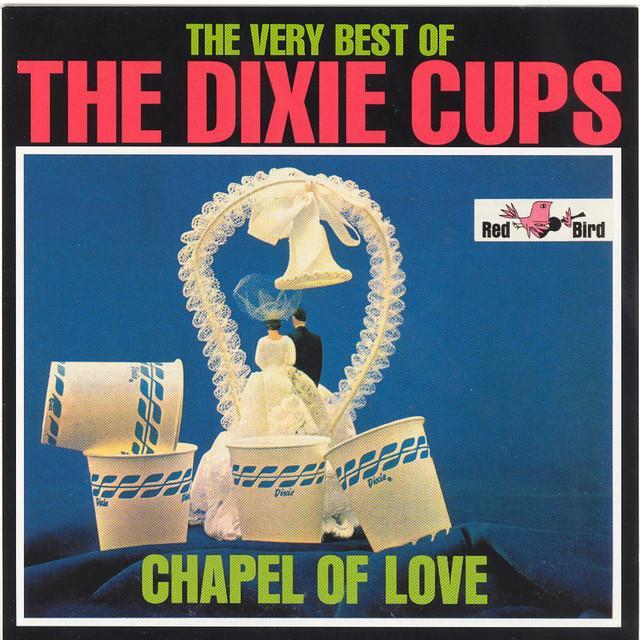
Why 'Chapel of Love' Still Feels So Joyful
The meaning of Chapel of Love The Dixie Cups starts with a simple idea: they are singing from the happiest edge of commitment. This is not a song about chasing love or fearing rejection. It is about arriving at a life-changing moment and treating it like pure celebration.
"Chapel of Love" - The Dixie Cups
Goin' to the chapel and we're gonna get ma-a-arried
Gee, I really love you
Loading lyrics...
Unable to load lyrics
We're unable to display the lyrics at this time. Please try again later.
Released in 1964, The Dixie Cups' version became a major pop landmark, spending three weeks at No. 1 on the Billboard Hot 100 and helping define the girl-group sound of the era. It was written by Jeff Barry, Ellie Greenwich, and Phil Spector, and the hit recording was produced by Jerry Leiber, Mike Stoller, Ellie Greenwich, and Jeff Barry.
A Wedding Song That Thinks the Future Is Bright
At the center of the song is a speaker who feels sure about love. The famous hook, goin' to the chapel
, is more than a catchy line. It turns the whole song into a countdown to a wedding, where excitement matters as much as romance.
The verses reinforce that mood with images of spring, blue skies, singing birds, and sunlight. In plain terms, the outside world seems to agree with the speaker's feelings. Nature sounds as if it is celebrating too.
This is what makes the song different from many early-1960s pop love songs. Instead of describing a crush or heartbreak, it jumps straight to a lasting promise. Song historians often note that the song focuses on marriage and commitment rather than just falling in love, which gave it a slightly more grown-up emotional center.
Watch the official Chapel of Love
music video
How the Chorus Turns Love Into Certainty
The chorus is repetitive on purpose. Each return to we're gonna get married
feels like a joyful chant, almost like the singer is telling themselves the dream is now real.
That repeated language matters because the song is built on certainty. The line Gee, I really love you
is simple, even childish on the surface, but that simplicity is part of the appeal. They are not trying to sound poetic or complicated. They sound sincere.
There is also a promise built into the song's emotional logic. The lyric idea behind never be lonely anymore
suggests that marriage is not just a ceremony. It is a cure for isolation and a doorway into lifelong companionship.
I'll be his and he'll be mine
We'll love until the end of time
Those lines show the song's biggest emotional leap. It moves from today's wedding to forever. That is a huge promise, and the song delivers it without doubt.
The Key Symbols: Chapel, Bells, Spring, and Sun
The main symbols are easy to hear, which is one reason the song has stayed popular.
- The chapel stands for public commitment. Love is no longer private.
- Bells suggest celebration, tradition, and ceremony.
- Spring signals new beginnings and emotional renewal.
- Sunshine and blue sky create a world with no storm clouds in sight.
Interpretation: together, these images present marriage as both personal joy and social ritual. The song says love becomes more powerful when it is declared openly.
That is why the setting matters so much. The song is not just about two people loving each other. It is about entering a shared future in a space that symbolizes blessing, community, and hope.
Why the Performance Sounds So Effortless
The Dixie Cups were a New Orleans trio made up of Barbara Ann Hawkins, Rosa Lee Hawkins, and Joan Marie Johnson. Their version feels light, but the record is carefully built.
The arrangement uses buoyant rhythm, bright harmonies, and a pop structure that never lets the energy dip. Research on the recording also notes the use of chimes to underline the wedding imagery, especially around the bell reference. That small production touch helps translate the lyrics into sound.
Their vocal style is key to the meaning. They do not sound solemn or formal. They sound thrilled. That matters because the song is not trying to describe marriage as duty. It presents it as excitement, almost like a parade.
Interpretation: the record works because its sound matches its message. Every harmony and repeated phrase makes commitment feel fun, not heavy.
The Story Behind the Hit Adds Meaning
The song was first intended for Darlene Love, but Phil Spector did not release that version at the time. The Dixie Cups, who had come to New York to audition, were taught the song and helped turn it into the definitive hit. It also became the first release on Red Bird Records.
Its success was huge. The single knocked The Beatles out of the top Billboard spot in June 1964 and sold over a million copies. That commercial impact matters because it shows how strongly listeners connected with its message.
Part of the reason is timing. In the middle of a fast-changing pop era, "Chapel of Love" offered something direct and emotionally clear. It gave listeners a fantasy of total happiness, and it did so in under three minutes.
A Sweet Song With a Bigger Cultural Echo
The song has lasted because it works on two levels. On the surface, it is a wedding-day anthem. Underneath, it captures a deep pop music fantasy: that love can defeat loneliness and make the future feel settled.
That does not mean it is realistic in every detail. It is idealistic. But idealism is exactly the point. The meaning of Chapel of Love The Dixie Cups lies in how completely it believes in joy.
For many listeners, that is why it still feels fresh. They are hearing not just a bride's excitement, but a whole pop-world vision where love, weather, music, and destiny all line up at once.
Final Take on Its Lasting Meaning
In the end, "Chapel of Love" is about confidence, celebration, and the dream of permanent togetherness. Its lyrics are simple, but they are carefully aimed at universal feelings: hope, security, and belonging.
Interpretation disclaimer: This reading is an informed interpretation based on the song's lyrics, recording style, and release history. Different listeners may hear its message in slightly different ways.







