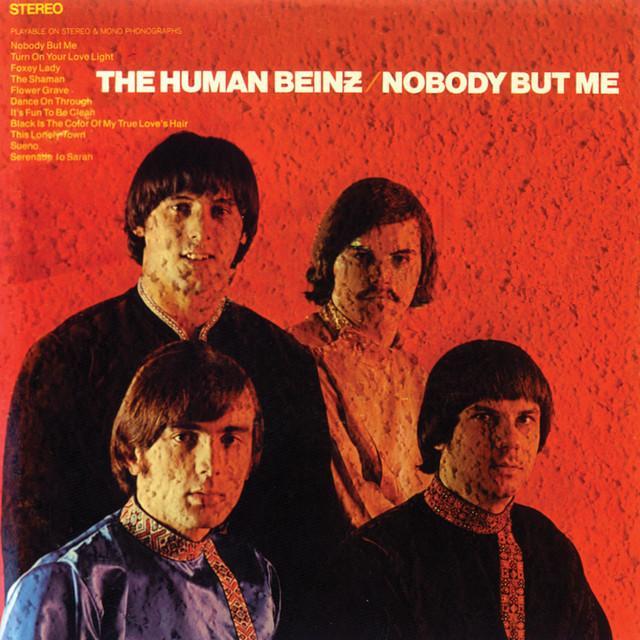
Nobody But Me by The Human Beinz
Why This Loud Little Hit Still Connects
The meaning of Nobody But Me The Human Beinz starts with a very simple idea: total self-belief. The song does not tell a complicated story. Instead, it builds a whole identity out of repetition, rhythm, and attitude. They present a singer who steps onto the dance floor and insists that no one can match their moves, energy, or style.
"Nobody But Me" - The Human Beinz
Na-no, no, na-no, no-no, na-no, no-no, no, no-no, no
Nobody can do the (Shing-a-ling) like I do
Loading lyrics...
Unable to load lyrics
We're unable to display the lyrics at this time. Please try again later.
That is why the song still feels alive. It is not about careful reflection. It is about presence. In just over two minutes, The Human Beinz turn bragging into a party chant, and that confidence is the whole point.
Watch the official Nobody But Me
music video
From Isley Brothers Cut to Garage-Rock Smash
Factually, this was not originally a Human Beinz song. It was written by O'Kelly Isley, Ronald Isley, and Rudolph Isley, and first recorded by The Isley Brothers in 1962. The Human Beinz released their famous version in 1967, and it became the hit, reaching No. 8 on the Billboard Hot 100 in 1968, according to Songfacts and Wikipedia.
That history matters because their version shifts the song’s feel. The Isley Brothers came from an R&B and early rock and roll tradition. The Human Beinz made it rawer, faster, and more garage-rock. They were a Youngstown, Ohio band who had reportedly played the song live for years before recording it, which helps explain why their take sounds so road-tested and explosive, as noted by Songfacts.
The Core Message: Confidence as Performance
At the center of the lyric is a boast: Nobody but me
. They are not asking for approval. They are declaring superiority in public, with a grin. The song lists dances and then claims mastery over all of them.
That matters because the lyric is less about any one dance step than about identity. Phrases like like I do
turn movement into self-definition. The singer is saying that style cannot be copied, because style comes from personality.
Interpretation: This is why the song can feel bigger than a novelty dance track. Beneath the playful bragging, it celebrates individuality. They frame performance as proof of self.
The Dances Are More Than Name-Drops
The lyric mentions several 1960s dances, including Shing-a-ling
, Skate
, and Boogaloo
. On the surface, those are just trendy references that would have sounded current to young listeners.
But they also do something more important. They place the song inside a social world where dancing means status, freedom, and visibility. If someone can out-dance the room, they can own the room.
So the repeated claims are not random. Each dance name expands the singer’s power. They are not best at one thing. They are best at everything that matters in that moment.
How Repetition Creates Meaning
One reason the track is unforgettable is how obsessively it repeats itself. Critic Dave Marsh famously called it the most negative song to hit the Top 40 because of how often it says “no” and “nobody,” a statistic summarized by Songfacts and Wikipedia.
Still, the repetition does not sound gloomy. It sounds excited, almost wild. The constant refusal in the words becomes a strange kind of affirmation. They keep saying nobody else matters, which ends up meaning the singer matters a lot.
Nobody can do the Shing-a-ling like I do Ain't nobody do it but me
In that short passage, the song’s whole logic becomes clear. First comes the challenge, then the answer: no rival exists. It is repetitive, but that is exactly why it works. The hook feels less like a statement and more like a crowd chant.
How the Sound Sells the Swagger
Production is a big part of the meaning. The Human Beinz reportedly cut down a much longer live version to a radio-sized blast of about two minutes, recorded over two days on an 8-track machine, according to Songfacts. That decision shaped the song’s identity.
Nothing lingers. The guitars jab, the drums push hard, and the vocals sound urgent rather than polished. The roughness makes the confidence believable. A smoother performance might have felt too neat. This one feels like a band trying to win over a room in real time.
There is also a sense of joyful chaos in the arrangement. The famous ending detail—reportedly made by hitting an empty Pepsi bottle with a drumstick—fits the song perfectly because it adds one more burst of weird personality. Even the production says: nobody does it quite like them.
Why the Song Lasted in Pop Culture
The track has kept showing up in movies, TV, and ads, from Kill Bill: Vol. 1 to The Office, as documented by Songfacts and Wikipedia. That long afterlife makes sense.
Its appeal is immediate. Viewers do not need to know the band’s history to understand the mood. The song instantly creates mischief, momentum, and cocky fun. It works whenever a scene needs strut, rebellion, or comic overconfidence.
A Final Reading of the Song’s Meaning
So what is the meaning of Nobody But Me The Human Beinz? Factually, it is a dance-rock hit built from a simple brag. Interpretation: emotionally, it is about the thrill of feeling irreplaceable, if only for a moment.
That is the real charm. They take a tiny idea—no one can top me—and push it until it becomes funny, infectious, and strangely empowering. The song is not deep in a poetic sense. Its depth comes from conviction.
In other words, Nobody But Me turns ego into celebration. And that is why it still lands.
Disclaimer: This interpretation mixes documented facts with informed reading of the lyrics, sound, and cultural context. Song meaning can vary from listener to listener.







