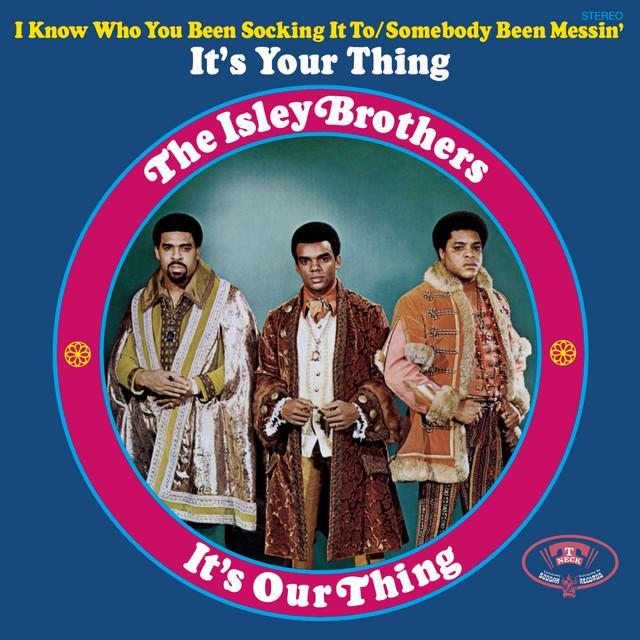
Why “It’s Your Thing” Still Feels Defiant
The meaning of It's Your Thing The Isley Brothers starts with a simple idea: nobody wants to be controlled. In the song, they present that message through romance, swagger, and a groove that sounds almost impossible to resist.
"It's Your Thing" - The Isley Brothers
I can't tell you, who to sock it to
It's your thing, do what you wanna do
Loading lyrics...
Unable to load lyrics
We're unable to display the lyrics at this time. Please try again later.
On the surface, the singer tells another person that their choices are their own. But the record also carried extra force in 1969, because The Isley Brothers had just left Motown and returned to their own T-Neck label. That real-life context makes the song feel bigger than a casual relationship talk.
A Love Song With a Declaration Inside
At the lyric level, the message is direct. The chorus revolves around It’s your thing
and do what you wanna do
, which frames love as a matter of personal choice, not ownership.
The singer does not beg, threaten, or try to control. Instead, he shrugs off the urge to dominate and says he cannot decide who to sock it to
. In plain terms, he is saying the other person has agency.
Interpretation: That stance can sound generous, but it is not purely selfless. The verses suggest he still wants affection and attention. So the song mixes freedom with desire: he accepts choice, even while hoping he will be chosen.
Watch the official It's Your Thing
music video
Why 1969 Matters So Much
The broader story is a major reason the song still lasts. According to Wikipedia and Songfacts, this was the group’s first release after leaving Motown, and they wrote and produced it themselves.
That matters because the song’s message of independence matched their career moment. Many critics and fans have heard it as a subtle answer to label control, especially after the group felt limited at Motown. They were not just singing about freedom; they were practicing it.
The single was released on February 16, 1969, peaked at No. 2 on the Billboard Hot 100, hit No. 1 on the R&B chart, and later won the 1970 Grammy for Best R&B Vocal Performance by a Duo or Group, as summarized by Wikipedia. That success turned their statement into proof.
How the Verses Complicate the Hook
The chorus is famous because it sounds loose and open. But the verses add tension. When the singer says maybe I will
and it ain’t no big deal
, he sounds cool on purpose, almost as if he is trying to stay emotionally above the situation.
That cool tone is important. It suggests a person trying to protect pride while facing uncertainty. He will not control the other person, but he also will not pretend he feels nothing.
Freedom Without Possession
Another key line is I’m not trying to run your life
. That is the clearest statement in the song’s worldview. Love is presented as something shared, not managed.
Interpretation: This is part of what gives the record its modern feel. Instead of treating romance like ownership, it treats it like negotiation between equals, even if ego still lingers in the background.
The Groove Says as Much as the Words
The song’s meaning is not only in the lyrics. It is also in the way the record moves. Wikipedia identifies it with R&B and psychedelic funk, and its short 2:47 runtime gives it a punchy, urgent feel.
The performance is stacked with energy: Ronald Isley on lead vocal, O’Kelly and Rudolph on background vocals, Woody Woodson on drums, Herb Rooney on piano, George Patterson on sax and arrangement, and Charles “Skip” Pitts on guitar. One especially notable detail is that 16-year-old Ernie Isley played bass on the track, his first recorded bass performance, according to Wikipedia and Songfacts.
That rhythm section makes the song feel self-possessed. The drums hit hard, the bass pushes forward, and the guitar and horns answer the vocal with attitude. The result is music that does not ask permission.
It’s your thing
Do what you wanna do
I can’t tell you
Who to sock it to
Those lines are catchy, but their real power comes from repetition. Every return to the hook sounds less like advice and more like a creed.
A Funk Landmark, Not Just a Hit Single
The record’s place in music history also shapes its meaning. Wikipedia notes that it is widely credited as an early funk anthem, helping define the style alongside giants like James Brown and Sly and the Family Stone.
That makes sense. Funk often centers the body, the beat, and a kind of fearless self-expression. “It’s Your Thing” fits that tradition exactly. The song’s looseness is disciplined, and its confidence feels communal rather than polished for approval.
Its long afterlife in covers, samples, and pop culture only deepens that reading. Artists have kept returning to it because its message is broad enough to travel: in love, in art, and in identity, people want room to decide for themselves.
The Best Way to Hear the Song Today
The best reading is probably both personal and professional at once. On one level, the singer tells someone their love life is their choice. On another, The Isley Brothers turn that idea into a public statement about creative control.
That is why the meaning of It's Your Thing The Isley Brothers still lands. It is playful, proud, and slightly wounded, but never passive. They made a dance record out of independence.
In the end, the song says freedom may sting a little, but it still beats being owned.
Disclaimer: This interpretation separates documented facts about the song’s release and recording from critical reading of its lyrics and themes. Meanings can vary by listener.








