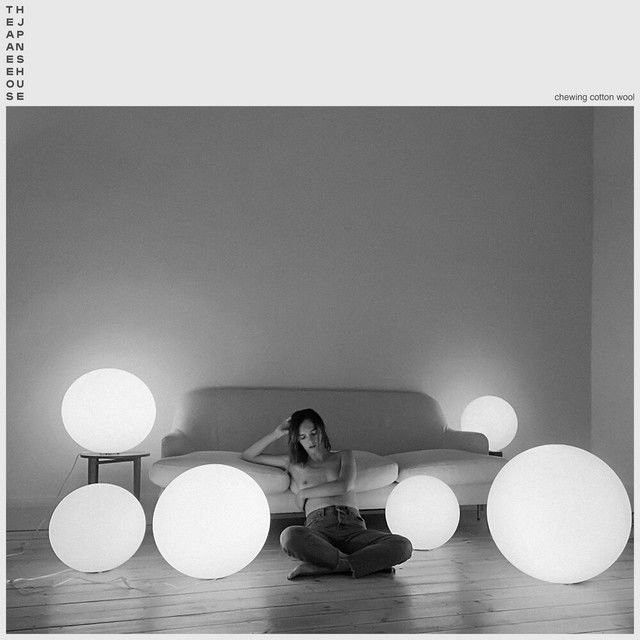
Dionne by The Japanese House, Justin Vernon
The meaning of Dionne The Japanese House, Justin Vernon sits in a painful but familiar place: loving someone deeply while knowing that love does not erase their past. The song is tender, awkward, protective, and a little self-mocking. Rather than sounding like a grand romance, it feels like a private moment where devotion becomes almost embarrassing because it is so total.
"Dionne" - The Japanese House ft. Justin Vernon
Talkin' about somethin' meaningless
Wishin' that someone would film the way I'm lookin' at you right now
Loading lyrics...
Unable to load lyrics
We're unable to display the lyrics at this time. Please try again later.
The track was released by The Japanese House, the project of Amber Bain, and features Justin Vernon of Bon Iver. It appeared on Bain's 2023 album In the End It Always Does, and Bain is credited as a writer alongside Vernon. Those facts matter because the song sounds like two artists meeting in a space both intimate and emotionally precise.
A Love Song That Refuses Easy Comfort
At its core, the song describes someone watching a person they love while other people talk around them. The outside conversation feels trivial, almost like background noise. What matters is the look, the memory of the look, and the weight of what the loved person is carrying.
Early on, the narrator admits a kind of extreme self-awareness. The phrase meaningless
dismisses the room's chatter, while the way I'm lookin' at you
turns all attention toward one person. Then the song jolts into dark humor with an image of wanting to replay that loving gaze and feel mortified by it. That blend of sincerity and cringe is a key part of the song's emotional truth.
Interpretation: the song suggests that real love can feel uncool. It makes people obvious. It strips away distance and irony.

Watch the official Dionne
music video
The Emotional Problem Under the Romance
The most revealing lines are not just about desire. They are about timing, restraint, and emotional history. The narrator knows this is not the right moment to stir up old issues. In other words, they understand the other person well enough to see where the wounds are.
That is why the song feels more mature than dreamy. It admits that being known this well is not very sexy
. In plain terms, the relationship has moved past fantasy. They know each other's patterns, triggers, and old pain.
Past and Present Collide
One of the song's sharpest ideas is that memory can trap a person. The lyric about how the past becomes the present if it stays on the mind gives the song its emotional engine. Bain's narrator is not only loving someone in front of them. They are loving someone while their history keeps intruding.
That is where the title comes in. The mention of Dionne Warwick's "Walk On By" places this relationship inside a larger pop tradition of heartbreak and endurance. The reference is brief, but it matters. Warwick's music carries elegance, sadness, and restraint, and those same qualities shape this song.
What the Chorus Really Does
The chorus sounds supportive at first. Phrases like Pay them no mind
and You're alone with this one
seem to defend the loved person against judgment or noise from others.
But the reassurance is uneasy. The chorus does not promise healing. Instead, it accepts isolation. When the song says it won't do no good
, it hints that some emotional struggles cannot be solved by talking, arguing, or even loving harder.
Interpretation: this is the sound of someone trying to be helpful while knowing they may be powerless. That tension gives the chorus its ache.
Why Justin Vernon's Feature Matters
Justin Vernon does not just decorate the song. His voice changes the emotional temperature. Bain often writes with soft-focus intimacy, and Vernon's presence adds a rougher, earthier gravity. Together, they create the sense of an internal conversation becoming external.
Because the song is about closeness and difficult emotional knowledge, the duet structure matters. It can sound like two people inside the same problem, or one voice echoing the other's concern. Either way, the feature deepens the feeling that this relationship is shared, observed, and lived in.
Sound, Production, and the Feeling of Holding Back
Musically, "Dionne" is gentle but unsettled. The production wraps the song in soft indie-pop textures, but it never feels weightless. The arrangement gives space to the vocals, which mirrors the lyrical theme of careful attention.
There is also a sense of containment in the song's pacing. Nothing explodes. That matters. The narrator talks about suppressing feelings and not digging up old ground, and the production follows that same emotional logic. The track moves with control, not catharsis.
Small Details, Big Meaning
The repetition near the end, especially around film the way I'm lookin' at you
, feels obsessive in a revealing way. It turns a passing thought into a loop. They are not just loving the person; they are stuck in the act of witnessing that love.
That makes the song feel almost cinematic. The imagined camera is not there to make the moment glamorous. It is there to prove the feeling was real, even if the narrator is embarrassed by how visible it makes them.
The Best Way to Read "Dionne"
The meaning of Dionne The Japanese House, Justin Vernon is not simply romance or heartbreak. It is about the strange mix of devotion, shame, care, and helplessness that can exist in a close relationship. They see someone clearly. They love them deeply. They also know that old pain has its own life.
That is what makes the song hit so hard. It understands that intimacy is not just passion. Sometimes it is watching someone hurt, knowing exactly why, and still not being able to fix it.
Disclaimer: This interpretation is based on the song's lyrics, performance, and publicly known release context. Like most art, the song can support more than one meaning.









