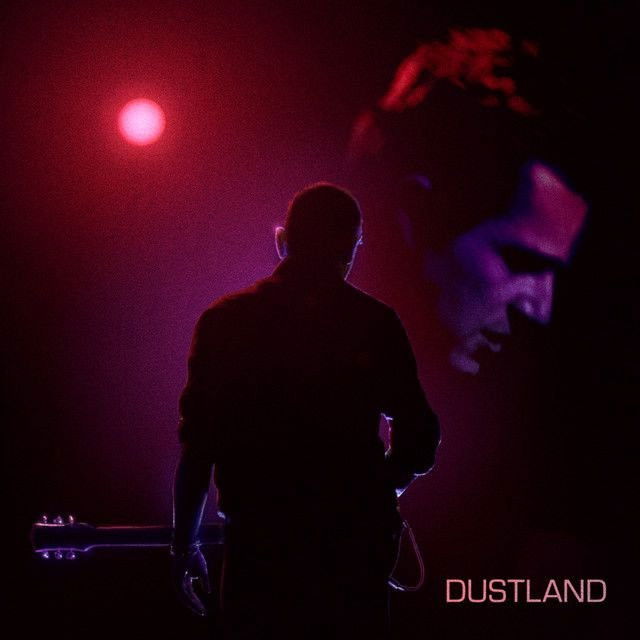
Why “Dustland” Hits Harder With Bruce
The meaning of Dustland The Killers, Bruce Springsteen starts with a family story, but it grows into something larger: a portrait of love trying to survive time, class, fear, and loss. First released as "A Dustland Fairytale" on Day & Age in 2008, the song was later reworked in 2021 as "Dustland," with Bruce Springsteen joining Brandon Flowers in a full duet.
"Dustland" - The Killers, Bruce Springsteen
Or just another white trash
County kiss
Loading lyrics...
Unable to load lyrics
We're unable to display the lyrics at this time. Please try again later.
That change matters. The original was already one of The Killers’ most emotional songs. With Springsteen, it becomes even more like an American elegy for ordinary people whose lives never look glamorous, but still carry epic weight.
A family memory dressed like a myth
Factually, Flowers has explained that the song was inspired by his parents, who met as teenagers in the same trailer park while his mother was battling cancer. He described it as an attempt to understand his father, grieve his mother, and honor their sacrifices. He said, “It was my therapy. It was cathartic,” as reported by Songfacts and American Songwriter.
That context unlocks the song’s strange mix of fairy-tale and rough-edged imagery. The opening idea of a dustland fairytale
immediately clashes fantasy with poverty and damage. This is not a clean Disney world. It is a story about young love in a hard place, where people want beauty but live with limits.
Flowers paints his parents as larger-than-life figures without pretending their life was easy. The father becomes a kind of American prince, and the mother becomes Cinderella. But these are not royal figures. They are teenagers in a working-class setting, trying to build something lasting.
Watch the official Dustland
music video
The song’s real tension: dream versus reality
One of the smartest parts of the lyric is how often it pushes against romance. When the song says Cinderella in a party dress
, it suggests glamour. But that image is quickly undercut by exhaustion, danger, and the need for comfort rather than fantasy.
Interpretation: this is why the song feels so moving. It keeps asking whether people can still believe in love after life has stripped away the easy illusions. The line about the devil preparing for a showdown turns hardship into a looming force. The threats are never fully named, which makes them feel bigger: poverty, illness, disappointment, aging, maybe even death.
Another key image is the Great Divide
. In plain terms, the song reaches a point where escape seems necessary. The narrator sees where things may be heading and wants out. But emotionally, that divide also suggests the gap between who people hoped to be and what life made of them.
A chorus built from emptiness
The repeated “out here” lines are some of the starkest writing Flowers has done. They describe a barren place where joy, growth, and song seem absent. Instead of quoting the full section, it is enough to say that the landscape becomes emotional geography.
Out where the dreams all hide
Out here the bell don't ring
Paraphrased, the song imagines a place where promise has gone quiet. Dreams are not gone forever, but they are buried, hidden, or delayed. Even the bell not ringing suggests no rescue, no celebration, and no clear ending.
Interpretation: “dustland” is not only a real environment. It is a mental and spiritual state. It is what happens when hope dries out but refuses to die.
Why Springsteen changes the meaning
The 2021 version matters because Springsteen did not simply guest on a classic track. According to reports summarized by Songfacts and American Songwriter, he texted Flowers first: he wanted to do “Dustland.” That says a lot, especially since Springsteen reportedly considered it his favorite Killers song.
His presence fits naturally. Flowers said Springsteen had long written about people like his parents and found beauty in “otherwise invisible people’s hopes and dreams.” That is exactly what “Dustland” does.
Pitchfork noted that on the duet, Springsteen and Flowers trade lines instead of fully blending, which gives the song a dramatic, almost mini-operatic tension. That choice is important. Rather than sounding like one voice, they sound like two generations answering each other. Flowers brings intimacy and ache. Springsteen brings weathered authority.
Together, they turn private grief into shared experience.
How the music carries the story
The song is usually tagged as heartland rock, and that fits. The arrangement pushes forward with a wide-screen, road-song feeling, but it never loses its bruised center. The production on the original is credited to Stuart Price and The Killers, and the song appeared on Day & Age in 2008; the duet version arrived in 2021.
Musically, “Dustland” moves like memory: steady drums, rising guitars, and a chorus that opens into the horizon. There is grandeur, but not comfort. Even when the melody lifts, the emotional ground still feels unstable.
That contrast mirrors the lyric. The sound reaches for transcendence while the words stay close to fear, class, and mortality. In other words, the music sounds like the dream, while the lyrics track the cost.
The clearest reading of the ending
Late in the song, the plea not to sleep feels deeply personal. Sleep sounds less like rest and more like surrender. The warning that the kingdom is under siege suggests a life under pressure, where love itself needs defending.
Interpretation: in the final stretch, Flowers is not just singing to Cinderella, or even only to his mother. They may be singing to anyone trying to keep tenderness alive in a world that wears people down.
That is the lasting power behind the meaning of Dustland The Killers, Bruce Springsteen. It is a song about ordinary parents, but it treats them like legends. It is about lost innocence, but it does not become cynical. And with Springsteen in the picture, it sounds even more like what it always was: a broken American love story told with reverence.
Disclaimer: This interpretation combines documented artist comments with critical reading of the lyrics and music. Some meanings remain open to the listener.







