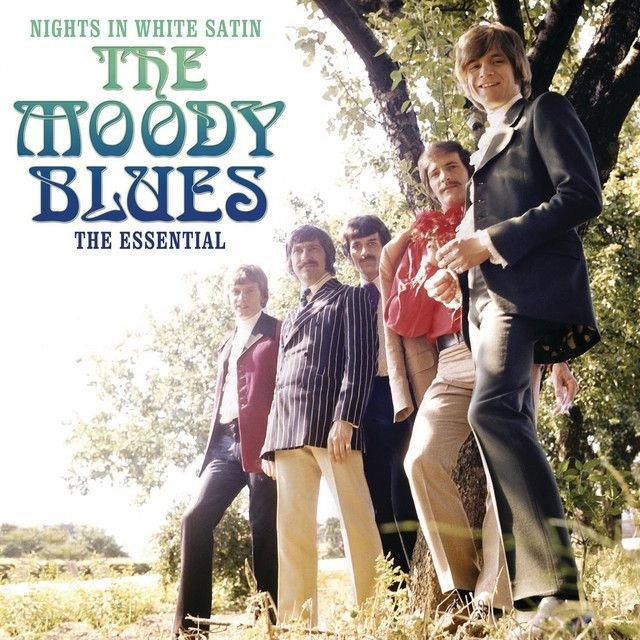
Why 'Nights in White Satin' Still Hurts
The meaning of Nights In White Satin The Moody Blues still draws listeners because the song feels simple on the surface and complicated underneath. It sounds like a love song, but it also carries confusion, distance, and the ache of things left unsaid.
"Nights In White Satin" - The Moody Blues
Never reaching the end
Letters I've written
Loading lyrics...
Unable to load lyrics
We're unable to display the lyrics at this time. Please try again later.
Written by Justin Hayward and first released in 1967, the track appeared on Days of Future Passed, the Moody Blues album that blended rock with orchestral color. It was produced by Tony Clarke, with orchestral arrangements by Peter Knight, and later became a major U.S. hit in 1972 after a reissue pushed it to No. 2 on the Billboard Hot 100. Those facts help explain why the song feels bigger than a private confession: it is intimate, but it is staged on a grand canvas.
A Love Song Caught Between Two Moments
At its core, the song is about someone overwhelmed by love and unable to settle their thoughts. The opening images of Nights in white satin
and Letters I've written
set up a scene of late-night emotion. The narrator is full of feeling, but that feeling does not become clear action.
That matters because the song is not about a stable romance. Hayward later explained that he wrote it while he was at the end of one big love affair and the beginning of another. That biographical detail makes the emotional tension easier to hear. The song is not just saying “I love you.” It is asking what love feels like when someone is confused, lonely, and trying to understand themselves.

Watch the official Nights In White Satin
music video
The Real Weight of the Unsent Words
One of the song’s strongest ideas is emotional overflow without release. When the lyric mentions Never meaning to send
, it suggests private letters, rehearsed confessions, or thoughts that feel too raw to share.
That image connects to the larger theme of distance. The narrator is not empty; they are almost too full. They have words, but the words stay trapped. That is why the song feels suspended, as if it never quite reaches closure.
Why the chorus lands so hard
The repeated declaration of 'Cause I love you
is direct, but it does not solve anything. Instead, it makes the verses sadder. The feeling is clear, yet the situation remains unclear.
Interpretation: This is part of what gives the song its staying power. The chorus is not triumph. It is release mixed with helplessness.
Seeing Beauty Too Late
Another key line points to missed perception. When the narrator speaks of beauty they had not truly seen before, the song suggests awakening through pain. Love has changed how they look at the world, but that change comes with regret.
The line With these eyes before
hints that the speaker feels older within the song than they may actually be. Hayward was only 19 when he wrote it, yet the lyric carries the shock of sudden maturity. They have discovered feeling and insight at the same time, and both discoveries hurt.
Watching Other People, Feeling More Alone
The middle section shifts from inner thoughts to the outside world. The narrator watches others moving through life, including couples, and feels unseen. They believe other people cannot grasp what they are going through.
That detail broadens the song beyond romance. It becomes a portrait of isolation. Love here is not only connection; it is also the thing that makes the narrator feel most separate from everyone else.
Gazing at people, some hand in hand
they can't understand
This brief moment matters because it puts private pain in a public space. The narrator is surrounded by people, yet emotionally alone.
How the Sound Deepens the Meaning
A big reason the song feels so haunting is its arrangement. Mike Pinder’s Mellotron supplies much of the song’s famous string-like texture, while Peter Knight’s orchestration and the London Festival Orchestra add sweep at the edges. Ray Thomas’s flute also softens the track and gives it a drifting, nocturnal feel.
The result is a sound that mirrors the lyric’s emotional blur. The music rises like a memory rather than a statement. Even the chord movement, often noted for its dark E minor center, supports the sense of longing and unresolved feeling.
Interpretation: If the words are unsent letters, the arrangement is the emotional weather around them. The orchestra and Mellotron make private confusion sound universal.
Why It Took Time to Become a Classic
The song was only a modest hit at first. In the U.S., its original release stalled outside the Top 100, but the 1972 reissue benefited from radio’s growing openness to longer, moodier tracks and climbed all the way to No. 2. That delayed success fits the song itself: it is patient, reflective, and not built for quick impact.
Its legacy has held up because listeners keep hearing their own lives in it. Hayward called it a very personal song and said every word meant something to him. Even so, he also noted that many people felt the same way when they heard it. That balance between the specific and the universal is the secret.
What the Song Ultimately Means
So what is the meaning of Nights In White Satin The Moody Blues? Most clearly, it is about love in a state of emotional overflow: desire, regret, confusion, wonder, and isolation all at once.
Interpretation: It can also be heard as a song about perception itself. The narrator is learning that truth and feeling do not always arrive in neat sentences. Sometimes they come as fragments, repeated phrases, and half-finished letters.
That is why the song still feels alive. It does not explain love cleanly. It lets listeners sit inside its beauty and uncertainty.
Disclaimer: This interpretation is based on the recorded lyric, documented background, and commonly cited artist comments. Like many classic songs, it remains open to personal reading.







