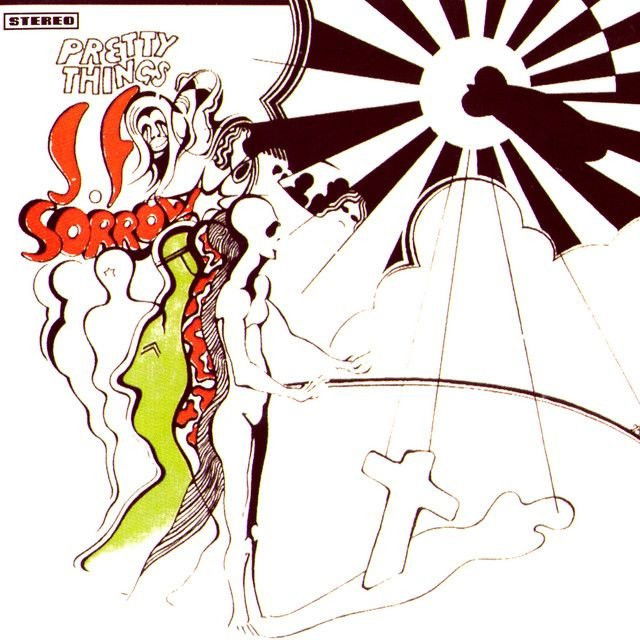
S.F. Sorrow Is Born by The Pretty Things
The meaning of S.F. Sorrow Is Born The Pretty Things starts with a clever twist: a birth song that does not feel fully joyful. Instead of treating a child’s arrival as a clean beginning, the band frames it as the first chapter in a life already shadowed by distance, deceit, and inner gloom.
"S.F. Sorrow Is Born" - The Pretty Things
Nobody thought there would be
Family laughter behind the windows
Loading lyrics...
Unable to load lyrics
We're unable to display the lyrics at this time. Please try again later.
This matters because the track is the opening scene of S. F. Sorrow, the Pretty Things’ 1968 album, widely described as one of the first rock operas. According to the album’s documented history, the record follows Sebastian F. Sorrow through birth, work, love, war, grief, and spiritual collapse. It was released on December 20, 1968 and produced by Norman Smith during sessions at EMI’s Abbey Road studios.
A Birth Scene With a Dark Edge
On the surface, the story begins simply. A house that had been empty now has new tenants, and soon the neighborhood hears a baby’s cry. The song uses ordinary details like number three
and a Christmas tree
to place the listener in a familiar working-class street.
That plain setting is important. The Pretty Things do not introduce Sorrow as a mythic hero. They present him as a child born into routine life, into a row of houses and everyday sounds. Then the title line, S. F. Sorrow is born
, lands less like a celebration than like the start of a long fate.
Interpretation: the song suggests that sorrow is not just his surname. It also feels like his condition. From the first track, they blur the line between a person and an emotion.
Watch the official S.F. Sorrow Is Born
music video
The Lyrics Turn Inward Fast
The most revealing move comes late in the song, when the writing jumps ahead from birth to character. After the street-level storytelling, the lyrics describe how the grey of his mind
shapes his life. In other words, the song is not only saying he was born; it is saying he was born into alienation.
That shift gives the track its real purpose. It compresses biography into omen. The child grows, but instead of opening outward, he seems to close in on himself. The line about using a tongue of lies
hints at emotional damage, weak trust, or learned survival. The final image, the world is shrinking
, makes his life feel mentally boxed in.
Interpretation: this is less a cradle song than a diagnosis. The Pretty Things imply that Sorrow’s troubles are social and psychological at once.
How It Fits the Album’s Bigger Story
The song works best when heard as the doorway into the full album narrative. S. F. Sorrow follows Sebastian through key stages of life, and later songs expand the sadness only hinted at here. Reference summaries of the album story describe love, war service, devastating loss, surreal visions, and a final descent into loneliness.
Phil May later explained that the group wanted a connected 40-minute work rather than unrelated songs, shaping music around a storyline and characters. That context helps explain why this opener is so compact. It plants the seeds of everything to come: home life, identity, emotional fracture, and a life that seems fated before it truly begins.
A Tiny Plot Map
- A once-empty house becomes occupied.
- A baby is born in an ordinary neighborhood.
- The song jumps from event to emotional forecast.
- Sorrow’s inner life is marked as troubled from the start.
That structure is efficient, almost novelistic. They sketch a scene, then reveal the tragedy underneath it.
The Sound Makes the Birth Feel Unsteady
Part of the meaning of S.F. Sorrow Is Born The Pretty Things comes from the production. The album was recorded between late 1967 and 1968 at EMI Studios with Norman Smith, the former Beatles engineer who also produced early Pink Floyd. Reports on the sessions note the use of Mellotron, sitar, unusual percussion, heavy overdubs, and studio effects.
Even when this specific track stays relatively direct, it benefits from that larger psychedelic design. The performance does not sound warm in a simple family-song way. It has movement and color, but also tension. That balance mirrors the lyrics: a child enters the world, yet the mood already feels unstable.
Interpretation: the arrangement turns birth into foreshadowing. Rather than promising innocence, the music suggests vulnerability and strangeness.
Why the Song Still Stands Out
The Pretty Things were reaching for something ambitious. Later critics often praised S. F. Sorrow for its adventurous production and emotional scope, even though the album was not a chart hit at the time. Its reputation grew because listeners came to hear how boldly it linked psychedelic rock to character-driven storytelling.
This opening song is a big reason that concept works. It gives Sorrow a social address, a family entry point, and an inner curse all in a few verses. They do not overexplain him. They let the contrast do the work: family home versus mental greyness, birth cry versus shrinking world.
The Core Meaning in One View
So, what is the song really saying? At its heart, it presents birth as the start of an identity shaped by sadness, confinement, and emotional distortion. It is about the arrival of a person, but also the arrival of a worldview.
That is why the song feels larger than its plot. It begins on one street, in one house, on one ordinary day. Yet it quietly argues that a whole tragic life can already be heard in the first cry.
Interpretation disclaimer: song meanings are never fully fixed. This reading is based on the lyrics provided, the album’s documented story, and the band’s recording context.







