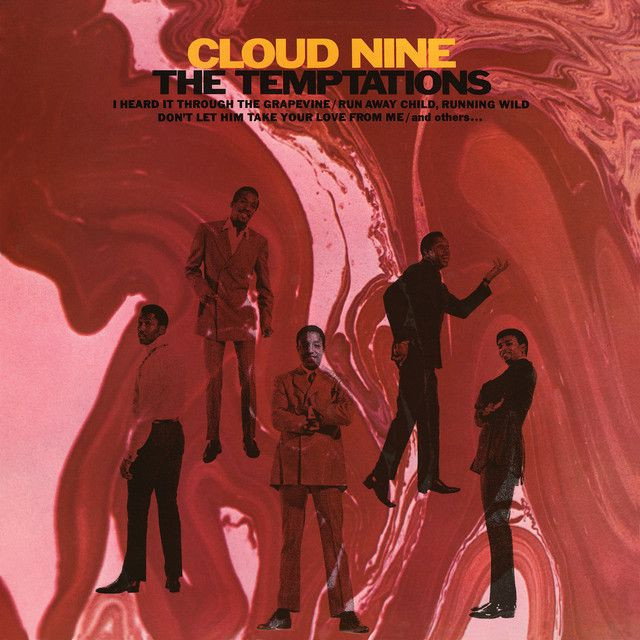
Cloud Nine by The Temptations
Why This Song Still Feels Radical
The meaning of Cloud Nine The Temptations starts with escape, but it does not stop there. On the surface, the song is about getting away from pain. Under that surface, it becomes a sharp picture of poverty, family stress, social pressure, and the need to survive.
"Cloud Nine" - The Temptations
Childhood part of my life, it wasn't very pretty
You see, I was born and raised in the slums of the city
Loading lyrics...
Unable to load lyrics
We're unable to display the lyrics at this time. Please try again later.
Released in 1968, “Cloud Nine” was a major turning point for the group. It was their first single with Dennis Edwards and one of the clearest signs that producer Norman Whitfield was pushing The Temptations into psychedelic soul and funk, a shift documented by major reference sources and music histories. The song was written by Norman Whitfield and Barrett Strong, produced by Whitfield, and later won Motown its first Grammy. Those facts matter because the song’s message lands partly through its bold new sound, not just its words.
Watch the official Cloud Nine
music video
A Hard-Life Story Hiding Inside a Hit
At the center of the lyric is a narrator who grows up in deep hardship. They describe a crowded home, very little food, and a father who brings more pain than stability. The verses build a clear social setting before the chorus ever arrives.
That opening matters because it frames “cloud nine” as a response to suffering, not simple fantasy. When the singer says they are doin' fine
there, the line sounds upbeat, but the verse before it makes that happiness uneasy. They are not celebrating a perfect world. They are trying to get relief from a damaged one.
What “Cloud Nine” Most Likely Means
Interpretation: Escape First, Utopia Second
The strongest reading is that cloud nine is a mental escape hatch. It is a place where pressure disappears, where they can forget the harsh rules of ordinary life. The chorus promises no responsibility
and being a million miles from reality
. In plain terms, the song imagines a zone where the burdens of class, work, danger, and disappointment no longer control them.
That idea gives the song its tension. The verses are grounded in real-life struggle, while the chorus floats above it. The result is not pure joy. It is relief mixed with denial.
Interpretation: Is It About Drugs?
Many listeners, including Motown founder Berry Gordy, heard the song as a drug reference. That debate has followed the record for decades. At the same time, Whitfield, Strong, and members of The Temptations denied that this was the intended meaning.
Both facts can be true in practice: the writers may have denied a drug reading, yet the lyric still leaves room for one. Phrases about being riding high
and far from reality naturally invite that interpretation. Still, the song works even without that lens. Its emotional core is broader: people under pressure often dream of someplace—real or imaginary—where pain cannot reach them.
How the Verses and Chorus Work Together
The song is smart in how it moves from detail to slogan. First, it gives listeners a life story. Then it offers an answer.
Here is the basic path:
- The narrator describes childhood poverty and neglect.
- They leave home looking for work and do not find it.
- They see the world below as cruel and competitive.
- They choose cloud nine as an escape from that reality.
That structure explains why the chorus sounds both inviting and suspicious. It promises freedom, but it also hints at detachment. In one of the song’s key ideas, cloud nine lets people be what you wanna be
. That sounds liberating, yet the cost is losing contact with the real world.
Cloud nine, you can be what you wanna be
You ain't got no responsibility
These lines sum up the dream in simple language. The fantasy is not luxury. It is freedom from pressure.
The Sound Tells the Story Too
Psychedelic Soul as Meaning, Not Decoration
The production is crucial to the meaning of Cloud Nine The Temptations. This was not the polished, romantic Motown sound many listeners expected. Whitfield built the track with a harder beat, electric guitar, wah-wah effects, congas, and a more aggressive groove. Music histories often point to the influence of Sly and the Family Stone on this shift, and that influence helps explain why the song feels restless and modern.
Instead of one smooth lead voice, the group trades lines. That choice makes the song feel communal, almost like a street-corner conversation or a shared testimony. Different voices enter the fantasy together, which broadens the message beyond one person’s pain.
The groove also matters. It pushes forward rather than gliding. That drive gives the song urgency. Even when the chorus describes release, the music never fully relaxes. That contrast suggests that escape is temporary. The beat keeps reminding listeners that trouble is still out there.
Why the Song Mattered in 1968
“Cloud Nine” arrived at a time when soul music was becoming more openly political and experimental. It reached No. 6 on the Billboard Hot 100 and No. 2 on the U.S. R&B chart, and it won Motown its first Grammy. Those achievements show that a song about social strain and emotional escape could still break through to a huge audience.
It also opened a new chapter for The Temptations. After this record, they leaned further into psychedelic and socially aware songs. So “Cloud Nine” is not just a hit single. It is a bridge between classic Motown elegance and a tougher, more unsettled late-1960s sound.
The Lasting Takeaway
The best way to understand the meaning of Cloud Nine The Temptations is to hear both sides at once: the promise and the warning. Cloud nine is comforting because real life hurts. But the song never fully says that escape solves anything.
That is why it lasts. They turn hardship into a hook, but they do not erase the hardship. They make the fantasy sound good while leaving enough doubt to ask whether it is freedom, self-protection, or surrender.
Interpretation note: Song meanings can vary by listener. This reading separates documented facts about the song’s creation and reception from reasonable interpretation of its lyrics and themes.







