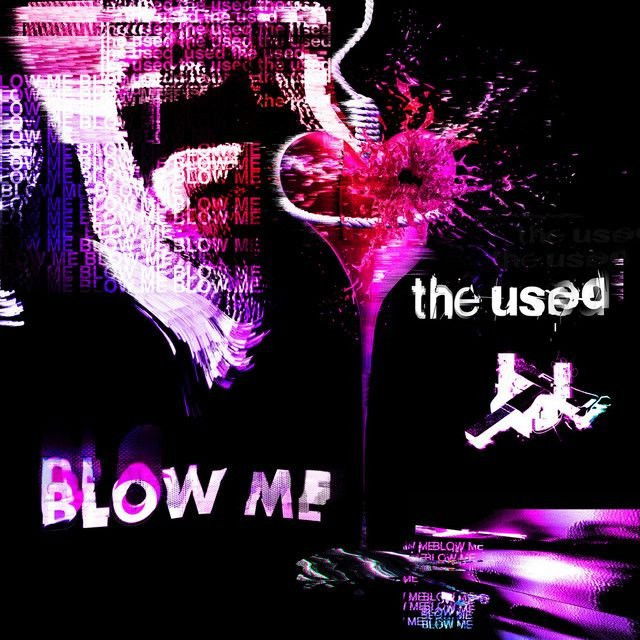
Why 'Blow Me' Hits Like a Warning
The meaning of Blow Me The Used, Jason Aalon Butler starts with shock, but it does not end there. The song sounds like a meltdown, yet its deeper purpose is more pointed: it turns violent imagery into a protest against violence itself.
"Blow Me" - The Used ft. Jason Aalon Butler
Looking scary through your window
It wasn't really what I planned
Loading lyrics...
Unable to load lyrics
We're unable to display the lyrics at this time. Please try again later.
According to Songfacts, Bert McCracken said the track responds to America's gun problem, while also touching on how powerful words can be in the social media age (Songfacts). That double meaning matters, because the song feels both physical and psychological at once.
A Protest Song Hidden Inside a Breakdown
On the surface, the lyrics describe someone holding a weapon, seeing the damage, and spiraling through guilt, anger, and blame. Short lines like felt so heavy
and made a mess
make the scene feel immediate and ugly.
But the song is not celebrating destruction. It is forcing listeners to face it. Interpretation: The narrator sounds trapped inside a violent thought cycle so the audience can hear how senseless and horrifying that cycle is.
McCracken told Kerrang, as quoted by Songfacts, that gun violence in America has gone beyond what is rationally acceptable. That comment gives the song a clear real-world frame: this is rage directed at a culture that has normalized the unthinkable.
Watch the official Blow Me
music video
Who Is Speaking in These Lyrics?
The voice in the song is unstable, accusatory, and self-aware. They speak as if confessing, but also as if challenging someone else to imagine the same act. That is why the repeated question What if you found a gun?
lands so hard.
The line is not just plot. It tests the listener. It asks whether violence is learned, inherited, or chosen.
The "killer in you" idea
Near the end, the song turns outward and becomes more confrontational. The repeated phrase killer in you
suggests that violence is not just one person's problem. It may live in culture, language, trauma, and example.
Interpretation: The narrator may be talking to a lover, a younger self, society, or even the audience. That ambiguity helps the song feel broader than one story.
How the Lyrics Build Their Message
The writing moves in a clear emotional sequence:
- First, there is fear and hesitation.
- Then comes the imagined or remembered act.
- After that, guilt and depression flood in.
- Finally, blame spreads beyond the self.
That pattern makes the song feel less like random chaos and more like a study of how violence echoes. When the singer says little boy inside my head
, the image points to childhood, damage, and the part of a person that never fully healed.
Would you use it like I did?
Put a bullet in my head
Those lines are blunt, but their function is clear: they strip away distance. The song refuses euphemism because euphemism would weaken the warning.
The Chorus Turns Panic Into Meaning
The chorus hinges on Blow me away
, a phrase with more than one meaning. In ordinary speech, it can mean amazement. Here, it also points toward gunfire and obliteration.
That wordplay is important. McCracken said the song can be read as being about gun violence or about the power of words (Loudwire). The chorus sits right at that crossroads. A person can be destroyed by a bullet, but they can also be wrecked by language, attention, shame, and public hostility.
Interpretation: The song uses that double meaning to show how modern violence is both literal and verbal.
Why Jason Aalon Butler Changes the Song
Jason Aalon Butler's guest spot gives the track extra urgency. Songfacts notes this was the first recorded collaboration between members of The Used and Fever 333, after Fever 333 supported The Used on tour in 2018 (Songfacts).
Butler is known for politically charged intensity, so his presence sharpens the song's protest edge. Instead of sounding like one person's private confession, the track starts to feel like a shared alarm.
Loudwire also reported that Butler had been a longtime fan of the band and jumped at the chance to appear on the song (Loudwire). That history adds chemistry rather than gimmick.
How the Sound Carries the Theme
Producer John Feldmann's role matters here. Both Songfacts and Loudwire identify him as the producer, and his long history with The Used helps explain the song's tight balance of melody and attack. The guitars hit hard, the drums push fast, and the vocals sound close to the edge.
That production style mirrors the lyrics. There is very little breathing room. The track feels compressed, urgent, and pressurized, which suits a song about living with constant threat.
Instrumentally, three things stand out
- Jagged dynamics: the song jumps between tension and explosion.
- Layered vocals: these make the inner argument feel crowded.
- Hooky structure: even with dark subject matter, the chorus sticks.
That last point is key. The song is catchy on purpose. It uses pop-punk and post-hardcore hooks to smuggle in a difficult subject.
The Strongest Reading of the Song
The best way to hear this track is as a protest song disguised as a personal crisis. It uses self-destructive imagery to condemn a society where deadly force feels close at hand and where language can also wound.
For listeners searching for the meaning of Blow Me The Used, Jason Aalon Butler, the song's power comes from that blend of personal pain and public anger. It is not asking for easy sympathy. It is asking people to look directly at what violence does to minds, relationships, and culture.
Disclaimer: This interpretation is based on the lyrics, the recording, and publicly available artist comments. Like most songs, Blow Me can support more than one meaning for different listeners.









