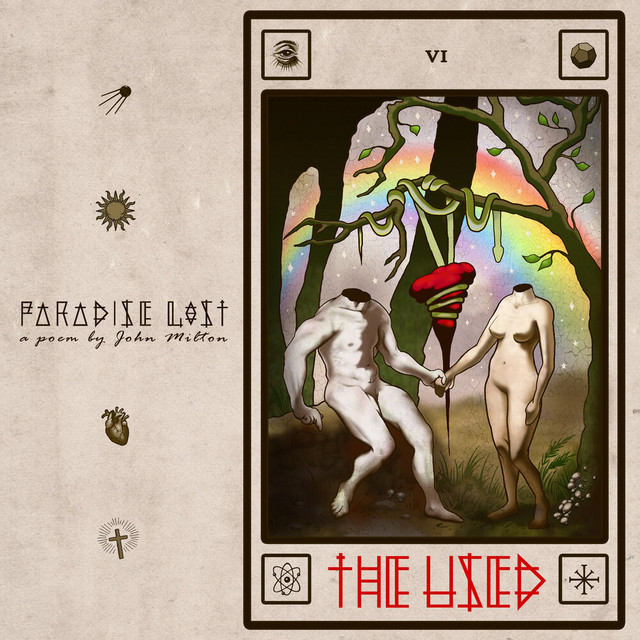
Paradise Lost, a poem by John Milton by The Used
The meaning of Paradise Lost, a poem by John Milton The Used centers on a bond they cannot fully escape. The song sounds like a confession from someone who knows a person, memory, or pattern is harmful, yet still feels pulled back into it. That is why the title matters so much: it borrows from John Milton’s Paradise Lost, the 1667 epic about temptation, the Fall, and exile from Eden.
"Paradise Lost, a poem by John Milton" - The Used
And all the tragic we've been through
No matter where I go
Loading lyrics...
Unable to load lyrics
We're unable to display the lyrics at this time. Please try again later.
Milton’s poem tells the story of Adam and Eve, free will, disobedience, and the loss of innocence. It is one of the best-known works in English literature and focuses on how paradise is ruined by choice and desire (Britannica; Poetry Foundation). The Used seem to turn that grand idea inward. Instead of retelling Milton, they use its language of corruption and consequence to describe emotional damage.
A Relationship That Feels Like Fate
At the start, the speaker addresses a painful history directly. They keep “running into” this person no matter where they go, which suggests more than coincidence. Interpretation: this can mean a literal ex, but it can also mean trauma, addiction, or a destructive pattern that keeps returning.
The early line about time feeling warped supports that reading. When they say Blink of an eye
, then imply it feels endless, the song captures how old pain can stay fresh. A short moment becomes a lasting wound.
Watch the official Paradise Lost, a poem by John Milton
music video
The Chorus Turns Love Into a Curse
The chorus is where the song’s meaning becomes clearest. They cannot cut ties, even though they understand the damage. The phrase Blessed with this curse
says everything: the connection feels special and intimate, but also punishing.
That contradiction is the emotional engine of the song. They know this person deeply, maybe better than anyone, and that knowledge keeps the attachment alive. In plain terms, the song is not just about heartbreak. It is about being trapped by emotional familiarity.
When the chorus reaches Paradise lost in your eyes
, the Milton reference clicks into place. A paradise once existed, or at least seemed to. Now it is gone, but the image of it remains in the other person’s face. Interpretation: they are mourning not only a relationship, but the version of themselves that existed inside it.
Eden Imagery, Recast as Modern Damage
The second verse leans harder into biblical imagery. The singer says they found a way out but still could not free themselves. That leads into references to disease, poison, and the tree, all of which echo Eden without directly retelling it.
The key phrase poisonous seed
suggests that the damage started small and grew. Likewise, the mention of trying not to eat from the tree points toward temptation and the failure to resist it. In Milton’s poem, the Fall is tied to choice and consequence; here, The Used shrink that huge idea into one bruised human relationship.
Found the key but couldn't open the cell
Tried not to eat from the tree
Those lines paraphrase the whole conflict: escape is visible, but not achievable. The person understands the trap and still stays inside it.
What “I’m Shaken” Really Means
The repeated hook I'm shaken
is simple, but it carries a lot of weight. It sounds like shock, grief, withdrawal, and self-doubt at once. The repetition matters because it mimics rumination: the mind circling the same pain again and again.
In many The Used songs, emotion arrives at full volume rather than being hidden behind cool distance. That style fits here. The repeated phrase feels less like poetry for its own sake and more like a body reacting before the mind can explain itself.
How the Sound Supports the Meaning
The Used built their reputation on mixing post-hardcore force with pop clarity and emotional directness (AllMusic). That blend helps this song. Even without a full production breakdown from the band, the writing points toward a structure where tension builds through repetition, a sharp chorus, and heavy emotional delivery.
This matters because the song’s message is about being unable to break free. A rock arrangement with urgent drums, pressure-building guitars, and a strained vocal tone would naturally reinforce that feeling. The likely effect is a push-pull between control and collapse.
Writers, Context, and Why the Title Is Smart
The song’s listed writers are Daniel Whitesides, Evan Bogart, Jeffrey Howard, John Feldmann, Joseph Bradford, and Robert Edward McCracken. Feldmann’s long history with emotionally polished rock songwriting makes the literary title even more striking: it pairs classic reference with modern alt-rock language.
The title is smart because Paradise Lost is not just about sin. It is about what happens after the choice: shame, separation, and living with the result. That is exactly the emotional world this song enters.
The Best Reading of the Song
The strongest reading is that this is a song about toxic attachment after paradise has already failed. Love, memory, guilt, and self-preservation all exist together. They know the bond is bad for them, but they cannot stop carrying it.
That is the core meaning of Paradise Lost, a poem by John Milton The Used: the loss of innocence inside intimacy. What once looked beautiful now lives as shadow, curse, and aftershock.
Final Thought
The title gives the song literary scale, but the feeling is very human. They turn Milton’s ideas of temptation and exile into the language of modern emotional ruin.
Disclaimer: This interpretation is based on the lyrics provided, the song title, and established context around Milton’s poem. As with all art, listeners may hear different meanings.








