Why 'Smell of Incense' Still Feels Haunted
The meaning of Smell of Incense The West Coast Pop Art Experimental Band comes down to a strange mix of beauty, rejection, and memory. The song feels dreamlike, but it is also painfully human. They present a figure who seems frozen in time, while the narrator tries and fails to keep emotional distance.
"Smell of Incense" - The West Coast Pop Art Experimental Band
She stood on the edge of my mind
I tried to push her away
Loading lyrics...
Unable to load lyrics
We're unable to display the lyrics at this time. Please try again later.
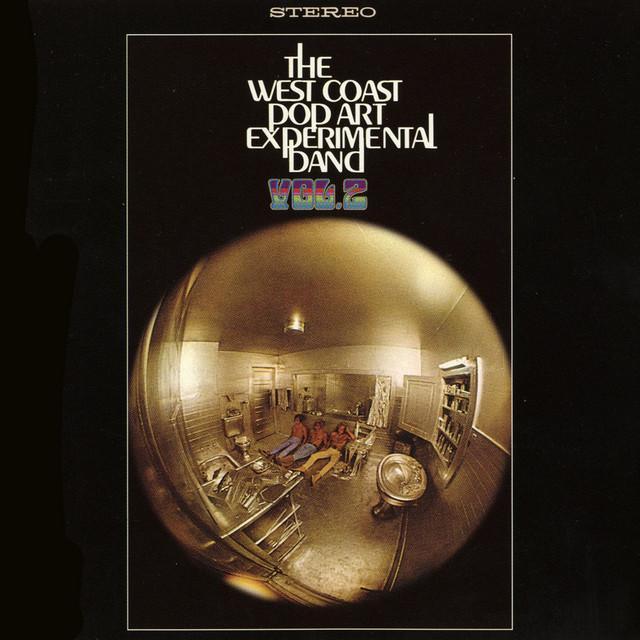
Released as a 1968 single on Reprise, and also heard in a longer form on Vol. 2 (Breaking Through), the song was written by Ron Morgan and Bob Markley and produced by Bob Markley and Jimmy Bowen. It did not chart in its original version, though it is now often treated as one of the band’s signature recordings.
A Psychedelic Song About Avoidance
On the surface, the lyric is simple. A woman stands in a room, still and watchful, while the narrator tries to shut her out. The line shut and locked the door
makes that rejection plain. But the song does not feel triumphant or cold. It feels guilty.
That is the key to its emotional force. They describe someone trying to create distance, yet the woman remains mentally present, almost fixed on the edge of my mind
. The song turns a private scene into a haunting one. The real conflict is not whether she leaves the room. It is whether the narrator can escape what she represents.
Interpretation: many listeners hear this as a song about pushing away intimacy and then being trapped by the afterimage of that choice.

Watch the official Smell of Incense
music video
The Woman in the Room, the Memory in the Mind
The woman is introduced in a striking way, with the image still as the shadows of stone
. That phrase makes her seem both real and statue-like. She is alive, but she also feels frozen, unreachable, or remembered rather than fully present.
Her look is described as large and questioning, and that detail matters. She does not argue. She does not attack. Instead, she silently asks something of the narrator. That silence gives the song its pressure.
A lost innocence reading
The next verse opens the meaning outward. When the lyric asks about childhood dreams
, the song stops being only about one relationship. It starts sounding like a lament for innocence itself. Then comes the urban image that the sidewalk smothers us
, which suggests modern life crushing wonder, hope, and emotional openness.
Interpretation: in this reading, the woman is not just a person. She may also symbolize a softer, younger self that adulthood has betrayed.
Why the Refrain Matters So Much
The repeated title image does most of the song’s symbolic work. The phrase smell of incense
points to ritual, spirituality, and altered perception. Incense fills a space even after a moment has passed, so it works as a perfect image for memory that lingers.
The refrain is repeated over and over until it becomes almost hypnotic. That repetition changes the song. What begins as a scene becomes an atmosphere. By the end, the listener is no longer asking what literally happened in the room. They are feeling what stayed behind.
And the smell of incense filled her room
And the smell of incense filled her room
That brief repetition suggests that the room itself has become saturated with feeling. The narrator may shut a door, but they cannot shut out scent, mood, or conscience.
How the Sound Deepens the Meaning
Part of why this song lasts is its arrangement. Critical notes on the recording often point to Shaun and Danny Harris’s breathy harmonies, Ron Morgan’s distorted guitar, and Shaun Harris’s heavy bass as central to its effect. Those elements give the track both softness and menace.
That contrast mirrors the lyric. The harmonies sound airy, almost angelic, while the bass and guitar drag the song into something darker and heavier. The result is a psychedelic sound that feels less like carefree color and more like emotional fog.
This matters because the band later maintained that songs like this were not written under LSD, despite their psychedelic image. That makes the strangeness of the song feel more crafted than chemically accidental. Its dream quality is artistic design, not just period fashion.
Context Around the Song’s Reputation
The West Coast Pop Art Experimental Band never had a major commercial breakthrough with this single. According to the available release history, the original 1968 version failed to chart. But reputation and chart success are not the same thing.
Over time, the song became one of the most admired tracks in their catalog. A shorter cover by Southwest F.O.B. even reached No. 56 on the Billboard Hot 100 in 1968, which shows that the composition itself had broad appeal even if the original release did not.
Why it still resonates
They captured something larger than a psychedelic mood. The song speaks to:
- guilt after emotional withdrawal
- the loss of youthful hope
- memory as something physical
- beauty mixed with dread
That is why the track still feels vivid. It is obscure in chart history, but not in emotional truth.
Final Take on the Song’s Meaning
The meaning of Smell of Incense The West Coast Pop Art Experimental Band is best understood as a haunted portrait of distance and regret. They place a silent woman, a guilty narrator, and a room full of lingering scent into one of psych rock’s most eerie mini-dramas.
Interpretation: whether the woman is a lover, a memory, or a symbol of innocence, the song suggests the same ending: what people push away often remains with them the longest.
Disclaimer: This interpretation is based on the lyrics, recording context, and documented history of the song. As with many psychedelic-era songs, some meanings remain open to listener interpretation.








