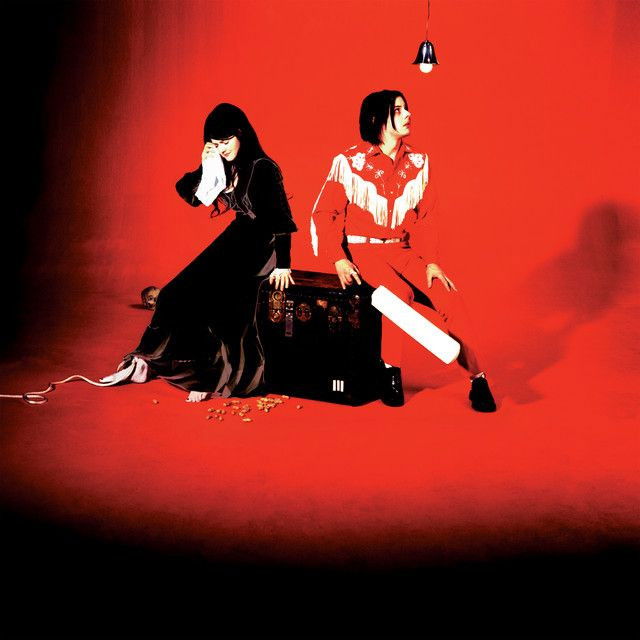
Seven Nation Army by The White Stripes
The riff everyone can hum hides a very human story. Beneath the stadium roar, the meaning of Seven Nation Army The White Stripes crafted is about gossip, pressure, and the stubborn decision to keep going.
"Seven Nation Army" - The White Stripes
A seven nation army couldn't hold me back
They're gonna rip it off
Loading lyrics...
Unable to load lyrics
We're unable to display the lyrics at this time. Please try again later.
The Fight Behind the Riff: Gossip vs. Glory
Jack White has described the song as a response to gossip and the scrutiny that came with sudden fame. The title itself came from a childhood mishearing of “Salvation Army,” which he turned into a symbol of outsized opposition. The opening lines set the stance of defiance before the narrator even explains why.
I'm gonna fight 'em off
A seven nation army couldn't hold me back
They're gonna rip it off
Takin' their time right behind my back
The threat feels huge, but the target is small and intimate—rumor, whispers, and looks.
The meaning of Seven Nation Army The White Stripes, in short
It’s a personal battle against public noise. The character resolves to endure, even when escape sounds tempting.

Watch the official Seven Nation Army
music video
Who’s Speaking, and What Are They Up Against?
The narrator speaks in first person and sounds wired by anxiety: talkin' to myself at night
. They try to quiet the obsession—leave it alone
—but the mind loops. That tug-of-war between pride and pressure drives the song’s tension.
The voice is combative without being superhuman. They’re confident, but the imagery of eyes, bones, and blood suggests stress seeping into the body. It reads like a self-pep talk that keeps cracking.
The World Is Watching: From Crowns to Hellhounds
The exaggeration heightens the paranoia: everyone has a story, from the Queen of England
“to the hounds of hell.” The narrator vows to confront the rumor mill—serve it to you
—yet the body keeps pleading to find a home
. That contrast captures the song’s core: bravado out front, vulnerability underneath.
Interpretation: The “eyes,” “bones,” and “blood” act like truth meters. Public faces say “I can take it,” while the body quietly signals the cost.
Wichita As Escape, Work, and Return
When they say I'm goin' to Wichita
, it isn’t travel planning; it’s fantasy. Wichita stands in as a faraway plain where the noise can’t reach. The imagery of labor—sweat, straw, and bleeding—imagines a cleanse through hard work, a way to rebuild identity.
Interpretation: “Leaving town forevermore” reads as temporary catharsis. The song ends with a pull back home, implying the cycle isn’t finished. They may flee to reset, but the real fight is internal.
A Hook With No Chorus: How Sound Shapes Meaning
White wrote the track as an experiment: a song with no traditional chorus. The “hook” is the seven-note riff, played on guitar pitched down an octave to mimic a bass, moving in E minor at a steady, march-like tempo. Meg White’s kick-heavy, “heartbeat” drum makes the riff feel like a footfall in a long, determined walk.
Production matters to the story. Recording at Toe Rag Studios with vintage gear gives the track a gritty, immediate texture—no gloss, just purpose. The minimal parts—riff, thud, distorted vocal—mirror a single-minded mission. The arrangement builds and releases like waves, reinforcing the narrator’s swings between control and overwhelm.
Factually, the song opened their 2003 album Elephant, was written and produced by Jack White, and won the Grammy for Best Rock Song. Its refusal of a chorus turns the riff into the rallying point—the same way the narrator rallies themself.
From Garage Rock to Global Chant
The riff didn’t stop at radios. In late 2003, Italian soccer fans began chanting it; by 2006 it was echoing through the World Cup, and it’s since become a staple at U.S. college and pro games and the 2018 World Cup. That migration from record to crowd suits the lyric’s stance: one person vs. a mob becomes a mob uniting behind one line.
Interpretation: The chant flips the song’s anxiety. What began as a shield against gossip turns into collective catharsis. The melody belongs to everyone, and that ownership dilutes the sting of “everyone’s got a story to tell.”
Other Readings, Same Punch
Some listeners hear a political protest, but White has framed it as a personal reckoning with attention. The text supports that: it’s packed with inward signals rather than specific events. Still, the ambiguity helps the chant travel. Defiance reads in any language.
Takeaway: The meaning of Seven Nation Army The White Stripes deliver is a portrait of resolve under pressure—swagger as armor, escape as fantasy, labor as purification. That’s why the riff keeps marching. It sounds like someone refusing to fold.
Disclaimer: Song meanings are interpretive and may differ by listener; this analysis blends reported context with close reading of the lyrics and production.









