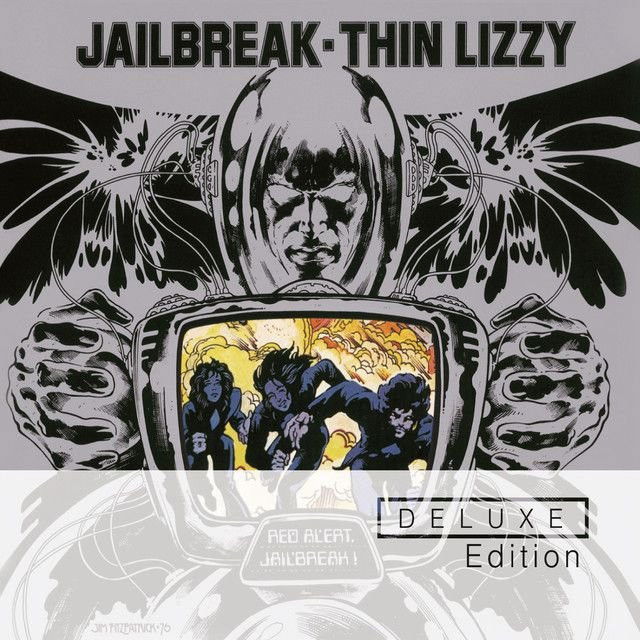
Cowboy Song by Thin Lizzy
Thin Lizzy’s “Cowboy Song” turns a familiar Western image into something more personal. For anyone searching for the meaning of Cowboy Song Thin Lizzy, the song is less about a real ranch life and more about escape, longing, and the cost of always moving on.
"Cowboy Song" - Thin Lizzy
A starry night, a campfire light
The coyote call and the howling wind wail
Loading lyrics...
Unable to load lyrics
We're unable to display the lyrics at this time. Please try again later.
First released on Thin Lizzy’s 1976 album Jailbreak, the track was written by Phil Lynott and Brian Downey. It sits beside the band’s harder, streetwise songs, yet it feels dreamier and more open. That contrast matters: the cowboy here is not only a rugged hero. They are also a lonely wanderer trying to outrun memory.
The drifter at the center of the song
On the surface, the plot is simple. The singer calls himself just a cowboy
and places himself in a classic frontier scene of stars, firelight, wind, and open land. But those details work like movie scenery. They create a mythic backdrop for a much more human problem.
He is alone, and his thoughts keep circling back to love, distance, and identity. Even when the landscape feels huge, his mind is fixed on one lost relationship. That is why the song feels bittersweet rather than triumphant.
Interpretation: Thin Lizzy uses the cowboy image as a mask. The narrator sounds tough and free, but the song keeps showing how fragile that freedom is.
Watch the official Cowboy Song
music video
A romance that keeps echoing
The emotional center appears when the singer remembers a certain female
and the time they shared. The wording is casual, almost throwaway, but the feeling beneath it is not. He is haunted by someone he cannot fully hold onto.
That memory gives the song tension. The cowboy wants movement, but memory creates gravity. He rides forward while emotionally looking back.
This is one reason the meaning of Cowboy Song Thin Lizzy connects with so many listeners. It captures a common contradiction: people may chase freedom when they are also carrying heartbreak. The road looks open, but the past travels with them.
Why the chorus sounds wild and unstable
The chorus shifts the song from reflection into motion. Phrases like turn me around
and hit the ground
suggest spinning, falling, and losing control. Instead of peaceful freedom, the rodeo becomes violent and unstable.
That matters because a rodeo is not the same as open riding. It is performance, danger, and survival. The singer is not calmly living off the land. He is being thrown around by life.
Roll me over and turn me around
Let me keep spinning
In those lines, the song turns freedom into chaos. Interpretation: the chorus may describe a literal rodeo, but it also works as a metaphor for emotional upheaval. The narrator accepts the risk because stopping would mean facing stillness.
A story told in quick snapshots
The verses move like memories rather than a strict diary. They jump from lonely nights to romance, then to Texas, Mexico, and rodeo work. That quick movement fits the narrator’s unstable life.
A simple timeline looks like this:
- He introduces himself as a lone rider in a romantic Western setting.
- He remembers a woman and a relationship that now feels distant.
- He lands in border-country spaces, including Texas and Mexico.
- He takes rough work
busting broncs
in the rodeo. - He ends by choosing motion again, claiming that life as a cowboy still suits him.
These scenes are vivid, but they are not heavily detailed. That is part of the song’s strength. Thin Lizzy lets the listener fill in the gaps, making the cowboy feel both specific and symbolic.
Freedom, masculinity, and the American myth
Though Thin Lizzy were an Irish band, they often drew from American images and rock mythology. Phil Lynott in particular loved larger-than-life characters, and this song fits that habit. The cowboy is one more outsider figure: mobile, proud, romantic, and slightly doomed. Thin Lizzy’s band history helps explain why they were so good at this kind of storytelling.
The song also plays with masculinity. The narrator presents himself as independent, but he is clearly vulnerable. He misses someone. He gets tossed around. He insists on freedom partly because he may not know how to live any other way.
Interpretation: that blend of swagger and sadness is central to the track. It keeps the cowboy from becoming a cartoon.
How the music carries the meaning
The arrangement is a huge part of why the song feels so moving. Thin Lizzy were known for melodic twin-guitar lines, and “Cowboy Song” uses that strength to make the open-road fantasy feel grand. The guitars do not just add power; they create lift, like a horizon opening up.
At the same time, the rhythm section keeps the song grounded. Brian Downey’s drumming pushes it forward without making it frantic, and Lynott’s bass gives the track a steady pulse beneath the drifting imagery. The result is a balance between dream and drive.
Phil Lynott’s vocal is key too. He does not sing the words like a pure cowboy fantasy. He sounds warm, reflective, and slightly worn down. That human tone stops the Western imagery from feeling fake.
So what is the song really saying?
At its core, “Cowboy Song” is about a person who turns wandering into identity. The cowboy life promises space, speed, and self-invention. But the song keeps reminding listeners that this freedom comes with loneliness and repetition.
The final claim that life is the life for me
sounds bold, but it also feels defensive. Interpretation: the narrator may be convincing himself as much as anyone else. He keeps riding because motion is easier than rest.
That is what gives the meaning of Cowboy Song Thin Lizzy its staying power. It is a road song, a heartbreak song, and a myth-of-freedom song at the same time.
Last takeaway
“Cowboy Song” works because it celebrates escape while quietly questioning it. Thin Lizzy gives listeners a cinematic rider, then reveals the loneliness inside the image.
That mix of romance and sadness is an interpretation based on the lyrics, performance, and context. As with any song, different listeners may hear different shades of meaning.









