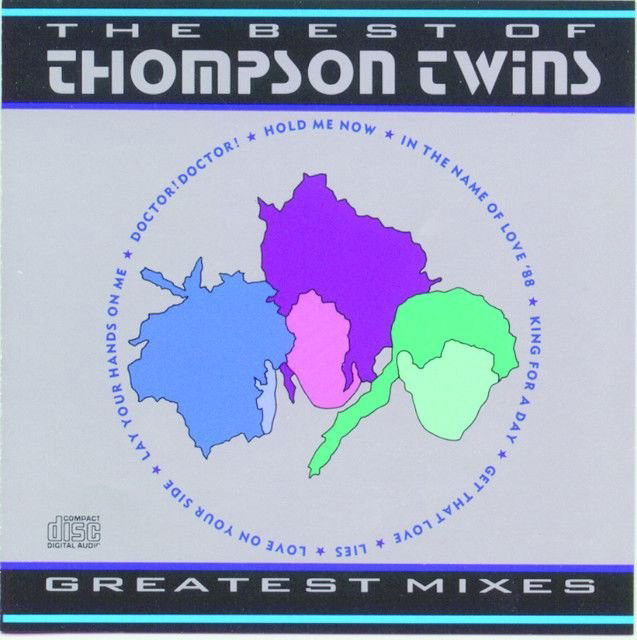
Why "In The Name Of Love" Feels So Uneasy
The meaning of In The Name Of Love Thompson Twins becomes clearer when listeners stop hearing it as a simple love anthem. On the surface, it is sleek, danceable, and full of pop momentum. Under that shine, though, the song sounds like a person realizing that desire, fantasy, and truth do not always match.
"In The Name Of Love" - Thompson Twins
In the name of
In the name of
Loading lyrics...
Unable to load lyrics
We're unable to display the lyrics at this time. Please try again later.
Released in January 1982, the track was a key early single for Thompson Twins and appeared on Set, which was retitled In the Name of Love in the US after the song’s club success. It became the band’s first entry on the US dance chart and hit No. 1 there for five weeks, a major turning point in their rise in America. Research sources also credit Tom Bailey as the main writer and Steve Lillywhite as producer, while the band at that time was still a seven-piece group.
The Song’s Core Idea Hides Inside the Hook
At the center of the song is a clash between romantic language and emotional doubt. The title phrase, In the name of love
, usually sounds noble or sincere. Here, it feels more complicated. The repetition can be heard as a defense, a plea, or even a warning.
Interpretation: Rather than praising love, the song may be asking what people excuse or endure because they call it love. That makes the chorus feel almost ironic. The hook is huge, but the verses are much less secure.
This tension is what gives the song its lasting pull. They are dancing, but they are not at peace.

Watch the official In The Name Of Love
music video
A Story of Recognition, Then Collapse
The verses sketch a small but vivid emotional story. First comes recognition and attraction. The speaker addresses someone directly with Hey you
and says I've seen your face before
. That creates instant intimacy, but it also feels eerie, like the person is already part real and part image.
Then the song introduces a private symbol: the picture
on the bedroom wall. That image matters because it suggests obsession, idealization, or a crush built from distance. The person is not only known; they have been framed, kept, and imagined.
The mood changes fast when the speaker wonders whether rumors are true. The song asks if what they say about you
is real. That line brings outside voices into the relationship. Love is no longer private. Gossip, reputation, and doubt begin to weaken the fantasy.
By the next section, even the dream of paradise starts to crack. The speaker admits that it is fun to think life is perfect, but then wants to be left with nothing at all. When the bedroom picture falls away, the symbol is clear: the illusion has broken.
The Chorus Means More Than It Says
A big reason the song works is that the chorus never explains itself fully. It keeps returning to the same short phrase, refusing closure. That gives the track emotional openness.
Interpretation: The repetition may represent someone trying to convince themselves that strong feeling is enough. It may also sound like a ritual phrase that has lost certainty through overuse. In other words, the more the title is repeated, the less stable it seems.
That ambiguity fits what Tom Bailey once said about songwriting and performance. In a 2014 interview, he explained that a song’s emotional roots often become clearer when it is performed live, not only when it is written. That idea suits this track well: its emotional meaning is not stated plainly, but felt through tension and delivery.
Images That Carry the Emotional Weight
Several simple images do a lot of work here:
- The face suggests attraction, familiarity, and fixation.
- The bedroom wall points to private fantasy.
- The picture falling marks the collapse of an ideal.
- Paradise suggests a dream that cannot hold.
None of these images are overly complex, which is part of the song’s strength. They are easy to picture, but emotionally loaded. The result is a lyric that feels immediate even when it stays mysterious.
Why the Sound Matters So Much
Musically, the song is just as important as the lyric. It blends synth-pop, new wave, and electronic rock, with a hard-driving pulse that helped it dominate clubs in 1982. Contemporary reception described it as a frantic electronic rocker with guitars, keyboards, and percussion, and that description still fits.
This matters for interpretation. The beat keeps moving forward even as the words grow less certain. That contrast creates the song’s real drama. The body hears celebration, while the lyric hints at disappointment.
Bailey’s broader songwriting background also helps explain why the song feels structured but emotional. He has spoken about classical piano and church-choir influences shaping his sense of harmony. Even in a club track like this one, there is a feeling of tension and release rather than just repetition for its own sake.
A Turning Point for the Band
The song’s meaning is also shaped by where Thompson Twins were at the time. In 1982, they were still a larger ensemble before later becoming the better-known trio of Bailey, Alannah Currie, and Joe Leeway. The single’s US success helped push their next phase and made American listeners take notice.
That context matters because the track sits between post-punk experimentation and polished pop stardom. It still has rough edges, urgency, and a slightly nervous energy. Those qualities support the lyric’s emotional instability.
The Best Way to Read It
The meaning of In The Name Of Love Thompson Twins is best understood as a song about love losing its innocence. It begins with desire and projection, then moves toward uncertainty, damaged trust, and emotional emptiness. The repeated title phrase sounds powerful, but the verses quietly question whether love can really protect anyone from disillusionment.
That is why the song still lands: it turns doubt into a dance record.
Disclaimer: This interpretation is based on the lyrics, musical context, and documented band history. As with most songs, individual listeners may hear different meanings.








